
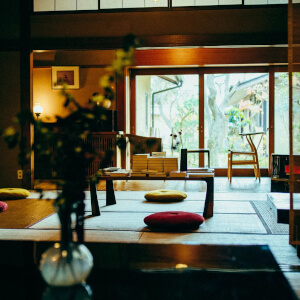
The Zensei Shinsha Haruchika Noguchi Memorial Music Room: A Commons
interview with Shin’ya Noguchi
(Part 2)
You can read Part 1 here. Translation by the Itsuo Tsuda School, authorized by S. Noguchi. All footnotes are the translator’s.
Translators’ note: In this interview, Shinya Noguchi uses the Japanese term henshū 編集 – literally “to edit” – but he interprets it in a creative and philosophical sense, referring, for example, to the “editing’ of the body or of places. A metaphor may help: just as an editor, in order to create a book, may begin by collecting and organising texts, they may also re-edit a work by revisiting and modifying its previous structure. Similarly, an individual has the ability to re-edit (re-organise) their neural connections and bodily awareness in order to reconstruct a more balanced body. Editing the body may thus mean re-organising or re-adapting bodily experience, or even – a term used elsewhere by Shinya Noguchi – educating the body (tai-iku 体育). Similarly, editing a place or a relationship may imply transformation, preparation or shaping.
The Struggle With Closed Language
Behind Shinya Noguchi’s intense dedication to editing [編集 henshū: re-organisation or re-adjustment of bodily experience] and translation lies a profound sense of crisis regarding the world of Seitai, a field in which he has long been immersed. ‘Seitai Kyōkai to which I used to belong operated as an extremely closed world, with very high barriers to entry – you couldn’t join without two sponsors,’ he explains.
Communities with a high degree of specialisation inevitably develop their own jargon – technical terms that are understood only within their ranks. Whilst this enables efficient communication, it is a double-edged sword that also creates a disconnect from the outside world. ‘In a closed world, conversations can take place using jargon alone. When that happens, the words needed to speak to outsiders are gradually lost. We forget how to converse. As a result, the community becomes increasingly insular.’
Consequently, the term “Noguchi Seitai” itself has become a generic noun, circulating with a narrow meaning and turning into jargon consumed solely within a specific category. Whenever “Noguchi Seitai” is mentioned, it tends to be categorised as a “therapeutic technique”, “adjustment”, “genius technique”, or judged in terms of whether it “works” or “doesn’t work”. To resist this “death of language”, Shinya Noguchi, together with his father and younger brother, established a new organisation called Seifū Gakusha. What he is doing is “translating” the philosophy of Haruchika Noguchi into language that resonates with modern people, without resorting to the technical jargon of Seitai. It is an endeavour that goes beyond the editing of places [編集 henshū: shaping, preparation], aimed at conveying that philosophy into a different context.
Behind this endeavour stands a pioneer: Shinya Noguchi’s father, Hiroyuki Noguchi’s. ‘My father began explaining technical terms – such as Yuki, Katsugen and extrapyramidal system, which form the three pillars of Seitai – by replacing them with everyday expressions such as “touching”, “moving” and “encountering others”.’
This act of translation met with fierce opposition from certain conservative factions within Seitai Kyōkai, who argued, ‘Haruchika Sensei never said such a thing.’ However, unless we use language that lies outside the jargon, that wisdom cannot be shared with society and will eventually become isolated and disappear. ‘My father fought a lonely battle, but it was a groundbreaking translation. He replaced the terms with words that anyone could intuitively understand, such as “touching is a good thing”.’
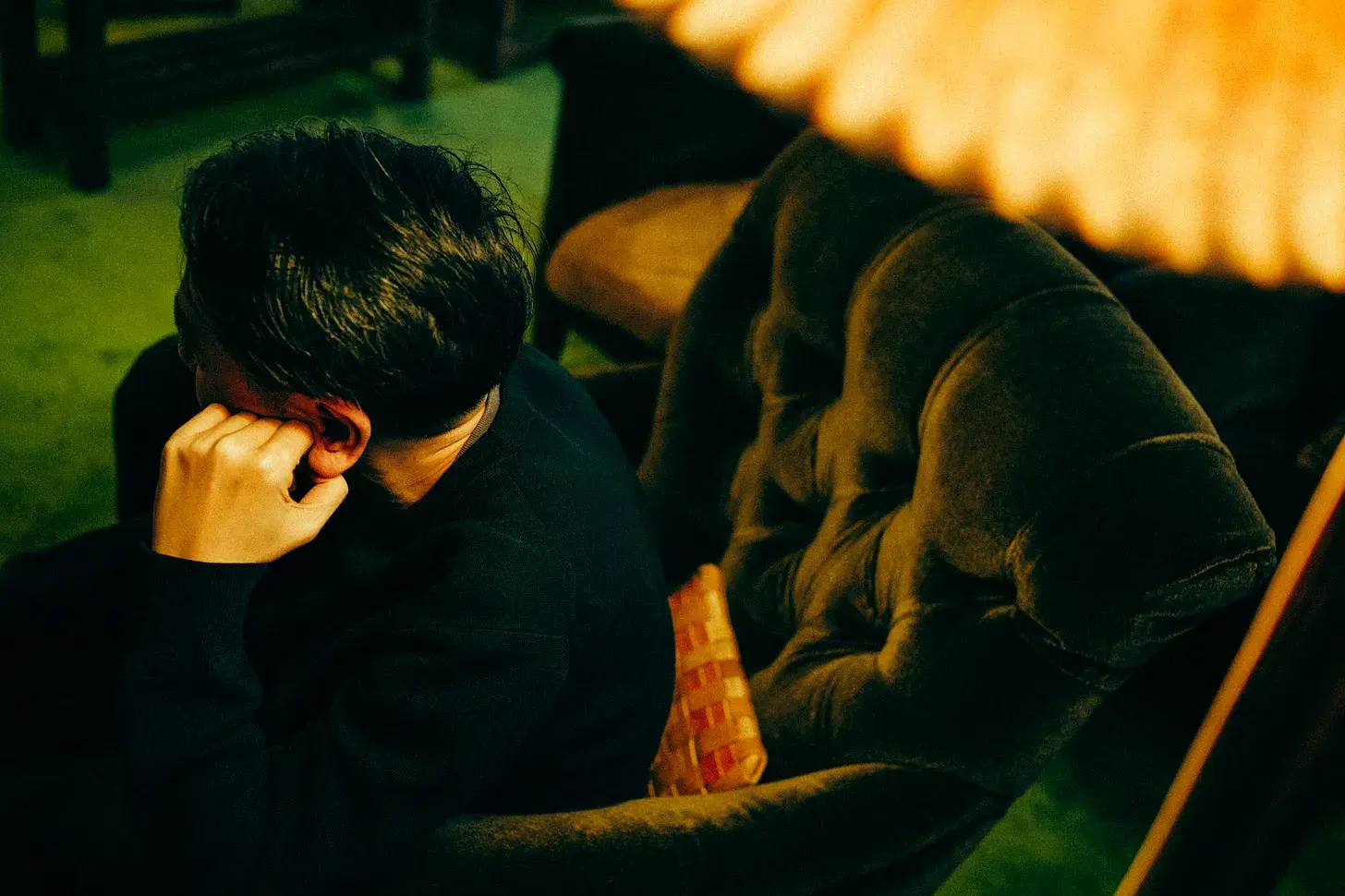
The reason Zensei Shinsha tackles such unconventional themes is entirely a strategy aimed at moving away from jargon. If we were to hang a sign saying Seitai, only those interested in Seitai would come. However, by providing universal entry points such as good music or interesting books, a diverse range of people gather there. The dialogue that takes place there becomes a form of communication using living language, free from reliance on technical terms.
‘Both organisations and society are finished if they lose their language. That is why I want to keep this place “half-open”, constantly letting in the breeze from outside. Otherwise, it will rot.’ The disconnect between expertise and the public sphere is a challenge faced not only in the field of bodywork, but by all specialist communities – be it academia, the arts, or corporate R&D departments. To continue translating without fear of “being told off” – that may well be the only way to recirculate knowledge back into society.
However, rejecting existing categories and remaining a place that is ‘nothing in particular’ also entails real pain. Speaking of the funding for Zensei Shinsha, Shinya Noguchi said with a wry smile, ‘I’ve poured my entire fortune into it, to the point where it’s causing my family concern.’ Naturally, he has tried applying for public grants, but the results have been disappointing. The reason is clear. ‘We do apply for grants, but we’re turned down every time. To be recognised, we have to categorise ourselves as “a place for music”. But that’s exactly what I find most difficult.’
People listen to music, discuss the body, and read books. It is precisely this cross-disciplinary nature that constitutes its value, yet within a vertically compartmentalised social system, anything that cuts across these boundaries is treated as having no clear affiliation. As funding comes only from vertical budgets – such as those for music promotion or local welfare – it does not trickle down to Zensei Shinsha, which exists in the gaps between them. ‘Collectors and music fans alike tend to cluster within their own vertical silos. They cannot feel secure unless they do so. Even if I say it’s all the same, they simply do not understand.’
Paradoxically, the fact that no grants are forthcoming is also proof that Zensei Shinsha has attained a new form of publicness that does not fit within existing frameworks. If a place were to be understood, categorised and allocated a budget, it would no longer be half-open. To continue opening up the space whilst accepting institutional isolation – the autonomy Shinya Noguchi speaks of is built upon precisely this kind of stinging friction.
Rewiring Sensations
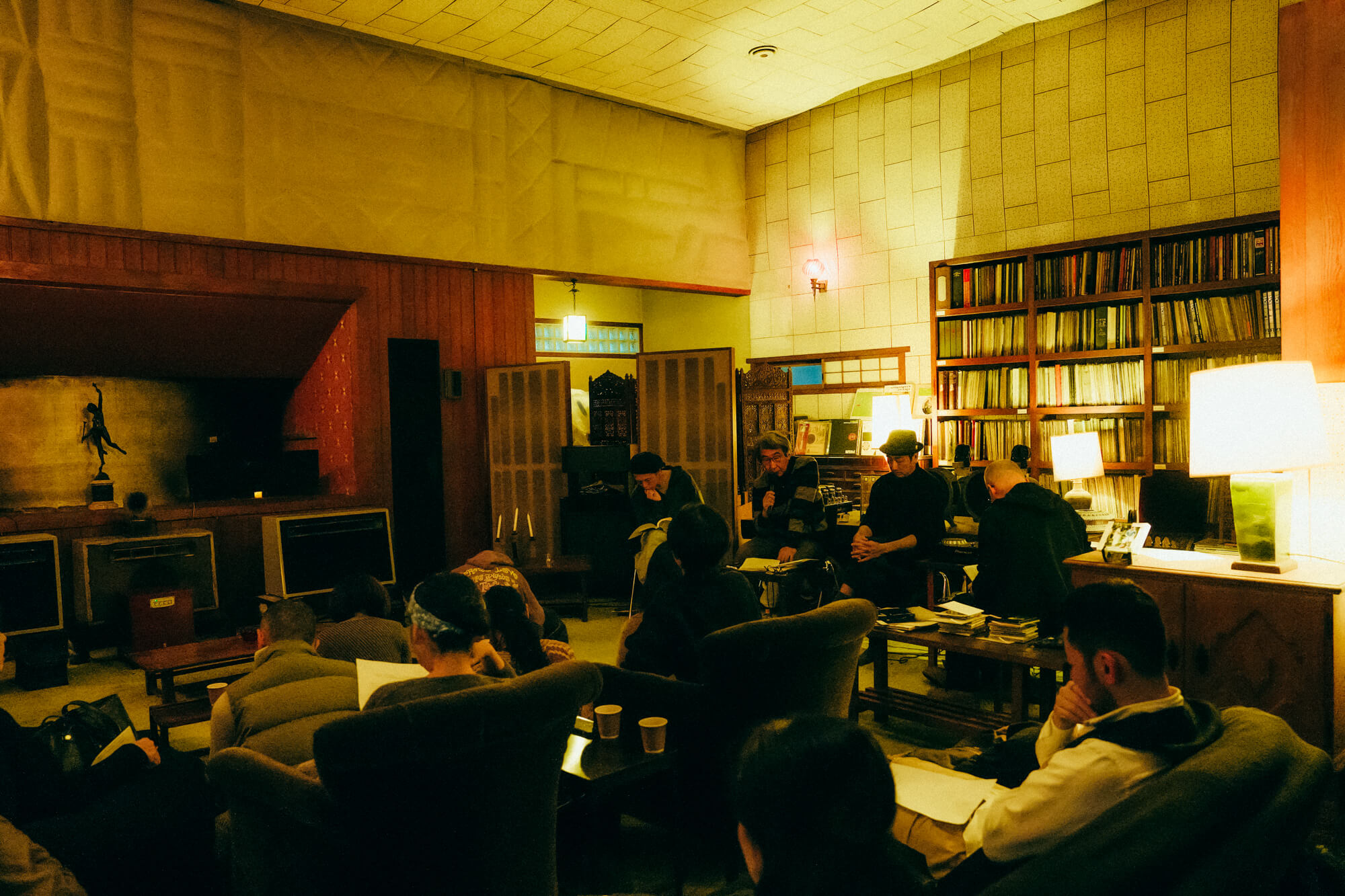
The experience at Zensei Shinsha is fundamentally different in nature from the musical experiences we are accustomed to. Existing music venues – such as so-called live houses and clubs – are predominantly ‘spaces of consumption’ where people are bombarded with loud music, drink alcohol and release stress amidst the frenzy. It is an escape from everyday life and a temporary liberation.
However, what Shinya Noguchi aims to achieve in this place is neither consumption nor escape. Rather, it is a time for reflecting on the past – a time to restore disturbed bodily sensations to their natural state. ‘I really do think its role is different from that of other music venues out there. It is not a place intended for enjoying music, being bombarded by loud music, or socialising.’
The most drastic change that occurs at Zensei Shinsha is, undoubtedly, one that affects the body itself. Shinya Noguchi explains that when high-quality sound resonates in this space, a strange phenomenon occurs in human perception. ‘When good sound begins to play, I get the sensation that my ears are moving somewhere else. The function of hearing seems to be distributed throughout my entire body. For example, it feels as though I am listening with my arms, or even with my fingertips.’
In modern society, our bodies are completely specialised. The eyes see, the ears hear, and the brain thinks. Each organ operates independently as a specialist, and information is processed in a fragmented manner. Shinya Noguchi points out that this state where the head and the arms are separate specialists is unnatural. The musical experience at Zensei Shinsha dismantles this system of division of labour. The overwhelming sound waves emitted by Siemens’ Oirodine vibrate not only the eardrums but also the skin, the bones and the internal organs. At that moment, hearing loses its localised nature and is integrated into a whole-body ‘tactile sensation’.
‘Chee Shimizu, the DJ and music curator I organise events with, stares intently with his eyes wide open whilst listening to music, without focusing on anything in particular. He says, “I’m savouring the sensation of the sound reaching my eyes and fizzing away.”’ Shinya Noguchi, on the other hand, says that when he enters a state of deep concentration, he closes his eyes and ‘feels something like a rubber ring float up gently in his lower abdomen, giving him the sensation of soaking in a bath’.
Listening with the eyes. Listening with the abdomen. Here, not only does the boundary between hearing and listening dissolve, but the boundaries of the five senses themselves dissolve, leading to a re-editing [再編集 saihenshū: re-organisation, re-adaptation] of bodily sensations. Moreover, this transformation of sensation is not something that remains confined within the individual.
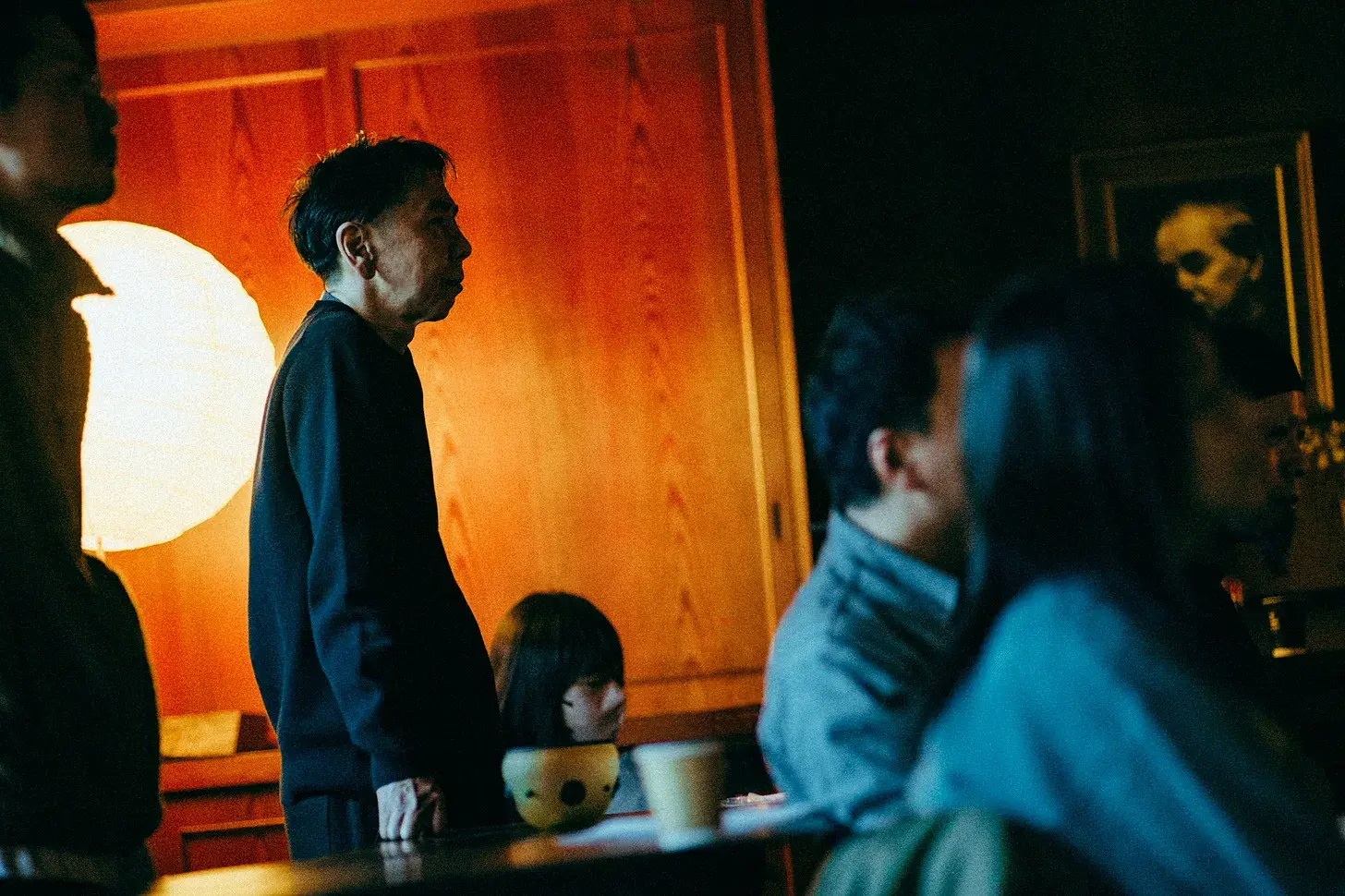
Shinya Noguchi reflects on a moment he once experienced in a small record shop: ‘There was a moment when everyone’s ears in the room began to focus in the same direction. Amidst a silence akin to that in a tea room, our hearing converged on a single point. It was an experience in which I felt myself and others become one.’ It is not a private musical experience isolated by earphones, but rather one of immersing oneself in the sound whilst sharing the same space and sensing the presence of others. What emerges there is a collective resonance of the senses.
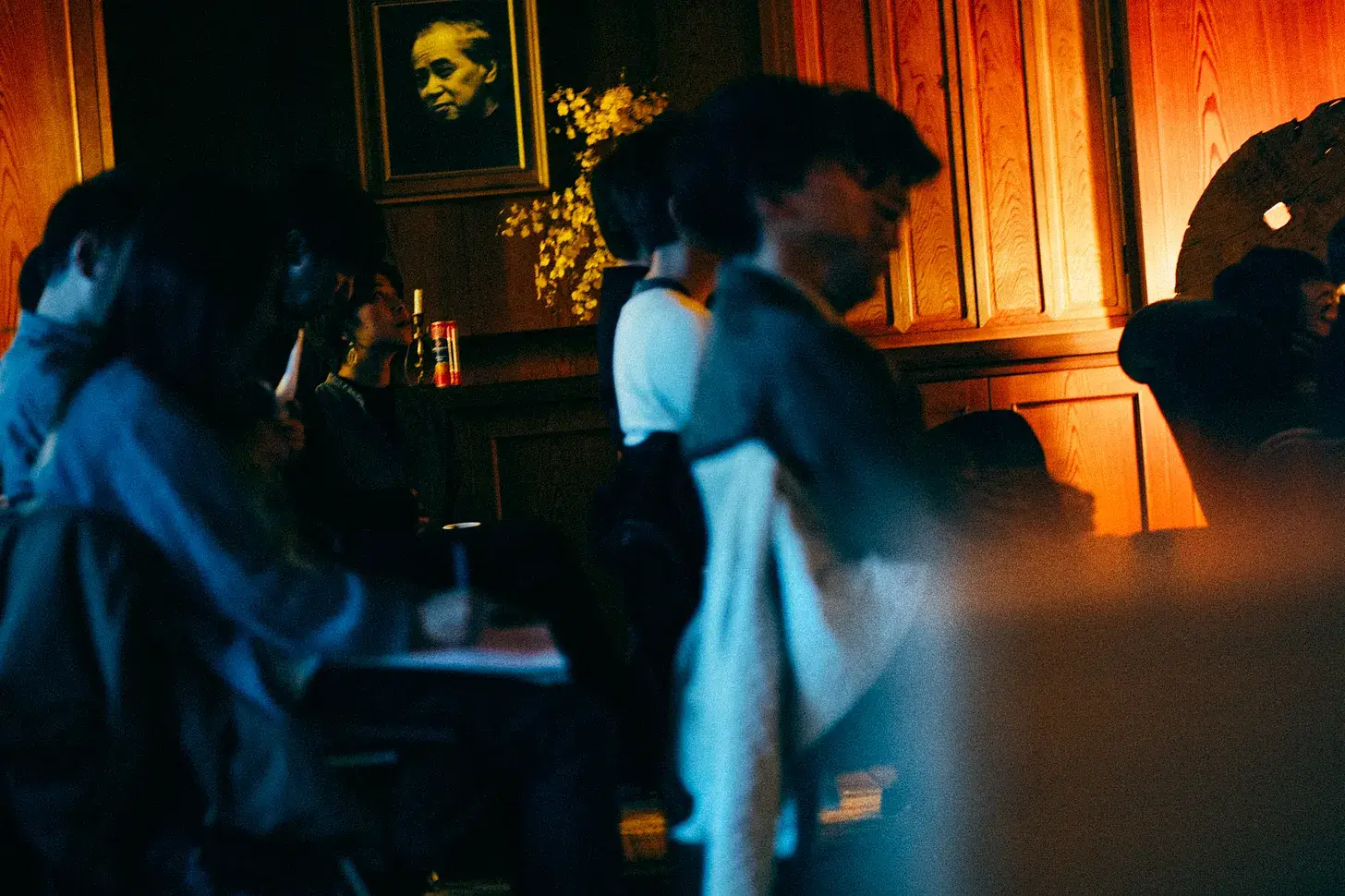
If the person next to you is delighted, you feel happy too. As someone’s concentration deepens, so does the depth of the entire space. Bodies that are ‘half-open’ connect gently through sound, becoming a single, vast receptor that savours the resonance. What Zensei Shinsha aims for is nothing less than the restoration of these resonating bodies.
The Ethics of “Hard-to-Access”
However, in order to maintain such a delicate and intimate space, a certain kind of protective barrier is necessary. That is precisely why Zensei Shinsha has been deliberately designed to be a “hard-to-access” venue. ‘The entrance is down a dodgy alleyway, it operates on a strict booking-only basis, and the promotional material contains rather abstruse language. All of these are intentional filters.’
When we speak of an open space, we tend to imagine a barrier-free environment that accepts anyone unconditionally. However, unguarded openness carries the risk of diluting – and at times even destroying – the atmosphere of a place. The concept of half-open that Shinya Noguchi aims for is not about being defenceless. It involves carefully managing boundaries in order to preserve the quality of the interior whilst maintaining a connection with the outside world.
This approach to management is symbolically represented by the entrance hall. ‘If you look at the entrance to my house, you’ll see that my guests’ shoes are lined up very neatly. Seeing that, I know, “Everything’s fine today.” When entering from outside, people have to shift their state of mind. The way the shoes are arranged is a sign that this ritual has been carried out properly.’
Participants go to the trouble of making a booking, reading a complex text, and walking through the backstreets to reach the venue. Each step of this process tunes the visitor’s mind and body into the right frame of mind to be present in that space. Shinya Noguchi says that he always adds a personal touch to his email correspondence regarding bookings. This is not merely a formal procedure, but the editing [編集 henshū: shaping, preparation] of a relationship that has already begun. By going to this trouble, not only are last-minute cancellations prevented, but those who turn up on the day are transformed from mere “consumers” into participants who contribute to shaping the space.
‘Making the process of entering the space just a little bit more troublesome is also part of “half-open”. After all, in order to receive something yourself, you need to prepare to build a relationship.’ Contemporary services are preoccupied with making the user experience as smooth as possible and eliminating friction. Zensei Shinsha, however, deliberately leaves friction in place. It is precisely this friction that draws out the participants’ proactivity and fosters a sense of respect for the space. Kindness does not mean beckoning people in too readily. Sometimes it means setting a high threshold and welcoming those with the will to cross it with the finest sound and space. This is the ethics of space as conceived by Shinya Noguchi.

Towards Resonating Commons
Beginning with a theory of the body centred on the antagonism between tension and relaxation, moving on to an editing approach that does not say the essence, and finally to the protection of a space through its being hard to access. As we unpick the initiatives of the Zensei Shinsha Haruchika Noguchi Memorial Music Room, we realise that they are brimming with practical insights for envisioning a new society.
Shinya Noguchi emphasised the importance of “cutting across” rather than “dividing vertically”. Seitai, audio, literature, nature. Rather than delving into these as specialised genres (the vertical axis), he threaded them together through the lens of human life (the horizontal axis). In this space, fixed roles – such as expert and amateur, performer and audience, host and guest – dissolve, and everyone engages as equals through shared common ground.
When asked how spaces for listening to music, such as Zensei Shinsha, should increase in the future, Shinya Noguchi replied as follows: ‘I hope to see more spaces where the sole purpose is not merely to listen to music, but where new things are born through the interplay of different elements. I believe that culture is born from such endeavours.’
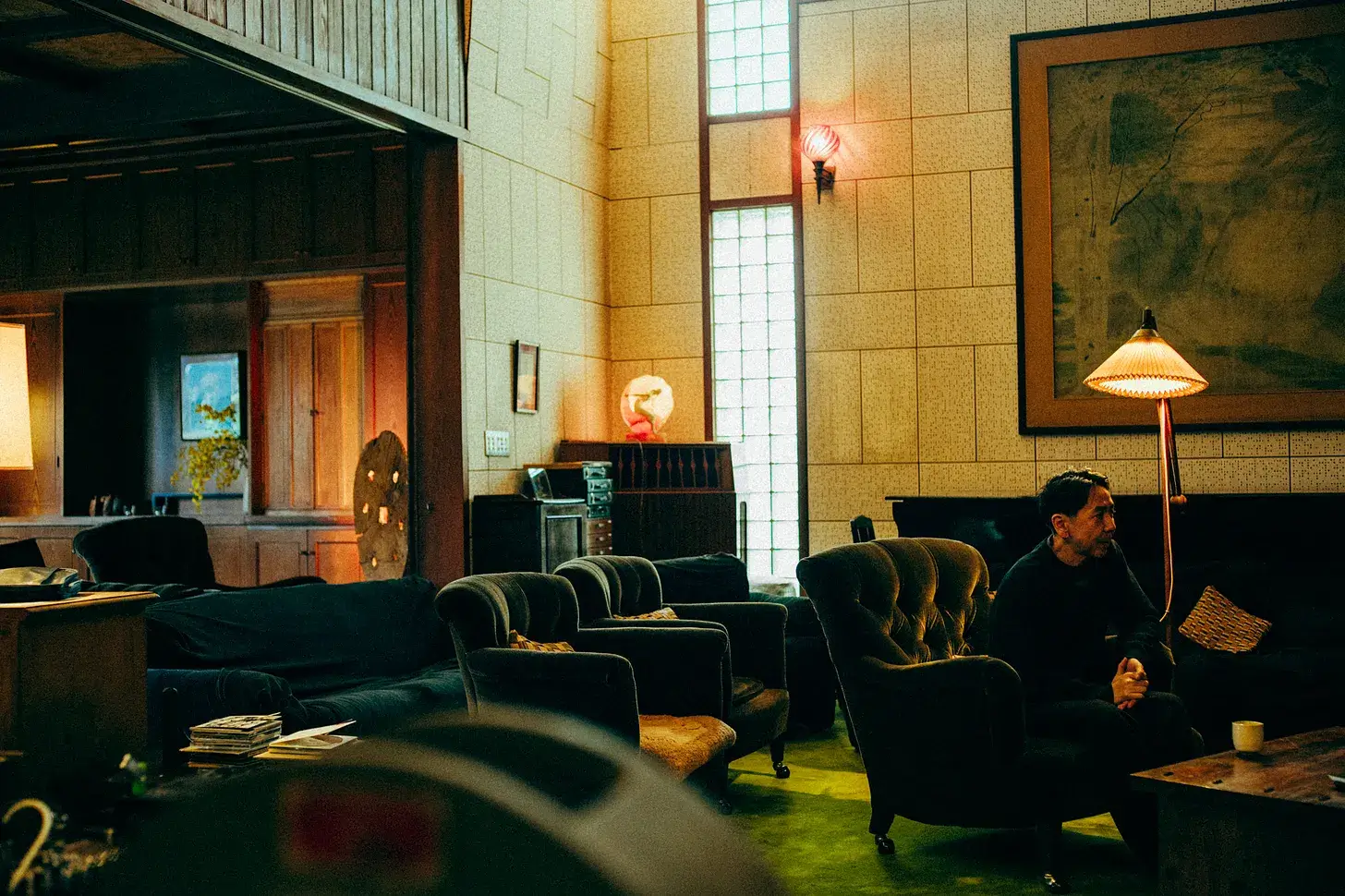
Zensei Shinsha is not a finished museum. Whilst inheriting what Haruchika Noguchi left for future generations, it remains perpetually unfinished, continuing to breathe in step with the times. The valve amplifiers give off heat, the record needles trace the grooves, and people gather and then disperse. This very activity is nothing less than the practice of Zensei – living by exhausting every ounce of one’s vitality – as advocated by Haruchika Noguchi. In a society that pursues efficiency and ‘correct answers’, are we not living with our bodies stiffened and our breath held? If you feel that this is the case, you might try knocking on that door tucked away in a back alley in Komae. There, you will surely find the free resonance of a ‘half-open’ door – a sensation your body has yet to experience, or one that will stir a sense of nostalgia.
[the end]
photographs by Kaori Nishida
Seifu Gakusha de Shinya Noguchi : https://seifugakusha.jp/
https://www.instagram.com/zenseishinsha
L’éditeur : https://www.zensei.co.jp/
Would you like to hear about the next article?