

Starting with a theme taken from I Ching hexagram K’an (the Abysmal), Régis Soavi writes in this article about Aikido as a Misogi pratice.
Misogi 禊 is widely practised among shintoists. It consists of an ablution, sometimes under a waterfall, in a stream, or in the sea and allows a purification of the body at both physical and psychical levels. In a broader sense, Misogi encompasses a whole process of spiritual awakening. Misogi is also a way to relieve the being of what overwhelms him, so to allow him to wake up to life. Water has always been considered one of its essential elements.
Like water, Aikido is a way to achieve Misogi
Founder of Aikido O Sensei Morihei Ueshiba kept on telling his students that the practice of this Art is above all a Misogi.
Aikido is one of the Japanese martial arts for which the main character, the very nature, is, like water, fluidity. The teaching brought by Itsuo Tsuda Sensei who was during ten years a direct student of the Founder Morihei Ueshiba has definitely confirmed it. Although his words seem to have largely been forgotten, he kept on repeating that in Aikido there is no fighting, its just the art of uniting and separating1Itsuo Tsuda, The Path of Less, 2014, Chap. XIX, Yume Editions, p. 182 (1st ed. in French, 1976, p. 174–5). However, when you watch an Aikido session, it seems that two people are fighting each other. In fact one of them plays the role of the assaillant, but in real he is a partner, facing him there is no aggressiveness, you wont see any malicious gesture, no violence, even if the response to the attack may be impressive because of its efficiency.
Overall, the Aikido practised in the Itsuo Tsuda School is an Art of great fluidity, an art in which sensitivity and caring for the partner have the main part, and it is always through the smoothness of a first part practised individually that an Aikido session begins.Far from starting with warm-up exercices, an Aikido session begins with smooth, slow but still invigorating exercises. Breathing coordination is essential, as it allows us to harmonize with Ki, and thereby to take a step forward to discover a world with an additional dimension, the “World of Ki”.
This world is not a revelation, it is more what comes to light, what appears clearly when one recovers one’s sensitivity, when rigidity vanishes into thin air and that the living appears through. It is often women who first understand the importance of such a way of practising. That is why so many women practise in our school because they have experienced the bitter taste of sexist oppression in our society and they find in this art a way, a path, far beyond the simple martial art.
Ki, a driving force
Do, 道 Path, Way, Tao
Ki is not a concept, a mystical energy nor a sort of mental illusion. We can feel Ki. In fact everybody knows what it is, even if, in Western countries nowadays, we do not give it a name. Learning to feel it, to recognize it, to make the most of it, is necessary for who wants to practise a martial art, and even more if you practise Aikido. In Aikido, if you dont focus on Ki, only the empty form of its contents remains, this form becomes quickly a fight, a struggle in which the strongest, or the most cunning will manage to defeat his partner. We are really far away from the founder’s teaching for whom it was an art of peace, an art in which there is neither winner, nor defeated. Each movement of the partner is accompanied by a complementary movement from the other partner, like the water that marries each roughness, every nook, leaving nothing behind or separate.
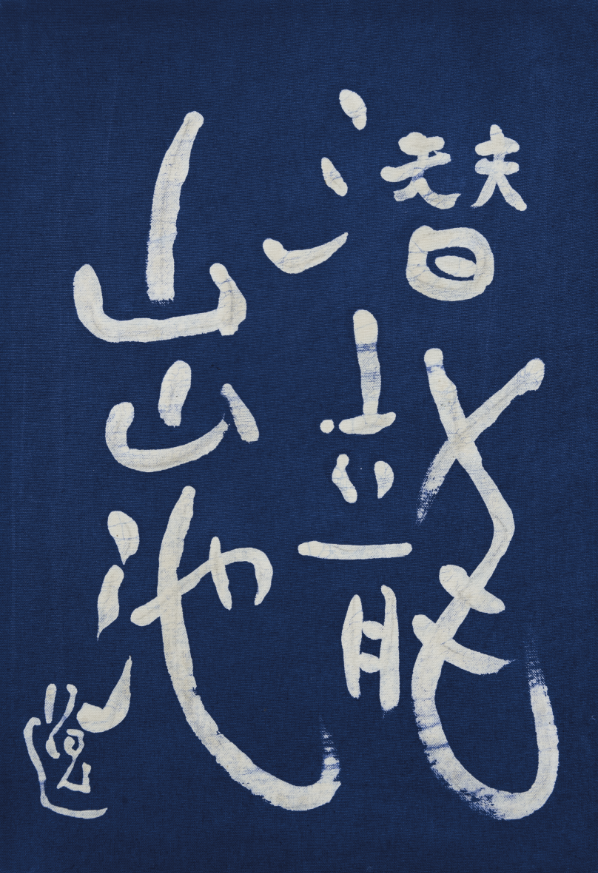
If the beginnings are usually tough, its because people have lost part of their mobility and mostly because they have become hard so to be protected from the world around. They have built a carapace, an armour, certainly protective, but which has become a second nature and an invisible prison. To have Ki flow in our body again, so to recover fluidity, and follow a teaching based on sensitivity enables us to understand physically the Yin and the Yang.
Bathing in a sea of Ki
Exercices and basic or advanced techniques have not only in common the breath which is nothing but the materialization or even better the visualisation of Ki, but they also allow to become aware of our body, physically and of our sphere of ki, which the Indians call the AURA, and that we have today practically forgotten almost everywhere.What modern science and in particular neuroscience has been discovering for a few years is only a small part of what everyone can discover on his own and put into practice in his daily life simply through the practice of Aikido as Itsuo Tsuda Sensei taught it.He would repeat over and over again that Aïkido as presented by his Master Morihei Ueshiba is the union of Ka the inspiration, the ascending force, the square, the weft and Mi, the exhalation, the downward force, the cercle, the chain.Ka being in Japanese a prononciation for 火 fire (which appears for example as a radical in the word Kasai 火災, wild fire) and Mi the first syllable of Mizu 水 water, the whole forming the word KAMI 神 which means divine in the sense of the divine nature of all things. Itsuo Tsuda would add that ‘in this gloss one mustn’t see a similar value to that of a scientific etymology. It comes from punning, the use of which is common among mystics’. 2Itsuo Tsuda, The Science of the Particular, 2015, Chap. XVIII, Yume Editions, p. 153 (1st ed. in French, 1976, p. 137)
I have never seen such fluid movements as when he wanted us to feel a technique he showed to us. Moreover, in his dojo there used to be no accidents, nobody injured, everything would be in a flow of Ki both respectful and generous but at the same time firm and rigorous, that I can hardly find today in the sports halls where aikidokas have their trainings.
The dojo, an essential place
Do we really need a special place to practise Aikido? If we talk about the surface we need for falls, we could lay tatamis anywhere, from the moment we are sheltered from bad weather.
In his book Heart of Pure Sky, Itsuo Tsuda gives us his extremely clear view of what should be a dojo, he who was Japanese was in the best position to give us a glimpse:
‘Concretely, L’École de la Respiration is a “Dojo”, a particular kind of space in the East, which refers less to the material place itself than to the energetic space.’3Itsuo Tsuda, Heart of Pure Sky (posth.), ‘Interviews on France Culture radio’, ‘Broadcast no. 1’, 2025, Yume Editions, p. 13 (1st ed. in French, 2014)

I am told that in France [or in Italy], we come upon dojos that are simply gymnasiums or sports clubs. So be it. As for me, I want my dojo to be a dojo, and not a club with a boss and his regulars, so as not to disturb the sincerity of the practitioners. This does not mean that they should wear a scowling constipated expression. On the contrary, we must maintain a spirit of peace, communion and joy.’4ibid., ‘Early Writings’, ‘Booklet n°3 – Respiratory Practice in Aikido’, p. 102
A sacred space therefore and yet fundamentally non religious, a secular space, a space of great simplicity where the freedom to be as we are exists, beyond the social. And not what we have become with all the compromises we had to accept in order to survive in society. This freedom remains inside us, deep within us in our intimate heart, our Kokoro 心 as Japanese language talks so well about it, and is only asking for a chance to be revealed.
Would you like to hear about the next article?
Notes
- 1Itsuo Tsuda, The Path of Less, 2014, Chap. XIX, Yume Editions, p. 182 (1st ed. in French, 1976, p. 174–5)
- 2Itsuo Tsuda, The Science of the Particular, 2015, Chap. XVIII, Yume Editions, p. 153 (1st ed. in French, 1976, p. 137)
- 3Itsuo Tsuda, Heart of Pure Sky (posth.), ‘Interviews on France Culture radio’, ‘Broadcast no. 1’, 2025, Yume Editions, p. 13 (1st ed. in French, 2014)
- 4ibid., ‘Early Writings’, ‘Booklet n°3 – Respiratory Practice in Aikido’, p. 102