

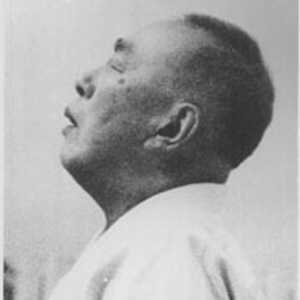
Here is the first of the Six interviews of Itsuo Tsuda by André Libioulle, entitled ‘Breathing, a Living Philosophy’ and broadcasted on France Culture in the 1980s.
To read and/or to listen to.
BROADCAST N° 1
Q: L’École de la Respiration was created by Itsuo Tsuda in Paris in 1973. However, the word “school” is not entirely appropriate and Master Tsuda never intended it to be a closed, exclusive teaching centre. On the contrary, his views remain entirely open. He is interested in other breathing disciplines and above all in the field of thought related to breathing.
Concretely, L’École de la Respiration is a ”Dōjō”, a particular kind of space in the East, which refers less to the material place itself than to the energetic space. […] Of course, movement is an individual matter; it is to be found in the inner space specific to each person. However, it is created through a certain state of relaxation and a whole atmosphere conducive to meditation. That’s why, for example, it is recommended that the Regenerating Movement be practised with the eyes closed. The dōjō is a spiritual more than a physical space, and therefore not a school in the usual sense. Itsuo Tsuda?
I. T.: It is not a school in the usual sense of the word. As I have written and published books under the imprint of “L’École de la Respiration (“the school of breathing”), I applied this name to the association. The association is independent from me. I am a guest, I am not the boss, and insofar as the association requires my presence, I accept, provided that the members carry out this personal endeavour themselves. I am not there as a boss who gives orders; that’s something you have to understand.
Q.: It is a “school”, in inverted commas, that is open to everyone. The Regenerating Movement is practised here “without knowledge, without technique and without purpose”. That’s a bit of a paradox for a school, isn’t it?
I. T.: Yes. Well, people have to be well motivated. Otherwise we refuse them. For example people who ask for therapy, etc., or who come with other intentions, we refuse. What we are doing is to exercise the extrapyramidal, that’s all. But we can’t throw ourselves into it all at once, can we? we don’t know what it is. When I give the workshop, I start by explaining the thing. Not explaining the extrapyramidal system in anatomical terms, but in relation to the life one leads in the Western context, and bring people back into another context that is natural. Which doesn’t mean that I’m against Westernization, it’s an irreversible thing. Japan is now westernised. But while accepting this conditioning, if you are determined, if you are motivated, you can get out of it and breathe freely, feel full and free.
Q.: Imagine someone entering L’École de la respiration: what can he expect? How will things work, concretely, in practice?
I. T.: They arrive and they sit roughly in a circle and I start to give a sort of talk. And there are people who don’t understand at all. At first almost no one does. But there are those who are attracted, who stay. But their heads are full of questions. And I refuse to answer. I say: “Wait a minimum of a year, two years if possible”. At the end of a year or two, the body changes, evolves and then they no longer know what to say and the questions have evaporated.
Q.: The people who come are not sick people, I mean they’re people who simply have a need for personal development, a need to feel better about themselves, usually..
I. T.: Well, the motivations are diverse. But what I ask for is practice without purpose. There is a psychiatrist who was attracted precisely because it is marked “without purpose”, because he knows from his own experience that this is extremely important. But for others it makes no sense; a practice without a goal is completely… crazy! That is one of the conditions that I insist upon. Otherwise people come and ask me all sorts of things and they go nowhere, they’re just banging their heads against the wall.
Q.: So at a certain point, people stop asking questions. What has happened inside them, what has changed so that all of a sudden, all the intellectual questions are resolved?
I. T.: Well, the body has evolved, sensations have evolved, so we don’t see the same thing from the same perspective. Before starting, such and such a thing is important; people think it’s absolutely necessary to ask me questions. But after a year or two, it becomes so obvious that they no longer need to ask questions.
Q.: But in the first stage, there’s a breathing practice, there are preparatory movements for another more fundamental movement that you call the Regenerating Movement. How does the preparation work?
I. T.: To tell the truth, you don’t need any preparation if you’re sensitive and not very complicated. But modern life doesn’t always allow you to be uncomplicated, so we need a bit of stimulus to get us going. You don’t need a memory, it’s something that arises from within, and it comes of its own accord.
Q.: So it’s more like an immediate, spontaneous reaction on the part of the person, and everyone has a particular reaction, everyone has a singular organic reaction that is unique to him or her.
I. T.: We can’t create a model for the Regenerating Movement, because each individual has his or her own movement and the movement of the same individual differs every day. That’s what they are going to find out for themselves. The difficulty is that people arrive with a head full of imaginings and it’s a real problem to get rid of these. They know thirty-six thousand methods that they mix up with the Regenerating Movement and which distort everything. I make sure that people don’t mix everything up, that’s the greatest difficulty.
Q.: Initially, it seems that people find it hardest simply to feel, to live in contact with their sensations. That’s what the Regenerating Movement brings.
I. T.: People say, “We’re not in the Middle Ages anymore”. Well, what’s the difference between the Middle Ages and now? Gestation still takes nine months; that hasn’t changed. Only, in the Middle Ages there was neither radio nor television. Only the means have changed. But the body, on the contrary, has become weaker. There are many people who are neither completely alive nor completely dead. They are in a kind of twilight,, without feeling. What we’re doing is not adding something extra, but going “back to the source”, which allows us to really feel what’s happening every day, at every moment. That’s what has been completely neglected. All we do is schedule, plan things with a view to what’s going to happen in a year’s time, in three years’ time, and so on. But what are you doing now, what are you feeling now? That we do not know.
Q.: Master Tsuda, the people who come to you come because they feel the need, let us say, for a personal evolution. But people come to work on themselves and they come with spontaneous body tendencies. In several of your books, you’ve mentioned a concept known as “taiheki“.
I. T.: It’s a concept that is also quite difficult to explain. In our modern lives, the body’s activities become increasingly specialised. Some people need their eyesight, their hearing, their brains, and so on. Athletes need their muscles. Because of this specialisation, we are more or less deformed. The channelling of energy becomes specialised. We cannot all of a sudden change direction. We’re always on the same channel.
Q.: You talk about the polarisation of energy…
I. T.: … Yes, polarisation if you like; channelling. And we think we can control all that, but it’s difficult indeed. That’s why we need to normalise the terrain, so that we can use all our pawns, if you will. For example, one woman told me that before doing the Movement, she didn’t know whether her feet were hot or cold, she had to take off her shoes and then touch her feet with her hand so she could say, “ah! yes, my feet are hot or cold”. But now she doesn’t need to do that anymore, she can feel directly. Sensation doesn’t work in most people.
Q.: Most people are desensitised…
I. T.: … desensitised either in the feet or in the legs, etc.
Q.: And by being desensitised, people are cut off from themselves.
I. T.: Yes, they are fragmented, they are compartmentalised. They see the world through this very, very narrow perspective.
Q.: Your desire is to put people in touch with themselves, with their sensations, and thereby even with “ki”’, that notion that evades all concepts, a moving notion: qualitative, not quantitative. The truth of science is quantitative, but the truth of the Movement is always particular, always concrete.
I. T.: We come into the world with no knowledge, with no explanation. How is it that a newborn baby can turn white milk into yellow poo? The baby has no knowledge. Well, at that very moment, the absence of knowledge allows everything to work. We have to be able to get to that point. Except with adults, the problem presents itself in a different way, because we cannot imitate a baby. If there are a lot of things that come to the surface of the conscious mind, that’s precisely why we are in the state of “heart of pure sky”. When we are very busy, we don’t even think about it. That is the return to the source, which is different from what happens with a newborn.
Q.: Will the people who come to you later become practitioners of the
Regenerating Movement, or is it just a practice they follow for the sake of their own well being?
I. T.: That’s up to them, isn’t it? I don’t say anything. If they want to do it, they do it, that’s all. But if people aren’t truly motivated, things just fall apart. And if they’re really motivated, little by little their horizons open up. So, as to how far they will go, for the moment I can’t say.
[end of Broadcast N° 1/6]
continue with Broadcast N° 2
Would you like to hear about the next article?

When Tsuda recited Nô #2

We are pleased to present a restored version of the video of Master Tsuda reciting Nō.
During the 1981 summer workshop in Coulonges-sur-l’Autize, Master Itsuo Tsuda recites an excerpt from a Nō play. Before beginning, Master Tsuda introduces the story.
Here is the transcript of the presentation:
She dances and comes to the center of the stage, and suddenly she jumps and the bell falls.’
Would you like to hear about the next article?

With the Philosopher of Ki #2
Continuation and end of the article published in the journal “Question de” in 1975, written by Claudine Brelet (anthropologist, international expert and French woman of letters) and student of Itsuo Tsuda.
Second Part
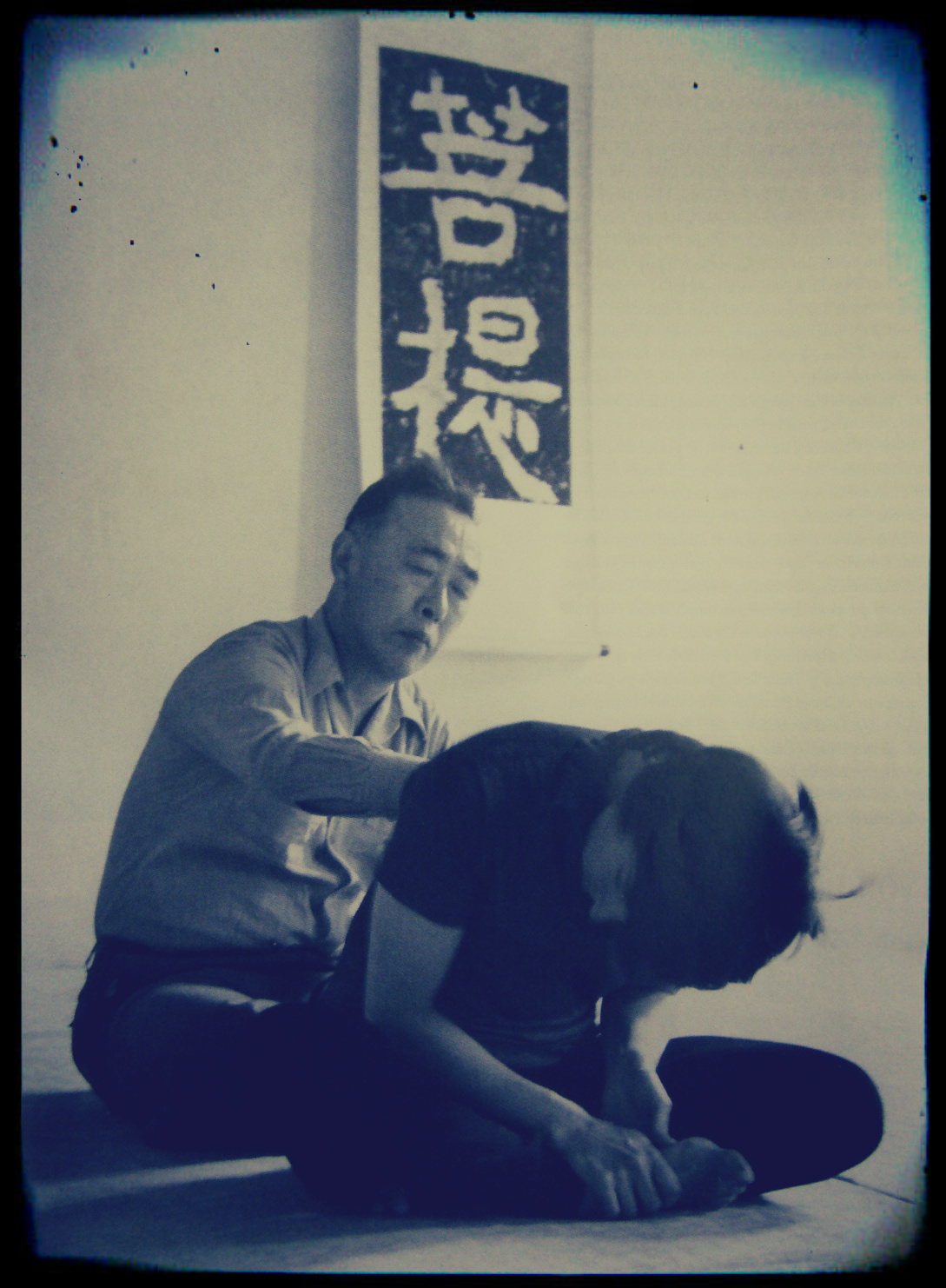
— Can one ‘fusion’ respiration and visualization?
— Indeed, visualization is one of the aspects of ki. Visualization plays an important and vital role in aikido. It is a mental act that produces physical effects. Visualization is part of the aspect of ‘attention’ of ki. When attention is localized, for example it stops at the wrist, breathing becomes shallow, disrupted… we forget the rest of the body.Read more

With the Philosopher of Ki #1
This coverage was published in the journal Question de [Topics of] in 1975. Claudine Brelet (anthropologist, international expert and a French woman of letters) who wrote this press coverage and did the interview and was one of the first students of Itsuo Tsuda.
First Part

At the fringes of Bois de Vincennes, in the rear of a garden in the suburbs of Paris, there is a particular At the fringes of Bois de Vincennes, in the rear of a garden in the suburbs of Paris, there is a particular dojo. Dojo, meaning, a place for practising the Art of breathing and martial arts. It is not a gym. It rather is a sacred place where ‘space-time’ is different from that of a profane place.We salute when we enter to sanctify ourselves and when we leave to desacralize.Read more

Itsuo Tsuda’s Calligraphies #1
Régis Soavi tells us his discovery of Master Itsuo Tsuda ’s calligraphies.
When I began to teach aikido, like many people, I had a photo of Master Ueshiba in the tokonoma. That was the way I had been taught, bowing in the direction of the master. When I went to Master Tsuda’s dojo for the first time, there was a calligraphy, printed by a friend of his who was an artist, after an ancient stone engraving. It was Bodai. This calligraphy was there, when I had expected to see a photo of Master Ueshiba… Moreover the lines were thick… – 8 cm, that is very thick! – And it resonated in a different way, it had another respiration…It is another dimension. And seeing the calligraphy at each session… makes things change completely.Read more