The story begins with the publication of Manon Soavi’s book in 2022. Unless… it actually began on 8 December 1967! On that day, Paris publisher Gallimard released Raoul Vaneigem’s The Revolution of Everyday Life1[The original French title translates more directly as Treatise on The Art of Living for The Younger Generations. All chapters are available online.]. Vaneigem was a writer (now the author of some fifty books), philosopher and historian specialising in heresy. An anarchist and Situationist, he was one of the leaders, alongside Guy Debord, of the Situationist International. His treatise The Revolution of Everyday Life would have a considerable influence on the rebellious youth of 1968 and the decades that followed. For some, it was a detonation that changed their world forever. Among them was Régis Soavi, seventeen at the time, for whom the book would remain a constant companion.
Years later, his daughter Manon also read it as a teenager, and when she wrote Itsuo Tsuda, The Anarchist Master, Raoul Vaneigem’s ideas were not only cited but permeated the book.
When the book was released in 2022, Manon met filmmaker Sandra Blondel at a bookshop event. Blondel was finishing a documentary film chronicling the Zapatistas’ “Journey for Life” – a journey that celebrates, in its own way, the indigenous peoples’ entry into resistance five hundred years ago during the Spanish conquest of Mexico. The Zapatistas are making the reverse journey to rename the Old Continent ‘Unsubmissive Land’ with a message to Europeans: ‘Wake up!’
Sandra is very enthusiastic about the book The Anarchist Master and sends it to Raoul Vaneigem, whom she knows, as he is in close contact with the Zapatistas.
A few months later, a Chilean anarchist, whom we shall call R. B., dropped in on Raoul Vaneigemand came across the book. He did not really speak French, but the title caught his eye and Vaneigem said to him, ‘This book is for you; read it.’ A few months later, R. B. had read the whole book and visited Tenshin dōjō for a meeting with Régis Soavi sensei, Manon Soavi and a few members. Following a discussion lasting several hours, an aikidō session and a great deal of enthusiasm, plans were set in motion to publish part of the book in Spanish for distribution in South America and Spain.
Today we are delighted to announce that the book was published in March 2026. It has the immense privilege of a foreword written by Raoul Vaneigem. What a fascinating loop of time!
As you will see, this text is a “non-foreword” entirely worthy of an anarchist of his calibre, and we are pleased to share it with you.
I have always believed that a book that stands on its own has no need for a preface. In truth, its richness lies precisely in the echoes it awakens and which, in turn, stimulate the reader’s consciousness.
Dissociating the social from the existential is a practice that originated in the first hierarchical collectivities which, succeeding pre-agrarian civilisations, were populated by exploiters and exploited, dominators and dominated, masters and slaves. It continues today through intellectual work, which reigns in the name of the Mind over a body forced into manual servitude. A split has occurred between the body mechanised by work and the body whose sensitive intelligence is attentive to its vital impulses.
While propaganda, dismayed by a Profit rate in dire straits, pushes us to take refuge and confine ourselves in fear, regression, and dehumanisation (assimilated by petty journalists as a form of fascism), no one is immune, consciously or unconsciously, to a kind of alchemy of the Self in which – as health deteriorates – grows the feverishness to restore balance amid the imbalance that plagues the world over.
This struggle is not new. It is none other than the debate and dialogue with oneself that has for thousands of years pitted the desire to live against the necessity to work in order to survive.
What is new, however, is the threat of annihilation that the implosion of capitalism poses to the Earth and to all living things.
Until recently, religions propagated their share of pathetic consolations. Their death throes are no longer enough to resurrect Gods whose remains have been wrung dry by an economy that created them in the image of the first tyrants.
No human being has ever been so alone with themselves. But, paradoxically, it is an extremely populated loneliness. The torch of protest that is being lit everywhere is radically different from the uprisings of the past. This is the first time we have seen insurrectionary movements without chiefs, without leaders, without the intervention of political and trade union apparatus.
This is not the class struggle that the bureaucratic labour movement of the past liquidated. Strictly speaking, there is no longer a class struggle, but the project of a classless society is at the heart of spontaneous revolutions whose often futile pretexts can no longer hide the fact that these are truly insurrections of everyday life.
Drawing by Beatriz Aurora, a painter born in Chile to Spanish Republican parents in exile. She is involved with the Zapatista movement. The drawing features on the cover of Raoul Vaneigem’s book _Acracy and self-management_
These are mass movements that do not make a clean break with the past. They will reconnect with the most radical tendencies that brutal repression and official propaganda have broken off. For consciousness always re-emerges from ignorance. Nothing will prevent us from learning from our failures. The Paris Commune, the workers’ and peasants’ councils of 1917, the Spanish libertarian collectivities of 1936 and the timid attempts at self-management in May 1968 are just waiting to be taken further.
The individual aspiration for happiness is about to fuel the desire for a new society as never before. There is a tendency to no longer obey ideologies which, in any case, are mired in total political confusion. As left-wing clientelism sinks into ridicule, existential reflection, reflection on happiness, is growing in importance – a sensitive importance –, its perception both clandestine and public. Within it, the awareness of a reversal of perspective is maturing. By this I mean the shift from a perspective of death to a perspective of life.
Consciousness will have taken a great leap forward in human evolution when our dialogue with the universal life power is conducted from me to me, as in the alchemy that takes place every moment when my choice wavers between a reaction of life and deadly lethargy.
The impulse of love gradually awakens from the weariness caused today by boredom, mediocrity, distress, and hatred of oneself and others. The option arising from an alchemy of the self where the discomfort of survival calls for a transcendence that is nothing other than life itself is a gamble. It is here that human evolution truly resumes its course, in opposition to the option of death, of which the “self-made man” is the perfect representation.
The self-made man, whom the United States has elevated to a model of inhumanity, is a product promoted by the fanaticism of John Calvin. Calvin identifies God with a protective and dynamic economy. The God of the evangelists places a benevolent hand on the shoulder of those who reap profits and withdraws it unceremoniously the moment they lose them. Misfortune condemns the “failed” one, signifying that they have failed in their divine duties. The collapse and disintegration of capitalism now ridicules what passes off for the triumph of a capitalism from which anti-capitalism has yet to learn its lesson.
Individual autonomy is only just beginning to take up arms against individualism. Those addicted to Power want us to cry out our forlornness in a vast desert of incomprehension. In reality, it is their own loneliness that terrifies them. Once the cardboard shell of the roles they have taken on is pierced, they find themselves on the edge of the black hole of their non-existence. Behind the scenes of oblivion, they are confronted with their gasping remains.
We have the advantage over them in knowing that our struggle stems from a life where there is nothing to lose, nothing to gain. The intimate presence of a universal heart fills us with a multitude whose flashes of insurrection hail the rebirth of mutual aid.
There is no supreme being other than the human being in the making.
When we talk about self-mastery, the first image that usually comes to mind is that of an individual rising to mastery, to unalterable calm. Those who are masters of themselves are detached individuals, dominating their passions and emotions much as one dominates nature and subordinate beings. Seen in this light, self-mastery is an idea borrowed from Kantian philosophy: man, detached from the world, freed from the bonds that constrain him, is no longer affected by emotions and, by becoming his own “ideal of freedom”, no longer feels himself or the world around him. In the West, our philosophy, history and religions lead us to view self-mastery in this way. Moreover, we teach children to control themselves through willpower, and those who fail to do so are considered weak. The warrior ideal that deeply permeates our culture sees no other choice than to be dominant or dominated, whatever the subject.
I totally agree that Heijoshin, self-mastery or inner calm, is fundamental, not only in the practice of martial arts but also in life in general. However, I am interested in another way of achieving this state of Heijoshin. Just as courage is not the absence of fear, Heijoshin may not be the absence of emotions and sensations either.
Manon Soavi
Returning to the root
This other path can be described as reverse path, or returning to the root. This path is a descent into the depths of humanity, towards darkness. A journey that connects us to ourselves and our sensitivity and, because it places us at the centre of the universe, it centres us on ourselves in relation to the surrounding life. Self-mastery is then not a question of control, a “power” over oneself or others, but the rediscovery of ‘the power within’, as theorised by author Starhawk1cf. Starhawk, Dreaming the Dark: Magic, Sex, and Politics, 1982, Beacon Press (Boston) [French trans.: pouvoir du dedans]. Thus, seeking Heijoshin is not about keeping at a distance what disturbs us, others, etc., but rather accepting the interdependencies of living beings and even “kneading” them through the physical experience of sensation.
Aikidō, beyond the always present martial nature, is a physical practice that brings us to this attention to reality through learning by way of the body. We live and experience directly what passes through us and seek how to remain centred. Ueshiba O-sensei said, ‘I am the centre of the Universe.’2[See e. g.Ueshiba Morihei, The Art of Peace, Shambala Publications (Boston & London, 2002), p. 11 & 20. Or also Tsuda Itsuo, The Science of the Particular, Chap. XVIII, 2015, Yume Editions (Paris), p. 148, or (same author & publisher) The Way of the Gods, Chap. XIII, 2021, p. 101 (1st ed. in French: 1976, p. 132; 1982, p. 96)] I understand this in a non-dualistic sense, where there is no opposition between me, a small individual, and the immense world. I am the centre because the world is the centre. Tsuda Itsuo sensei often addresses the question of inner calm in his books, as here:
Calligraphie de Itsuo Tsuda “Unis ton souffle dans l’indifférencié”
‘The dualistic solution may be compared to chasing away a black cloud with another black cloud. It is valid insofar as it does not bring in other clouds on either side as reinforcements and finally obscure the whole sky. The non-dualistic solution is to see there is blue sky above the clouds.
To see blue sky where there isn’t any is impossible. It’s mad. It’s crazy.’3Tsuda Itsuo, The Dialogue of Silence, Chap. I, 2018, Yume Editions, p. 16 (1st ed. in French: 1979)
Others have expressed the need to feel what binds us, not as shackles, but on the contrary as the capacity for ‘Perceiving life in all things’, as Noguchi Hiroyuki said, or even Laozi:
‘While all things are simultaneously developing,
I can observe their cycles.
Though everything is flourishing, each will return to its root,
Returning to the root means stillness’4Laozi, Tao Te Ching, Chap. XVI, trans. David Hong Cheng (2000)
This inner tranquillity is not a New Age idea, or something for eco-friendly hipsters who go to recharge their batteries for half a day in the forest. It is not about always being “cool”. It is something concrete that is discovered through practising and deepening breathing.
Perceiving reality
When confronted with reality, humans tend to struggle, overwhelmed by feelings of injustice, or to submit, overcome by discouragement. Some still want to control everything, but is that really possible? However, facing reality is not as easy as we think, even if we all imagine ourselves doing so. Often, we create our own “drama” by feeding a narrow, emotionally biased view of reality.
The ancient Taoists were not mistaken; they did not take this ability for granted and had a practice for cultivating the perception of the world, which they called mingxin5[Chin. míng xīn 暝心. This paragraph paraphrases Monica Esposito, La Porte du dragon [The Dragon Gate], PhD Thesis, Université Paris VII, 1993, Introduction, p. 70, 2d parag. See also Chap. III, 2. The Secret of…, 2. Preface to…, (xii) Third stage…, pp. 216–7.], “darkening the heart”. Mingxin refers to the twilight hours, those magical moments before sunrise and sunset. In these moments, light spreads evenly and offers an equal view of everything around us. Contours fade away and we see things as they are, with no more emotional judgement. Darkening the heart means putting oneself in this state of mind, this emptiness of spirit, in order to feel-see reality and let Non-Doing take effect. Tsuda sensei spoke of this in relation to Katsugen Undō (Regenerative Movement):
‘Now, concentrated exhalation aims specifically at silencing those people whose heads buzz with ideas, often disparate and confusing, to introduce them to the world of sensation. The usual assessment criteria, such as physical beauty, details of clothing, intellectual ability, finances, social class, etc., must give way to something more intrinsic: biological speed through breathing. […]
[…]
How difficult it has become today, this scaling down to less and less! We surround ourselves with thick layers of facades to protect ourselves from others: arrogance, possessiveness, snobbery to set ourselves apart from others, begging familiarity, the need for tenderness, eccentricity to attract attention, aggressiveness, worship, the desire to dominate, etc. It is difficult to list all the features we notice in others and not in ourselves. Life is suffocating.’6Tsuda Itsuo, One, Chap. XIII, 2026, Yume Editions, pp. 100–1 (1st ed. in French: 1978)
Rather than letting our life suffocate within us, we can make way for it, give it priority over everything else. Practising Katsugen undō is one way of doing this. Similarly, the short moments of daily meditation included in the respiratory practice that begins all our Aikidō sessions can be likened to mingxin. Early in the morning, in the calm of the dōjō, the heart calms down and the breathing slows. We are no longer struggling for control; it is a special moment when we can integrate reality with greater calm and feel that we are the centre of the universe.
My father, Régis Soavi, a student of Tsuda sensei, who has been teaching for fifty years, is also my Aikidō sensei. My education with a father who was an Aikidō teacher, a libertarian spirit, a feminist before his time and a great lover of Zhuangzi, consisted more of working on awareness of reality as it is: uncontrollable. He taught me that it is our inner positioning that changes, not “Reality” itself but the point from which we interact with it, which in turn changes the reality around us. This is the action of Non-Doing or Non-Acting, this ‘mode of activity’7[definition proposed by Jean François Billeter (his original term is « régime d’activité »), see his Études and Leçons sur Tchouang-tseu [Studies and Lessons on Zhuangzi] published by Allia (Paris)] as sinologist Jean François Billeter calls it, which is so difficult for Westerners to understand. Letting go of our judgements and preconceptions, and rediscovering inner calm, which lies within us but which we – too agitated and anxious – often forget. Then, curiously, unexpected possibilities for action appear.
Our compass: sensation
If self-mastery is not the transcendence of the body by the mind, nor separation and insensitivity, it is clear that it does not mean being overwhelmed by emotions and sensations. On the contrary, it means accepting them as part of life, feeling them and letting them flow in order to maintain inner calm. In the practice of Aikidō, this is very evident when we allow ourselves to be overwhelmed by fear, the will to win, or other emotions. With training, we immediately sense that we have lost this calm; we are no longer “empty”, even if our technical mastery allows us to overcome the attack.
Far from the idea of technical mastery or control that allows us to “deal with reality”, the philosophy of Tao goes in the same direction, valuing intuition, mental emptiness and the ability to adapt, which allow us to harmonise with the situation: ‘If we understand how to harmonise, the body will be calm, and if the body is calm, the world will be in order. It is akin to the response of an echo (xiangyin). That is why, if we are able to achieve a moment of purity and harmony, it will be a moment of true, effective Virtue [or Regime of activity].’8The Dragon Gate (op. cit.), Chap. III, 5. Alchemical Pratice…, 7. Two texts…, (i) The Ten Rules of…, p. 345
I experienced this while performing as a concert pianist for over ten years. If I was afraid throughout the concert, even when my performance was correct and I had sufficient mastery of myself outwardly, my interpretation suffered, and my relatives in the audience could sense my stress and were unable to enjoy the concert. If there were no stakes, no stress at all, I could lose my concentration and make silly mistakes. On the contrary, when I managed to be truly calm inside, with just the right amount of stage fright to maintain my concentration and stamina during the concert, then my perception and that of my relatives were completely different, “the world was in order”.
The stage
It was during my years as a concert pianist that I had my most revealing experiences of self-mastery. Beyond technical mastery or knowledge of the work being performed, the stage experience is quite paradoxical. Everything is prepared and rehearsed, sometimes for months, yet the element of the unexpected remains paramount. During my music studies, I specialised in accompanying singers and chamber music, areas where ultimately the most important thing is the present moment and coordination with other musicians. It is undeniable that, at the same level of pianistic skill, it was my ability to merge with others that was appreciated by my peers. I was not only “listening” for any discrepancies with the others, they felt that I was anticipating what was going to happen. I know that this ability comes from my practice of Aikidō since the age of six and from my search of seeking harmony with the partner. My inner calm allowed me to remain open, to perceive what was happening outside without being overwhelmed by emotions. I felt them, but I was not disturbed by them. Most of the time, at least!
Manon Soavi au piano
Some experiences have been more powerful than others. Those of a successful concert in a beautiful hall are obviously very powerful, but when it comes to self-mastery, it is often the less successful experiences that reveal what we are capable of doing or not doing. Like the time I performed excerpts from Mozart’s opera Cosi fan Tutte. The performance was for secondary school pupils, in the school gym. The “piano” provided for me was actually an electric keyboard placed on trestles. We quickly realised that in order for the singers to hear me, the speakers had to be turned up to full volume, but that meant I could barely hear the singers myself. During the performance, the keyboard shook on its fragile legs, to such an extent that the large and unstable score on the small music stand threatened to fall off throughout. I also had to wedge the pedal, which was connected only by a wire, as it kept sliding back on the floor, moving further and further away from my foot. Other times, two pages of the score were turned instead of one, or the singer himself skipped two pages. In all these circumstances – which are quite disastrous for the quality of a performance –, even though my stress level was high, I did not panic, but simply looked for what I could do to be back with the others, in the right place at the right time. Time stretched out, like when you have an accident and see yourself falling, but at the same time you act to catch yourself.
Changing your perspective
Changing your perspective is not easy and requires not only physical practice, but also addressing symbols. As Carol Christ explains: ‘Symbol systems cannot simply be rejected; they must be replaced. Where there is no replacement, the mind will revert to familiar structures at times of crisis, bafflement, or defeat.’9Carol Patrice Christ, Laughter of Aphrodite: Reflections on A Journey to The Goddess, 1987, Harper & Row (San Francisco), p. 118 This is why we may need to evoke an incarnation other than the detachment of the heroes who have accompanied us for centuries.
A figure such as Kannon, “her who contemplates the sound of the world”, seems interesting to me for this purpose. This ancient goddess, worshipped in India and China under other names, became over time a bodhisattva and a Taoist goddess. But above all, she is the survival of much older matrifocal beliefs10see the works of Heide Göttner-Abendroth and Marija Gimbutas, where she represented an active inclusive principle. In her original meaning, she evoked this capacity for unification, this absence of duality between myself and the world, between subject and object. Thus, we are both receivers and transmitters of this tranquillity. It is perhaps in this sense that O-sensei Ueshiba said: ‘Attackers, whether there is one or many, it does not matter, I put them all in my belly’.11Tsuda Itsuo, private conversation with Régis Soavi. [See also The Dialogue of Silence (op. cit.), Chap. XI, p. 94 (‘Ueshiba. “I do not look others in the eyes; I do not look at their technique, their manner. I put them all in my belly. Since they are in my belly, I do not need to fight with them.’) and Heart of Pure Sky (same author and publisher), ‘Interviews on France Culture radio’, ‘La matinée des autres’, 2025, p. 46 (‘this is what Master Ueshiba said: “when there are a lot of people it doesn’t matter, I put them all in my belly”.’)]
[See e. g.Ueshiba Morihei, The Art of Peace, Shambala Publications (Boston & London, 2002), p. 11 & 20. Or also Tsuda Itsuo, The Science of the Particular, Chap. XVIII, 2015, Yume Editions (Paris), p. 148, or (same author & publisher) The Way of the Gods, Chap. XIII, 2021, p. 101 (1st ed. in French: 1976, p. 132; 1982, p. 96)]
Laozi, Tao Te Ching, Chap. XVI, trans. David Hong Cheng (2000)
5
[Chin. míng xīn 暝心. This paragraph paraphrases Monica Esposito, La Porte du dragon [The Dragon Gate], PhD Thesis, Université Paris VII, 1993, Introduction, p. 70, 2d parag. See also Chap. III, 2. The Secret of…, 2. Preface to…, (xii) Third stage…, pp. 216–7.]
6
Tsuda Itsuo, One, Chap. XIII, 2026, Yume Editions, pp. 100–1 (1st ed. in French: 1978)
7
[definition proposed by Jean François Billeter (his original term is « régime d’activité »), see his Études and Leçons sur Tchouang-tseu [Studies and Lessons on Zhuangzi] published by Allia (Paris)]
8
The Dragon Gate (op. cit.), Chap. III, 5. Alchemical Pratice…, 7. Two texts…, (i) The Ten Rules of…, p. 345
see the works of Heide Göttner-Abendroth and Marija Gimbutas
11
Tsuda Itsuo, private conversation with Régis Soavi. [See also The Dialogue of Silence (op. cit.), Chap. XI, p. 94 (‘Ueshiba. “I do not look others in the eyes; I do not look at their technique, their manner. I put them all in my belly. Since they are in my belly, I do not need to fight with them.’) and Heart of Pure Sky (same author and publisher), ‘Interviews on France Culture radio’, ‘La matinée des autres’, 2025, p. 46 (‘this is what Master Ueshiba said: “when there are a lot of people it doesn’t matter, I put them all in my belly”.’)]
Manon Soavi is an aikidōka and martial arts teacher in the Itsuo Tsuda School in Paris. Her entire childhood was steeped in the philosophy of Non-doing developed by Itsuo Tsuda, whom her parents met in the 1970s. This philosophy, along with the practice of Aikidō and Seitai (the Regenerative Movement), became an integral part of their daily lives. Manon Soavi never attended school, and began practising Aikidō at the age of six and studying classical piano at the age of eleven. As an adult, Manon Soavi complemented her martial arts practice with Japanese sword and jūjutsu; she also worked as a concert pianist and accompanist for over ten years. At the same time, she began teaching Aikidō and the philosophy of Non-doing herself. Today, she devotes herself entirely to passing on this knowledge.
Listen to the podcast here [in French] or read the [English] transcript below:
Would you like to hear about the next article?
Subscribe to our newsletter
LV: Hello Manon Soavi.
MS: Hello.
LV: I am delighted to welcome you for the publication of your book Itsuo Tsuda, The Anarchist Master — The Art of Living Utopia, published by L’Originel. For you, the practice of energy and martial arts leads to something more, as it prompts you to reflect on and take a stance on the functioning of society itself. This is what we will discover throughout the programme. First of all, I would like to ask you to introduce yourself.
MS: Thank you for having me today. I often say that I am like Obelix: I fell into the pot when I was little, since my parents began this journey before I was born.
It started with the May 1968 revolts and the questioning of systems in the 1970s. Then their encounter with Itsuo Tsuda enabled them to truly implement and experience in their bodies and sensibilities a different way of looking at the world, at life and at human relationships. It was a turning point for putting all these ideas into practice, all the turmoil that surrounded those years: anarchists, situationists, all those thinkers who questioned the modern world. And these thoughts that nourished them found a very strong echo in Itsuo Tsuda. This encounter changed their way of life, their way of being – gradually, it was a journey.
When I was born, and then my sister three years later, something obviously continued in terms of the relationship with the children and the pace of life. In other words, there was no question of them having come all this way towards liberation, this journey to break free from these systems of domination, only to let their children start again from scratch. That’s why it was only natural that neither my sister nor I ever went to school. That’s fundamental. Because not going to school allowed us to have a very different life, a kind of continuum between childhood, adolescence and adulthood, without these separations, these boxes, these categories of child | man | woman | work | leisure – everything was intertwined. And the philosophy of Itsuo Tsuda, the philosophy of Non-Doing, the importance of the body, of the subconscious, all of that was present, omnipresent in our daily lives.
Manon Soavi on AligreFM radio (93.1)
LV: Yes, we will develop all that. You are Sensei Régis Soavi‘s daughter. Your father was a student of Itsuo Tsuda for ten years. He has been teaching Aikidō for over forty years...
MS: Fifty years now, actually.
LV: Oh, right! And could you… So I imagine it was Itsuo Tsuda who brought him to this level?
MS: My father started jūdō when he was young, at the age of 12, and pursued it for a while. Then he started Aikidō, practising with several Aikidō masters, including Master Noro and Master Tamura. He had a long journey in Aikidō… and one day (in 1973) he met Itsuo Tsuda. Itsuo Tsuda was someone who completely reoriented his practice of Aikidō. Moreover, the discovery of Katsugen Undō – which translates as Regenerative Movement – was another dimension that, too, changed the nature of my father’s Aikidō. Itsuo Tsuda became his master, the one he followed for ten years, until his death. Shortly before Itsuo Tsuda‘s death in 1983, Régis Soavi decided to move to Toulouse and open his own dōjō. Itsuo Tsuda agreed and encouraged him to continue on his path. Since then, he has continued to teach every morning for 50 years. Every morning, he teaches Aikidō. And to introduce people to Katsugen Undō.
Régis Soavi
LV: Very well, yes. I was lucky enough to have this experience with you. So now we’re going to talk about Itsuo Tsuda‘s unique journey. And first, we’ll talk about his influences. Who was he? And perhaps we can start by talking a little about the beginning of everything in energy, which is the Tao. So who was he, and what was his journey?
MS: Itsuo Tsuda was born in 1914 into a Japanese family living in Korea. Korea was occupied by Japan at the time. It was a very rigid, harsh, militarised, colonialist society. At the age of 16, Itsuo Tsuda refused the right of primogeniture. He opposed his father quite violently, since he left home. He left everything behind at the age of 16 and went wandering, as he said. He travelled through China. And finally, in the 1930s, he had only one desire: to visit France. In my opinion, he had already been exposed to anarchist ideas in China through publications, and this had already made an impression on him. But when he arrived in France in 1934, it was the time of the Popular Front, a period of significant social change in France, the scale of which has been largely forgotten today, and when the anarchist movement was very strong.
These years in Paris were extremely important for Itsuo Tsuda. He studied under Marcel Granet and Marcel Mauss at the Sorbonne, studying sinology and sociology. These researchers had a profound influence on his thinking and his understanding of the world and different cultures. When the war broke out, he was forced to leave for Japan. At the age of 30, he discovered his country during the Second World War. This was also a major upheaval. He would have liked to stay in France, where he still had a whole journey ahead of him. But life decided otherwise.
After the war, he immersed himself in his own culture, which he ultimately knew little about. He discovered Noh theatre and then Seitai, with Master Haruchika Noguchi, and spent the last ten years of Master Ueshiba‘s life studying Aikidō. This journey, with these discoveries of a culture where the body is not separate from the mind, where there is this feeling of life in everything, where things are not inert matter, are not separate, as much the body as the mind, nature, ourselves… We are a whole. And this is a discovery of a way of thinking that he had already approached, through ancient China, through Marcel Granet. And his research on anthropology, which he continued all those years in Japan – he translated Marcel Granet‘s The Religion of the Chinese People, he was the first translator into Japanese, it was really something he explored in depth. And this discovery of Taoism – he is a great connoisseur of Chuang Tzu.
But Japan was also closed off for 200 years. This explains why they have preserved traces of a much older, much more fundamental culture, which continues to be expressed in traditional arts.
LV: Yes. Very interesting. So, I’m going to read a passage from your book and then we’ll take a musical break, which will give you time to think about the question. Regarding the Tao, which he is interested in:
‘ “In this initiatory geography of the Dao [Tao], there is a dark threshold represented by the bottom of a mysterious valley.” The Dao De Jing expresses this in a vague and poetic way: “The spirit of the valley does not die. It is the Dark Female, […] this is the origin of heaven and earth. Indiscernible, it always seems present and never runs out within us.” Gu Meisheng explains that this is a figurative way of talking about the active aspect of the void, which he explains in these words: “The valley is both an empty and sensitive place that echoes sounds. The valley is empty, but when we shout, the echo answers us. Such is the nature of the dao. The dao is therefore a void of extreme sensitivity.” ’
We listen to Dead of Night by Orville Peck.
MS: In this excerpt you read about the Tao, Master Gu Meisheng explains it very well. Only poetry can truly convey something that cannot be expressed in words.
You are probably familiar with the Zen story about a Zen master in a monastery who asks one of the monks to clean the garden… So the monk rakes and rakes and cleans until everything is spotless, then goes to see the master and says, ‘There, it’s done.’ The master arrives, looks at it and says, ‘Do it again.’ So the student starts again, cleaning everything thoroughly, impeccably, and returns to the master and says, ‘There, it’s done, master.’ So the master comes and says, ‘That’s not right,’ and leaves. The student is starting to get fed up. So this time he leaves a small pile of dead leaves. He returns to the master and says, ‘It’s done.’ When the master arrives, he looks and says nothing. Well, that’s what the void is: the void is active. We cannot define it definitively. But it’s true that it goes completely against our philosophy, against the way we see the world today in the West, which has spread throughout practically the entire world.
This is exactly what Tanizaki lamented in In Praise of Shadows. We have this idea that everything must be brought to light, everything must be dissected, there must be no grey areas, there must be no unknowns, everything must be explainable by rationality. Except that when we dissect a human body, an animal body, whatever, the essential is no longer there anyway. There will always be that essential that escapes us.
And in my opinion, this is completely in line with the analyses of some ecofeminist thinkers, or also Mona Chollet, who talk about this whole aspect that is unknowable by rational science, but which can be felt, experienced, which is something that human beings know, to which they have a very strong connection. Ecofeminist thinkers try to deconstruct our understanding of the world to show that rationality may not be on the side we think it is, that it may not be about dissecting everything, approaching everything from the most rational angle. Perhaps there is a whole that completely escapes us, a relationship with the Earth, a relationship with living things, perhaps even a relationship with the obscure, with the body, with all those things that we have denigrated, relegated, crushed, and that we need to revalue or rediscover.
LV: Yes. Mystery is very important, it is very precious. So here we come to the principles of martial arts: cultivating sensitivity and attention. Remaining attentive to biological speed, which requires intense concentration. I took that from your book. So we were talking about gyō in the influences of this master…
MS: Yes, so Itsuo Tsuda found in the body practices of seitai and Aikidō this embodiment, this possibility of feeling. He found the dimension of ki and breathing. Gyō is a term that is often translated as asceticism1[see also shugyō 修行 (ascetic practices), gyōja 行者 (ascetic person) and their fusion shugyōja修行者]. Except that the difference between Western asceticism is that we seek to leave our bodies through practices, to no longer feel, to extract ourselves from the body. Whereas in gyō, in the ascetic practices of Asia or even in India, at least in certain branches, on the contrary, we seek unity, the reunification of mind and body through ascetic practices. These ascetic practices influenced Me Ueshiba in particular, who passed on some of them through Aikidō. Through Aikidō, we can see a possibility of rediscovering this connection, this wholeness of being.
LV: You mentioned seitai again, and the regenerative movement. Perhaps you could enlighten us a little on this.
MS: Seitai was developed by Mr Haruchika Noguchi in the 1950s. It focuses on what makes each individual unique and indivisible, and on their innate ability to balance themselves in order to maintain their health. It is the unconscious movement of the body.
Among Seitai, which could be described as a philosophy, an understanding of human beings, there are several techniques and practices, including Katsugen Undō, which Itsuo Tsuda translates as Regenerating Movement, and it is precisely this aspect that interests Itsuo Tsuda: Regenerating Movement. It was this aspect of Seitai that he chose to pass on in France in the 1970s. He was interested in it because, with his personal orientation, his philosophy, his search for freedom for himself and others, this search for freedom and autonomy, he saw in Katsugen Undō a way to reactivate the body’s own means of regaining balance. No longer depending on an expert, an external practice, the opinion of a master or anyone else.
That’s why I compare it to what Ivan Illich called ‘convivial’ things, which are tools that anyone can use, no expertise required, and that’s fundamental to Itsuo Tsuda.
LV: Yes, it reminds me of how we work with that dimension in Qi Qong. We work with these dimensions of self-medication that are the body.
MS: Mr Noguchi said that we never stopped with the ‘you must’ and ‘you must not’, with external instructions, and since the 1950s, this has only gotten worse. Today, we must eat five fruits and vegetables a day, we must drink a litre of water, we must eat but exercise, we must do sport, but not too much… we are constantly bombarded with external injunctions…
LV: That’s true.
MS: And we forget our own biological needs, which depend on the day, the moment, lots of things, and which are not the same for us, for my neighbour, for my child; everyone has different needs and the only compass is ourselves. Rediscovering the ability to sense whether we want carrots or chocolate, whether we’ve eaten enough or not, is quite simply the beginning of autonomy.
LV: Absolutely. So now let’s talk a little about Ki, which is called Qi in China, for example. You write, ‘Ki defies any attempt at categorisation,’ said Itsuo Tsuda, who explained this many times. Here in the West, Ki is very difficult to explain because it does not fit into the system of categories. And you give this example: feeling observed.
MS: Depending on the circumstances, Ki can be translated as intuition, atmosphere, intention, vitality, breathing, action, movement, spontaneity… it is something fluid that cannot really be defined. Itsuo Tsuda also said, ‘Ki dies on taking form’2[see The Path of Less, Chap. IX (end), Yume Editions, 2014, p. 87. But it is something that can be felt. It is a concrete experience. He gave this example: you are walking down the street and suddenly you feel it. You feel that you are being watched, you turn around… perhaps you find “someone” watching you from behind a curtain. Maybe it’s just a cat, but either way, you felt it. You sense the intention. Obviously, in martial arts, we use it to sense the ki of aggression, of danger. That’s one form. But we can also sense the ki of danger for other reasons. Conversely, we can sense a welcoming ki, we can sense an atmosphere. We feel good in certain places. And in certain places, we feel extremely uncomfortable.
LV: And even with people. For me, there are friendships, loves of ki.
MS: Absolutely. There are people who give off something.
LV: You immediately feel at ease, immediately comfortable, because that qi – I would say qi or ki, it doesn’t matter – speaks to mine (laughs).
MS: Of course. Absolutely. The problem is that from childhood, from early childhood, we are taught not to listen to ourselves. Not to listen to our intuition, that thing that speaks to us. So unfortunately, by losing touch with ourselves, we forget that feeling a little.
LV: Very well, let’s think about that while listening to Hot Hot Hot by Matthew E. White.
LV: We’ve touched on this briefly, because it must be said that this book is very rich and I recommend it to you, but now we’re going to talk about Itsuo Tsuda‘s teaching itself. And I’m going to ask you first what he found in the practice of Aikidō by Me Ueshiba?
MS: He met Mr Ueshiba in the last years of his life. At the end of a lifetime of practice and research, Mr Ueshiba proposed an evolution of his art. He called it a path of love. I believe it is a powerful tool for human evolution. There is indeed gyō, ascetic practices, misogi, and various other things that fuelled his own research.
I believe that what fascinated Itsuo Tsuda was this master’s freedom of movement. Tsuda was already in his eighties, yet he had a freedom of movement that Itsuo Tsuda, who was forty, did not have; he already felt stiff. Through the practice of Aikidō, the daily practice of the first part, which Itsuo Tsuda called the respiratory practice, which is an individual practice with all kinds of movements that bring the body back to life, into movement, that deepen the breath, it is something that actually nourishes, that nourishes the life within us.
What is rather strange, or curious, is that even among rebels and revolutionaries such as The Invisible Committee, we find this sentence where they say: ‘the depletion of natural resources is probably much less advanced than the depletion of subjective resources, the vital resources that affect our contemporaries’. It is this exhaustion that is at issue, and it is a matter of revitalising internal resources, this root. Itsuo Tsuda said that he was there to propose ‘to revive the root’3[see The Unstable Triangle, Chap. I, 2019, Yume Editions, p. 15]. And I think that is what he also found in Aikidō.
In any case, that is what “this practice” taught him, that is what it gave him as a direction. Because here again, as with Seitai, where he took up Katsugen Undō, in Aikidō there were also more martial and other aspects that did not interest him, which other students of Master Ueshiba developed, each following their own path.
But what interested him was the aspect of breathing, the circulation of ki, this possibility through the body. That’s what struck him and that’s what he passed on in his school.
Itsuo Tsuda on the right, Régis Soavi in between, ca 1980
LV: It’s true that Master Ueshiba‘s aikidō is a great treasure and that some have developed their own path. And there is also Master Noro, who created a movement, an art of movement.
MS: Absolutely, yes.
LV: It is no longer a martial art but an art of movement. In fact, they were friends..
MS: Yes, absolutely. He knew Master Noro, who created Ki no michi, quite well. There was a big age difference, since Master Noro was a student of Master Ueshiba at a very young age, he was a live-in student, he was 17, 18 years old, whereas Itsuo Tsuda actually started Aikidō at the age of forty-five. And despite this big age difference, they had a lot in common, a fairly strong affinity.
The fact that Itsuo Tsuda started Aikidō so late also gave him the opportunity to acquire intellectual knowledge, as he also had a background in Sinology, to have these references because Mr Ueshiba spoke in a poetic, literary way, with references to mythology and Chinese culture. Itsuo Tsuda had a background, he was truly an intellectual, and he had the knowledge that allowed him to get into it. He was also the translator, the interpreter in fact at the beginning, and he continued to be the interpreter for Westerners who came to see Ueshiba. Like André Nocquet and others. So it was also a way for him to be very much in touch with Master Ueshiba‘s discourse, which he had to translate to make it understandable to these Westerners.
LV: Very good. So there’s another aspect that I found interesting about Master Itsuo Tsuda, which is ‘the mnemonic that consists of forgetting’4[see The Unstable Triangle (op. cit.), Chap. VII.
MS: (laughs) It’s about reconnecting with yourself, as he said. It’s about trusting our inner abilities, our own resources, and also our unconscious and subconscious minds.
We think that we are the ones who decide to do this or that, but in fact, 90% of our vital activity, if not 100%, is completely unconscious. We can’t speed up or slow down our heartbeat, except perhaps a few yogis, but most of the time we have no impact on our vital functions. And we have an illusion of control over ourselves, over nature, over others… we are completely under the illusion of control.
Instead of stressing out about ‘I mustn’t forget to buy milk on my way home’ – that’s stress, it’s the mind trying to remember. And we all know very well that most of the time we get home, put down our keys and say to ourselves, ‘Oh! I forgot the milk…’. Whereas Itsuo Tsuda says, ‘Visualise yourself getting off the tube and popping into the little supermarket next door to buy milk.’ Visualise this action, you can see it, OK? And now, forget about it, don’t think about it anymore.
LV: Thank you for that advice, which I will put into practice right away. So, what happens in the dōjō? The dōjō allows you to regain control over your body, and this extends to everyday life. Let me quote you: ‘The dōjō is one of those unique places where time passes differently, where the world stops for a few moments.’
MS: In our school, we have several dōjōs, which are places entirely dedicated to Aikidō and Katsugen Undō. They are not gyms, they are not sports halls, there are no other activities. They are places that are managed by associations. So people manage themselves, organise themselves. All members are responsible for their dōjō. There is no distinction between the dōjō on one side and customers on the other. Everyone is at home and at others’ homes at the same time. So it’s a space that’s a little out of time, out of this world, thanks to the direction Itsuo Tsuda gave it, and the direction that Régis Soavi, my father, has continued for 50 years, and which I myself am now trying to continue. To continue to provide this impetus. To make people understand that it’s possible to live differently.
LV: Yes, so the dōjō is the place where we come to practise the Way. I’d like to come back to this notion of martial arts, which cannot be something mechanical where the body is an object. So it’s much more connected to this dimension of breath. And therefore to spirituality. So your father recites a norito in the morning.
MS: Yes, and not just my father. We all begin the session with this norito, which is a recitation. To be honest, we don’t even know what it means. It’s a moment, a way of putting ourselves in another state, another frame of mind. Sometimes my father uses this example, talking about a Schubert Lied that is in German – and maybe we don’t understand German. Yet when we listen to it, something resonates within us. We feel it, we hear it, it’s inexplicable.
LV: Yes. There are vowels that are sacred, particularly in Sanskrit, and the sound and vibration really have an effect. So it comes from Shintoism. It is an invocation to the original gods. I will read an excerpt where your father talks about this:
‘Régis Soavi says: “The norito does not belong to the world of religion, but certainly to the world of the sacred in the animistic sense. The vibrations and resonance produced by the pronunciation of this text bring us a feeling of calm, fulfilment and sometimes something that goes beyond that and remains inexpressible. Norito is misogi. In essence, it is never perfect; it changes and evolves. It is a reflection of a moment in our being.” ’
So let’s think about that while listening to Shannon Lay‘s song Sure.
Itsuo Tsuda
LV: So today we’re talking about Master Itsuo Tsuda. And we’re talking about anarchism.
MS: Anarchism is a word that has become taboo. A word that is associated with violence and chaos. And in fact, we completely forget, we forget, and I would even say that it is surely done on purpose to detach it from what it was, from what anarchist philosophy still is. Anarchist philosophy is about self-organisation, self-management. It is order without power. It is simply a rejection of the domination of some over others. Ultimately, it is something that is not so unfamiliar. Even before the creation of states, let’s say around 3000 or 4000 BC, there were societies that were self-managed, and they existed for many thousands of years. And even after the creation of states, there were many places on earth that continued to be self-managed, with various ways of functioning.
There are a number of historians and researchers, such as Pierre Clastres and David Graber, who have conducted research and shown that all kinds of social organisations exist. What is certain is that even if there is a leader, the leader’s role is not one of coercion, it is not to direct others. It is often a mediating role, someone who has to find a way to organise things but who does not decide anything alone. The leader cannot give orders to others. Anarchism is about rediscovering this individual power and something that is being organised with others.
Anarchist movements have been very powerful. There have indeed been a few acts of violence that have been blown out of proportion in order to discredit the movement, to discredit a whole rich and complex body of thought. There is not one form of anarchism, there are many. And this is something that greatly influenced the thinking of Itsuo Tsuda, including the thinking of my father, Régis Soavi. This search for freedom, not only inner freedom, of course, but also freedom with others.
In the dōjō, it is really a question of taking charge of all aspects of our existence. Therefore, it is important to understand that this is not a matter of freedom that is detached from reality. Aurélien Berlan contrasts the fantasy of deliverance, where we would be freed from all material contingencies, but obviously freed alongside other people who are slaves, whether they be energy slaves, technological slaves or other dominated people. So, as opposed to the fantasy of deliverance, he talks about the quest for autonomy. Taking back control of our own abilities in all aspects of our lives. This obviously ties in with subsistence feminists, who also talk about this very important aspect of reclaiming all aspects of our lives.
And that’s what we’re looking for in a dōjō. In ours, at least, there is obviously the practical aspect of the body, but there is also the fundamental aspect of this organisation, of breaking out of a relationship where we arrive, we are customers, we pay and we want something in return. We are all involved, we are all working to keep this dōjō alive so that the place exists, for ourselves. It’s not about saying we have to do it for others, I’m sacrificing myself… not at all. Each of us does it for themselves but in collaboration with others.
Dōjō Scuola della Respirazione, Milan
LV: Yes, what I find really interesting about this path – and here we find, as you mention in your book, things in common with the Kogis in particular – is that ‘True morality arises from within’5[see Even if I don’t think, I am, Chap. X, 2020, Yume Editions, p. 76]. This work, this inner change, will lead to outer change. And you also say that the creation of the state has led to the dispossession of the creative values of the individual.
MS: Morality comes from within, as Kropotkin, the anarchist, says, as does Itsuo Tsuda, and indeed the Kogi people. It is not a question of having external rules, prohibitions, or injunctions, but of rediscovering the morality that makes us want to collaborate with one another.
There is also the notion of attentiveness. The Kogis live without leaders. But we live with domination. We are both dominated and dominant towards others. We cannot simply say, ‘Ah yes, this is freedom, we will do without leaders and everything will be easy.’ That is not reality. The reality is that we need to re-educate ourselves to understand the attentiveness and self-discipline that this requires. We need to rediscover both our power and our capacity for organisation.
Ultimately, there is a realisation that is somewhat similar to what Winona LaDuke says about Native Americans: they know they are oppressed, but they do not feel powerless. On the other hand, white people do not consider themselves oppressed, but they feel powerless. Well, that’s exactly it. We rediscover that ultimately we are dominated, we are dominant, but we are not powerless.
I think that was also the meaning of Itsuo Tsuda‘s statement, ‘Utopia exists nowhere except where we are.’6[quote from a 1975 letter written by Tsuda to Geneva dōjō (Katsugen Kai). See also The Way of the Gods, Chap. 1 & 2, 2021, Yume Editions] It is about rediscovering that power today and now. And I am here to say that it is possible.
LV: Definitely. (laughs)
MS: Even if it takes time! It’s not a magic wand. It’s something you have to work at, discover. It requires a journey within your body, as well as within your mind. There are philosophical tools, tools for intellectual understanding, and tools for breaking free from what we have fully integrated since early childhood. From early childhood, children are taught not to listen to themselves, not to say ‘no’, not to be themselves. So, we end up with people who internalise domination, and we have to work to break free from that, but it is possible. It is possible to follow this path and become at least a little bit freer.
LV: Yes, we are on that path anyway. So you talk about this culture of separation, particularly when you mention babies crying, saying that it is not particularly normal for babies to cry in other cultures. In Kenya, there is more of a culture of closeness and attachment.
MS: The culture of separation is a way of separating ourselves from ourselves, from our bodies, from our feelings, and obviously from each other. It means thinking that it’s normal to let a baby cry, to drag a child down the street who is screaming because they don’t want to go to school, that it’s normal, that life is like that, that in any case you have to ‘lose your life earning it’, as the 68ers said.
And yet, is that what life is all about? Isn’t it possible to refuse to play this game altogether? Can’t we rediscover that we are free inside ourselves? Of course, people will say to me, ‘Yes, but what about money? Yes, but there are debts… Yes, but we have to pay for this, that’s how it is, in life we have to suffer…’ – but who actually said that? Really? Why? In fact, maybe just, no. Maybe we feel like we have all these chains, and in a way we do, of course. They don’t just fall off with a wave of a magic wand.
But we can forge a path that brings us together and where we will realise that the children’s tears may indeed express the fundamental truth that things are not right at all!
Did you know that Morihei Ueshiba, one of the greatest budoka of the 20th century, would shout angrily whenever he saw his students practising: ‘No one here is doing aikido! Only the women are doing aikido!’1words reported by Guillaume Erard in « Entretien avec Henry Kono: Yin et Yang, moteur de l’Aïkido du fondateur » [‘Interview with Henry Kono: Yin and Yang, the Driving Force Behind the Founder’s Aikido’], 22 Apr. 2008 (French available online)?
Fukiko Sunadomari sensei at the Hombu Dōjō, teaching the women’s section, in 1956. in www.guillaumeerard.com
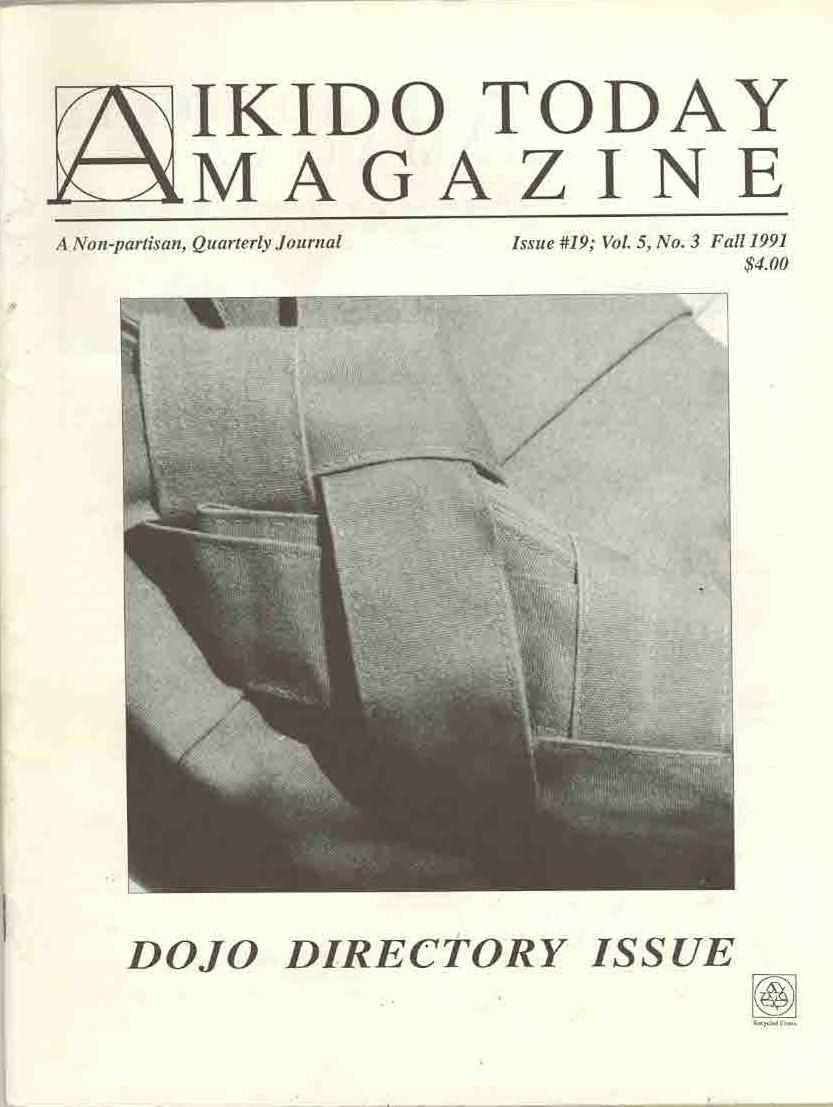
How could a Japanese man with a traditionalist view of the family and the place of women say such a thing and even claim that men are at a disadvantage in aikido because of their use of physical force2these words can be found – at least – in: ► Itsuo Tsuda, The Path of Less, 2014, Yume Editions, Chap. XVI, p. 157 (1st ed. in French: 1975, pub. Le Courrier du Livre (Paris), p. 148) ► Virgina Mayhew’s interview by Susan Perry pub. in Aikido Today #19, Vol. 5, No. 3, fall 1991 (French translation available online) ► Miyako Fujitani, ‘I am glad I have Aikido’, Magazine of Traditional Budo, n. 2, March 2019 (pdf link available online – at page bottom), p. 29 ► Mariye Takahashi, ‘Is Aikido the pratical self-defense for women ?’, Black Belt, Nov. 1964?
These remarks remain relevant today, since mainstream aikido still values strength. So why are these words, which shed light on the path developed by O-sensei, not better known?
This may be due to the silencing of the transmission of Ueshiba O-sensei’s female students. For, beyond the obvious injustice of rendering women invisible, silencing ways of doing things means erasing all memory of the gestures and ideas of the people who did those things. Our actions are nourished by the past, and the less we talk about women’s actions and how they operate, the more limited the range of possibilities is for future generations. We can see this clearly in aikido today: where are the women?
Men do not have to justify the need to be heard, but when it comes to women, we are obliged to justify the interest for everyone. However, men’s experiences cannot “count for everyone”; it does not work that way. Women’s experiences and ways of doing things are specific and different. That is why I am inviting you to discover a woman about whom very little is known, even though the path she followed would have justified her a place in the history of aikido.
Herstory, an militant history?
History is often mistakenly perceived as neutral and factual, when in reality it is a construct of those in power that influences the present. This is why Titiou Lecoq writes: ‘When working on women’s history, female historians are always suspected of being activists. Why should women’s history be militant? Isn’t the history we learn, which is masculine and non-mixed, also a form of militancy?’3Titiou Lecoq, « Tant qu’on ne cherche pas les femmes dans l’Histoire, on ne les trouve pas » [‘As Long as We Don’t Look for Women in History, We Won’t Find Them’], France Inter (French radio broadcast), 19 Sept. 2021 (available online)
The play on words her-story emphasises that history reflects male points of view: his-story. Herstory restores the active role of women in history. In her book The Great Forgotten Ones: Why History Erased Women, Titiou Lecoq explains that her aim ‘was not so much to feminise history as to demasculinise it. The approach is different. Demasculinising or devirilising implies the idea that there was a prior political process of masculinising society.’4Titiou Lecoq, « INTERVIEW: Pourquoi l’histoire a-t-elle effacé les femmes ? » [‘Interview: Why did History Erase Women?’], 7 June 2022, Revue Démocratie (French online review)
Lecoq cites French grammar5[In French, the standard gender is masculine, especially job names, and the plural of a list of items is traditionally masculine as long as at least one item is masculine] as an example of deliberate masculinisation6« Tant qu’on ne cherche pas les femmes dans l’Histoire, on ne les trouve pas », op. cit., as well as the fact that in the Middle Ages there were ‘female doctors, jugglers, goldsmiths, authors, illuminators and cathedral builders, and it was only at the end of this period that men forbade them from practising these professions.’ The masculinisation of society involved erasing women, their stories, their actions and their names.
A very obvious example of this erasure is that of Alice Guy, who invented cinema! While Méliès was interested in creating illusions and others used the camera to document their times, Alice Guy imagined telling fictional stories. In over twenty years, she made around a hundred films as a director, screenwriter and even producer. Yet the Lumière brothers and Méliès enjoyed great posterity despite having much shorter careers. Alice Guy was literally erased: many of her films were deliberately re-attributed to men in the registers, and many of her films were destroyed. She was not even mentioned in cinema encyclopaedias for a long time.
The story of Alice Guy is just a classic example of what happens to female creators. And if a work reaches us, historians question whether they really created it, when they do not outright dispute the existence of the person.
The delegitimisation of women is a form of symbolic violence that plays a major role in the mechanisms of male domination. This is why Aurore Evain advocates for the reintroduction of the term Matrimoine7[In French, patrimoine means heritage, and literally means ‘the inheritance of our fathers’. Matrimoine stands for women’s heritage.], because ‘[t]he symbolic power of language is immense[…]. Naming our matrimoine allows both women and men […] to recognise themselves in male AND female role models.’8Aurore Evain, « Vous avez dit “matrimoine” ? » [‘Did You Say “Matrimoine”?’], Mediapart blog, 25 Nov. 2017 (French available online)
The women’s heritage of aikido
What do we know about the her-story of aikido? Almost nothing. Once again, we need to “demasculinise” history in order to recover the memory of female aikidoka. This is why I wrote about Miyako Fujitani9Manon Soavi, ‘Miyako Fujitani, the “Matilda effect” of Aikido?’, Self&Dragon Spécial Aikido n° 17, April 2024, available online. Since I began my research on Fukiko Sunadomari, I have gone through phases of despondency and anger, as the potential seemed so interesting and yet there were no traces to be found.
Here is what little we know: Fukiko Sunadomari was born on 9th May 1914 into a family of devout followers of the Oomoto Kyō religion. In the late 1930s, she began studying naginata in the Jikishingake school under the guidance of Japan’s greatest expert – a woman –, Hideo Sonobe sensei.
Fukiko Sunadomari with her naginata. Sunadomari family Archives, all rights reserved.
In 1939, Sonobe sensei met Ueshiba O-sensei during a demonstration in Manchuria. She was enthusiastic about it and decided to send some of her advanced female students to learn aikido. This is how Fukiko began at the Hombu Dojo in the 1950s. Her two brothers (Kanemoto and Kanshu) had already begun practising under the guidance of Morihei Ueshiba.Fukiko ‘lived for many years in O-Sensei’s Wakamatsu Dojo in Shinjuku with his family and the live-in uchideshi.’10Stanley Pranin, Historical photo: Morihei Ueshiba, Aspiring Calligrapher!, 6 Nov. 2011, Aikido Journal, available online She held the position of Fujin Buchō (director of the women’s instructor section)11Stanley Pranin, The Aiki News Encyclopedia of Aikido, 1991, pub. Aiki News (Tokyo), p. 106, available online until O-sensei’s death in 1969. This tells us that there was a section for training female instructors! This raises many questions: why a separate class? How did it work, how many were there…?
A letter12Guillaume Erard, « Biographie d’André Nocquet, le premier uchi deshi étranger d’O-sensei Ueshiba Morihei » [‘Biography of André Nocquet, O-sensei Ueshiba Morihei’s First Foreign Uchi Deshi’], 2 Feb. 2013 (Fr. available online) written by Fukiko to André Nocquet’s family reveals that she was a key figure at the Hombu Dojo. She was involved in the dojo’s internal running and was close to the Ueshiba family. She was O-sensei’s confidante and personal assistant for twenty years, during which time he awarded her the rank of sixth dan. There is also a very short video of a demonstration on the roof of a building in Tokyo where O-sensei is seen demonstrating Ki no musubi with Fukiko.
Ueshiba O-sensei and Fukiko Sunadomari, Iwama, 1966
As O-sensei’s assistant, Fukiko often happened to accompany him on trips to the Kansai region, where he taught aikido while visiting long-standing students and friends. During these trips, O-sensei would often choose Fukiko to be his demonstration partner, particularly when teaching women13‘I am glad I have Aikido’, op. cit., p. 26. Fukiko apparently had many unpublished photos from this period14Historical photo: Morihei Ueshiba, Aspiring Calligrapher!, op. cit..
According to aikido researcher Stanley Pranin, Fukiko accompanied O-sensei on a series of trips in the mid-1960s and took the opportunity to gather material for a biography. She took photographs and interviewed former students of Morihei Ueshiba, as well as members of the Oomoto religion who had known him.15ibid.
After O-sensei’s death, she continued her extensive research and co-wrote the first authorised biography, Aikido Kaiso Morihei Ueshiba, with her brother Kanemoto. Of course, she is only mentioned as a collaborator; her brother is the sole official author of the book!
In the mid-1980s, Fukiko wanted to pay tribute to O-sensei by building a small votive temple in his memory in Kumamoto16Simone Chierchini, ‘Paolo Corallini’s Traditional Aikido Dojo’, 31 May 2020, available online. To finance her project, she decided to sell some of the many original calligraphies by O-sensei that he had given her17ibid..
Fukiko Sunadomari passed away on 1st May 2006 in Fujisawa, at the age of 92.
Make history
Stanley Pranin stated:
‘I knew Fukiko Sunadomari very well. Our association began in 1984 and continued through the end of 1996. She loved to come visit the Aiki News office in Tokyo, and we spent hours talking about aikido, Morihei, and the Omoto religion. I have many hours of recordings of our talks, one of which is being transcribed now.
Fukiko Sensei knew a great deal about the Founder’s public and private life due to her living in the Hombu Dojo and role as an assistant to Morihei. […]
[…] Fukiko Sensei’s testimony is very important to a deep understanding of Morihei’s history, character, and art.’18Historical photo: Morihei Ueshiba, Aspiring Calligrapher!, op. cit. (emphasis by M. Soavi)
From right to left: Stanley Pranin, Kanshu Sunadomari, and Fukiko Sunadomari
So, where are these hours of interviews, these articles reporting her words? I have searched thoroughly through all of Pranin’s publications, including books, AikiNews magazines and Aikido Journal issues – both print and web versions. I found nothing. There is no trace of them.
Current Aikido Journal editor Josh Gold confirmed to me that there are no recordings, either digitised or on archive tapes.
Pranin wrote in a short article: ‘[Fukiko] was an outspoken person and distanced herself from the Ueshiba family following Morihei’s death. As such, her comments and recollections are not always suitable for publication, and we have long refrained from releasing transcripts of these recordings, even in edited form. Given time and resources, we hope to remedy this situation’.19ibid..
In 2011, he justified himself as follows: ‘These areas are very sensitive, otherwise, I would have already published certain documents and testimonies. Even though many decades separate us from some of the events in question, the sensitivities of key individuals are a matter of concern. This is something I have wrestled with for a long time, and still don’t have a good solution. I felt very hesitant to publish Koichi Tohei Sensei’s letter of resignation, for example. We’ll see how things play out.’20ibid..
Thus, with a gentle shift, almost without intention, the masculinisation of history continues. Women disappear one after another from the scene, leaving only prevailing male voices.
‘She must be his mistress’ – a strategy for discrediting women
Given Fukiko’s position, it is not surprising that rumours spread that she was “sleeping with the boss”. This is the oldest weapon used to silence women.
It is assumed that if O-sensei “burdened” himself with a woman, there must have been a romantic story behind it. Strangely enough, the same is not assumed of the young male uchideshi of the dojo. Nor is it assumed that O-sensei had a secret lover in Iwama!
Fukiko Sunadomari and Ueshiba O-sensei
We can hypothesise about Fukiko’s views. Based on Pranin’s comments and the few comments she left, it is clear that she was a mystic21Michi-o Hikitsushi sensei said of Fukiko that she ‘understands spiritual matters well’ – see Hikitsushi sensei’s online biography (In French) or his biography pub. in Aikido Magazine No. 40, Oct. 1988 (French trans. available online) like Ueshiba O-sensei. She often emphasised the importance of this aspect in O-sensei’s path. Did she criticise the beginnings of a desacralised, sporting – and ultimately very masculine – aikido that, in her opinion, did not correspond to the founder’s vision?
Text by Fukiko Sunadomari written for the “Aikido Friendship Demonstration Tournament” in 1985. An event organized by Stanley Pranin. Sunadomari family archives. All rights reserved.
This aikido corresponds to Kisshōmaru Ueshiba’s efforts to expand his father’s art internationally. But for O-sensei, aikido was ‘a spiritual act’22Ellis Amdur, Hidden in Plain Sight: Tracing the Roots of Ueshiba Morihei’s Power, Chap. 13, 2018, Freelance Academy Press, p. 281: ‘[Ueshiba offered] not more spiritual lessons with which the world is uselessly glutted, but spiritual acts.’ (full quotation available online) and he himself stood on “Ame no Ukihashi, the celestial floating bridge”, that which connects the visible and invisible worlds. It was an art of universal love, recreating the bonds that unite us both as humans and to non-human living beings.
Could the West hear this? given that, as Isis Labeau-Caberia says, ‘[as a cosmovision, it] first set about destroying indigenous cosmovisions on the European continent itself – those of peasant, rural and “pagan” worlds; those of druids, bone-setters and witches – before pouring to the rest of the world’.23Isis Labeau-Caberia, « “La tête ne nous sauvera pas” (part. 1) : L’Occident est une cosmovision, la “raison” en est le mythe fondateur » [‘“The Head Alone Will Not Save Us” (Part 1): The West is a Worldview, and “Reason” is its Founding Myth’], 4 July 2023, blog La Griotte Vagabonde [The Wandering Female Griot] (available online). [Bold emphasis removed by M. Soavi.]
Elevating the intellect to the top and rejecting the body, emotions and spirituality: this artificial dualism was the matrix of the reification, domination and exploitation of everything that was not a “rational modern man”, i. e. non-human beings, women and non-white people, all of them being sent back to the belittled state of “Nature”.
In this context, aikido has become mainly a combat sport or a gold mine for gurus, when what we desperately need are spiritual but immanent practices for the body, stripped of all domination.
Other students of O-sensei criticised this new direction taken by the Aikikai, breaking away from the Ueshiba family: Kōichi Tōhei, Noriaki Inoue (O-sensei’s nephew), Itsuo Tsuda and Kanshu Sunadomari. However, we have no shortage of interviews with these famous practitioners.
There remains one difference: Fukiko was a woman with expertise who spoke to convey her truth, no more and no less than the others. But she was a woman… so they did not listen.
Fukiko Sunadomari in demonstration. Sunadomari family archive, all rights reserved.
Was O-sensei referring to her in particular when he said that his ideal aikido was that of young girls24The Path of Less, op. cit., loc. cit.? Or when he shouted: ‘Only women practise Aikido here!’?
Through the fragments of the story of Morihei Ueshiba’s closest female disciple, perhaps even his best, we can discern a relationship of transmission from master to student, and even beyond that, a spiritual relationship. So how can we not suppose that Fukiko’s aikido must have been breathtaking? And how can we not regret the loss of this link to the founder’s aikido?
I hope that I have played a small part in demasculinising aikido and raising awareness of this extraordinary figure. I would like to take this opportunity to thank Fukiko’s sister-in-law for kindly providing me with the unpublished photos and press clippings presented here.
By doing so, she is helping to preserve a women heritage where each piece of the puzzle is important.
these words can be found – at least – in: ► Itsuo Tsuda, The Path of Less, 2014, Yume Editions, Chap. XVI, p. 157 (1st ed. in French: 1975, pub. Le Courrier du Livre (Paris), p. 148) ► Virgina Mayhew’s interview by Susan Perry pub. in Aikido Today #19, Vol. 5, No. 3, fall 1991 (French translation available online) ► Miyako Fujitani, ‘I am glad I have Aikido’, Magazine of Traditional Budo, n. 2, March 2019 (pdf link available online – at page bottom), p. 29 ► Mariye Takahashi, ‘Is Aikido the pratical self-defense for women ?’, Black Belt, Nov. 1964
[In French, the standard gender is masculine, especially job names, and the plural of a list of items is traditionally masculine as long as at least one item is masculine]
6
« Tant qu’on ne cherche pas les femmes dans l’Histoire, on ne les trouve pas », op. cit.
7
[In French, patrimoine means heritage, and literally means ‘the inheritance of our fathers’. Matrimoine stands for women’s heritage.]
8
Aurore Evain, « Vous avez dit “matrimoine” ? » [‘Did You Say “Matrimoine”?’], Mediapart blog, 25 Nov. 2017 (French available online)
9
Manon Soavi, ‘Miyako Fujitani, the “Matilda effect” of Aikido?’, Self&Dragon Spécial Aikido n° 17, April 2024, available online
10
Stanley Pranin, Historical photo: Morihei Ueshiba, Aspiring Calligrapher!, 6 Nov. 2011, Aikido Journal, available online
11
Stanley Pranin, The Aiki News Encyclopedia of Aikido, 1991, pub. Aiki News (Tokyo), p. 106, available online
Simone Chierchini, ‘Paolo Corallini’s Traditional Aikido Dojo’, 31 May 2020, available online
17
ibid.
18
Historical photo: Morihei Ueshiba, Aspiring Calligrapher!, op. cit. (emphasis by M. Soavi)
19
ibid.
20
ibid.
21
Michi-o Hikitsushi sensei said of Fukiko that she ‘understands spiritual matters well’ – see Hikitsushi sensei’s online biography (In French) or his biography pub. in Aikido Magazine No. 40, Oct. 1988 (French trans. available online)
22
Ellis Amdur, Hidden in Plain Sight: Tracing the Roots of Ueshiba Morihei’s Power, Chap. 13, 2018, Freelance Academy Press, p. 281: ‘[Ueshiba offered] not more spiritual lessons with which the world is uselessly glutted, but spiritual acts.’ (full quotation available online)
‘Chouang Tzu, the great Chinese philosopher, said 2,500 years ago: “True human beings breathe from their heels, whereas ordinary people breathe from their throat.”
Who breathes from their heels nowadays? People breathe from their chest, their shoulders or their throat. The world is full of these invalids who ignore themselves.’1Tsuda Itsuo, The Non-Doing, Chap. I, 2013, Yume Editions (Paris), p. 15
This is how Tsuda sensei begins his first book, published in 1973, setting the tone by quoting the philosopher who most accompanied him throughout his life.
Tsuda sensei was a relentless researcher and a man of great culture. Throughout his life, he worked tirelessly to enable human beings to free themselves from what burdens and hinders them. Starting from his personal quest for freedom of thought, it was ultimately a philosophical understanding of human beings that emerged through his practices: Aikido, Seitai, Nō… And Tsuda sensei spread this philosophy of human beings, this path, primarily through his books2nine books (plus one posthumous) published in French between 1973 and 1984 – still available[ – then in English from 2013 to 2025]and his teaching in dojos over a period of ten years. But there was a more secret medium that he took up in the last years of his life: calligraphy.
In her book The Power of Mothers, Fatima Ouassak reminds us that there is nothing to expect from the authorities in power, that ‘we must become political subjects, rediscover our dragon power. Because our power to make the world is immense. That’s why it’s been taken from us.’ ‘It is our resistance that we must pass on.’ 1
Let us become dragons, let us become ReSisters! This brilliant play on words underlines the fact that it is possible to Resist as Sisters, as local ReSisters groups around the world are doing on food security, militarism, pollution, reproductive rights and land distribution.
Let us use the power of the concept of Reclaim – reappropriation/rehabilitation/reinvention – one of the most powerful tools of ecofeminists. This gesture of reappropriating and modifying the subject, and at the same time being transformed by it. Martial arts were not created by gods, they all evolved!
‘A permanent, unfinished creation’: this is, incidentally, how aikido creator Morihei Ueshiba considered his art at the end of his life. He himself had synthesised in aikido a lifetime of martial and ascetic practices much older than himself.
We also need to break down the rivalry between women that favours men, as some Olympic woman athletes have done by openly supporting their losing opponents. ReSisters support and inspire each other. From those of the past, like Édith Garrud’s jujitsuffragettes2, to those of today. MMA woman champion Djihene Abdellilah has turned her passion into a tool for women’s emancipation. In China, feminists are reclaiming Wing Chun3. In Mozambique, young women are inspired by their women’s boxing team, The Powerful Ones4. Finally, in Bolivia, the woman descendants of the Aymara and Quechua indigenous women, the Cholitas, dressed in their traditional skirts, have become figures of rebellion through mountaineering, skateboarding and wrestling.
This ReSisters and reclaim spirit inspired me to create women-only aikido sessions. A year after its creation, I can see that the non-mixed nature of the sessions removes a major barrier for female beginners and increases the sense of sisterhood in the dojo. In six months, the number of women who came for a trial session quadrupled and a third of them continued to practice.
Changing the rules
Rather than hiding behind the idea of equality, which is de facto protection of the status quo, let us take a fair approach that recognises unequal starting points and gives everyone a real chance in the world of sport.
A simple example comes from a small football club in the south-east of England.
Not content with having introduced equal pay between its men’s and women’s teams since 2017, the Lewes club is now going a step further with its See Us As We Are campaign, because ‘women footballers need their rules monitored, dark shorts to play in, extra coaching to build their confidence (they’ve been told they can’t play since they were little) [and] shoes that fit women (otherwise they’re prone to injury because of the angle between the knee and hip).’ They need ‘physiological and nutritional support and training programmes based on the female body, not on the male game.’ 5
Ultimately, ‘The initiative also invites the football industry to recognise the differences in culture and values between men’s and women’s football, and to not just try to squeeze women’s football into the broken mould of the men’s game.’ It ‘asks for the time, space and freedom to allow women’s football to develop according to its own emerging characteristics’. 6
Another example is the balance established in my aikido school7, which owes nothing to chance. There are 60% of women, and they have the highest responsibilities, including teaching. Régis Soavi sensei has been working towards this goal since the 1980s. To encourage the emergence of women and maintain this fragile balance in the dojos, everything is important: the way he teaches, the priorities he sets, the atmosphere, the attention. And intransigence in the face of macho behaviour.
Creating a vision
A reclaim requires profound change. Activist author Starhawk has written that magic is creating a vision. This vision gives us the courage to change the world and move towards a different kind of society8. In order to create a broad and positive vision of sport, the Move her Mind study proposed redefining sport as an activity that involves the body in movement, with a general sense of well-being, regardless of level or goal.
This more open vision puts competition back in its (small) place. Indeed, 96% of women participate in an activity primarily for their physical and mental health9. In amateur football, a study10 shows that winning a title is the least important aspect of a match for 82% of male and female players. In aikido, it is the state of mind (24%), the martial aspect (24%) and the absence of competition (21%)11 that stand out among woman practitioners. That is why our school has chosen to operate without ranks, so as not to reproduce the war of egos they entail and the damaging oppression that goes with hierarchical respect in too many clubs.
For my part, I would like to convey a vision of aikido as a transformative power, a practice that is a link between everything we have artificially separated. To reconcile with oneself, to position oneself with one’s body. Aikido can be this path of sensitivity that makes perceptible what weaves together the human and non-human worlds.
Having a partner is the great richness of aikido. We need to enter into a relationship and find in our bodies, through our gestures, a self-affirmation that does not crush the other. Instead of turning violence against the other, we must try to build another possible relationship outside the field of predation. This takes the conflict situation out of the narrow confines of destructive confrontation. Otherness is part of life; to eliminate it completely is a dictatorship nightmare. Aikido teaches us how to live together despite and with conflict. With humans and non-humans.
Performing without destroying yourself
Imbued with a certain masculine idea of what is rational and what is profitable, we continue to inherit toxic ways of learning. Perhaps we need to take a step back, remove our blinkers and draw inspiration from other cultures that experience physical activity in a much less harmful way.
Following the Ayurvedic tradition, Indian women’s health educator Sinu Joseph12 deplores the fact that ‘[m]odern day sports training push athletes to exceed their limit, assuming that this is how endurance is built’. She quotes a master of Kalaripayattu, an age-old martial art, as saying that ‘“[t]he exercises […] should be done only for 50% of that person’s capacity. Whereas in modern sports, if he can run 1 km, we make him run till he gets exhausted. In Kalaripayattu […] [we] bring the entire body to a stage where he/she can perform without getting exhausted. But, we do not begin by forcing the child to keep running till they exhaust themselves out.”’. The holistic aspect is striking in the Indian arts, which prescribe a certain diet and exercises, massages with specific oils, listening to biological cycles, etc.
It is important to review the concept of performance and endurance from this perspective. To value adaptation, continuity and, why not, small steps, instead of always long, hard and exhausting training sessions. Djihene Abdellilah points out that boxing sparring should not account for more than 10% of the preparation, which ‘is based on strategy, technique and adequate physical and mental preparation. […] What builds real warriors is not brutality, but mastery and precision.’ 13
In our aikido dojos, everyone comes at their own rhythm, but we offer daily practice. The sessions last an hour and a quarter, and the idea is not to do a lot of effort at once, but rather to establish a rhythm where the practice ends up acting by “capillarity”. It is not very intense, but it is very sustained over time. Ecofeminist Ariel Salleh describes this rhythm, which is analogous to the way living organisms function, as ‘enduring time’ 14. A cyclical temporality, like biological rhythms, which in the long term maintains the balance of the body in a much more enduring way.
Rehabilitating cycles
Cycles are only timidly beginning to be taken into account in the training of top-level woman athletes, but are far from being integrated into amateur practice. We can go even further by reversing the perspective. Look at cycles as an opportunity, after all. Menstruation is considered the fifth vital sign15 after blood pressure, temperature, pulse and respiratory rate. It reflects our state of health and offers a window into the proper functioning of many internal dynamics. Even better it contributes directly to our health, as the hormones produced by the ovaries perform an impressive number of useful functions for the cardiovascular, nervous and metabolic systems. Progesterone has an anti-depressant effect, contributes to breast health, and is essential for bone formation.16
Cycles are influenced by many factors: physical, emotional, psychological, cultural and socio-economic. A healthy menstrual cycle is not only a sign of good health, but also an indication of the quality of our close environment. This is clearly seen in sport, where some female athletes, because of the deleterious culture in which they develop, use amenorrhoea as proof of sufficient training and as a guarantee of their strength. But instead, this signal must be heard: training is too hard and the body is starting to break down. Men, who do not receive this signal, are therefore more prone to overtraining, which can lead to permanent damage.
Menopause should also no longer be a shameful taboo for those who go through it. With great humour, Élise Thiébaut explores the menopause, its setbacks and its joys, reminding us that it is not an illness, but rather a more or less harmonious dance, and sometimes also a trial. She concludes wisely: ‘I wish we could pay more attention to the subtle vibrations that speak of the importance of the sensitive, the spiritual, the invisible in our lives. What the menopause sometimes inflicts on us, in a modern world disconnected from natural cycles, where we are constantly asked to swear to our computer that we are not robots, we are now inflicting it on the Earth. Its hot flashes and our own seem to be condemning us to a final catastrophe. I believe, on the contrary, that the profound acceptance of who we are will allow us to give birth together to other forms of society, other ways of living together, linked to ancient and future knowledge.’ 17
Regaining our bodies
As Françoise d’Eaubonne said, we need practices that bring us back to the fact that we have a body, powerful and beautiful no matter what.
Beyond the sabotage of the pyramid of oppression and the anger against violence, there is the essential question of regaining the body. It is not “only” a matter of access to sport, or even of equality, but of the denial of the body, which is the loss of vitality and contact with reality. Human beings have not always been so uprooted, so devastated within themselves, so doubtful of their own sensation, their own intuition.
Let us re-appropriate these martial arts, these sports, from which we have not always been excluded18. Together we can revolutionise them.
‘You say there are no words to describe this time, you say it does not exist. But remember. Make an effort to remember. Or, failing that, invent.’ 19
Ariel Salleh, Ecofeminism as Politics, Chap. 9 ‘A Barefoot Epistemology’, ‘Grounded Solidarity’, 1997 & 2017, Zed Books (London), pp. 203–210. [The concept is actually attributed (see p. 202) to French thinker Georges Gurvitch.]
see Chris Sweeney’s 10 Sept. 2019 post on Harvard T. H. Chan School of Public Health website
cf.Menstruations en santé: un signe vital ! [Healthy Menstruation: a Vital Sign!], 17 Dec. 2020, Réseau québécois d’action pour la santé des femmes [Women’s Health Action Network of Quebec]
Monique Wittig, Les Guérillères, 1985, Beacon Press (Boston), p. 89 (1st ed. in French: 1969, pub. Les Éditions de minuit (Paris), pp. 126–127). [The French word “guérillères” is the plural feminine of “guériller”, a neologism evoking both “guerrier” and “guérillero” – warrior and guerilla fighter.]
The Olympic Games have drawn attention on women’s sport, implicitly underlining the extent to which sport remains a competitive and aggressive world designed by and for men.
Ranging from the sexualisation of the body with compulsory tight and uncomfortable outfits, to the sexist and misogynistic rhetoric of the commentators, including the magnificent low-angle shots of the athletes’ buttocks, not to mention the veil ban for Muslim athletes, the sequence of the 2024 Olympics Games has spared us nothing.
Just for a few women who shine – and at what cost? – how many are broken, disgusted or discouraged? Reports of abuse by coaches, mentors or peers are, unfortunately, “only” the tip of the iceberg. Underneath lies a continuum1 of violence that contributes to the domestication, objectification and annihilation of women. This abuse also affects amateur sport, as every year one in two women does not take part in physical activity despite wanting to2.
As an aikido teacher and a feminist, I feel anger: the world of martial arts is no exception. As the bearer of a fantasy that equates fighting and virility, this world is a true preserve of masculine identity. Under the guise of martial efficiency, violence against women is silenced, their difficulties to gain access to the tatamis are denied, and criticism is rejected, when these practices could be used as emancipatory arts for the benefit of all, including women who are deprived of their benefits.
Don’t keep silent any longer
Nevertheless, some voices are being raised: that of judoka Patrick Roux, who has denounced3 the violence inflicted on children under the pretext of training. That of American aikidoka Neilu Naini4, who was drugged and raped by her sensei (an aikido master), with the complicity of a tatami peer. Founder of #metooaikido, she campaigns for safer dojos through prevention work. Or yet Djihene Abdellilah5, grappling and MMA champion, who keeps denouncing the traumatising violence inflicted for the sake of combat preparation.
It is time to rebel and to remind the world that martial arts are not a ridiculous display of sweaty virility, nor a free pass to violence, but millenary tools rich in philosophies of life: respect, body work, flexibility, breathing, pushing one’s limits, development of sensitivity and intuition…
Even aikido which claims to be universal and open to all is in crisis: numbers are in free fall6, practitioners are getting older and the number of women is still as low as ever: 20% to 30%. But any criticism of its androcentric orientation is dismissed as “feminist hysteria”. The old recipe: a pinch of gaslighting7 mixed with a healthy dose of mansplaining8.
When I set up a women-only aikido session in Paris9, I received – fortunately – a lot of support but also a lot of criticism from aikidokas: epidermal reactions warning me not to create divisions within this universalist art at the risk of provoking an unlikely disaster. However, I believe it necessary not only to denounce abuses, but also to take a closer look at the reality of women and what prevents them from engaging in sport and martial arts.
Systemic inequalities
Several studies have provided revealing figures in this regard. The Move Her Mind study10 is the world’s largest11 research carried on gender inequality in sport.
The first finding of this study is the disparity between men’s views and women’s daily reality. 54% of men think that women have given up sport because they do not like it, and 56% believe that the main obstacles are physical complexes, fear of harassment and fear of being judged. However, lack of time is the number one barrier cited by the women concerned.
In fact, women worldwide are dissatisfied with their level of physical activity – 53% in Europe – and face systematic barriers to exercise. When asked, they identified five main obstacles12.
Time (76%)
Influenced by gender conditioning, women lack time. According to them, the main obstacle is the distribution of domestic tasks and care work – care, education, care of dependents, emotional support – within the family13. According to INSEE14, when both parents work full time, 70% of women do at least one hour of domestic work a day, compared with 28% of men.
Costs (62%)
Men earn (on average) 32% more than women, which puts a strain on the budget the latter can devote to sport. In addition, mothers’ purchasing power falls after divorce: they lose 14.5% of their standard of living, while men increase it by 3.5%15.
Environment (43%)
The common – and daily – experience of being subjected to violence leads women to adopt strategies of self-exclusion from any situation that is perceived as unsafe. The paradox is that this inculcated fear makes them afraid of strangers outside, while they are in greater danger with their close relatives in familiar surroundings. As a reminder, 91% of rapes and attempted rapes are committed by family and friends16.
Women’s vulnerability, presented as a “natural” characteristic, leads to hyper-vigilance in the public spaces, fuelled by unpleasant, intimidating or humiliating experiences – punishment through sport as a child, violence by physical education coaches, compulsory swimming, etc. Unwanted comments will always call women to order, so that this male social control continues17.
Even in martial arts, the contempt shown towards women and beginners or occasional practitioners contributes to this vicious circle of lack of self-confidence. Traumatic experiences suffered from an early age have a lasting effect: ‘When I was twelve, the aikido teacher told me to lie down to demonstrate the strength of the hara. He stood on my belly. The pain was terrible, I thought I was going to faint. I stopped practising martial arts forever.’ 18
Female aikido beginners talk: ‘I got on the tatami for the first time, we did the salute, a man grabbed me without a word and I found myself on the floor with my nose against a stinking tatami. I never went back.’ Another: ‘After a 3-minute warm-up, my aikido teacher sets off for 20 minutes of techniques with a breakfall19. The ten beginners who don’t know how to fall in this way have no explanation nor any accessible alternative’.
This mistreatment also applies to older people. Between the ages of 40 and 70, women can lose 40% of their bone mass and are therefore more prone to fractures. A Parisian woman reports: ‘Starting aikido when I was over 60, I practised with a tall, burly man. I had never seen the proposed technique, but without any explanation he lifted me up, put me on his hip and threw me straight down to the ground (koshi nage)’.
A study carried out by the Women’s Commission of the French Aikido and Budo Federation20 deplores the same situation in aikido clubs. Instead of putting all their energy into their art, female aikido practitioners exhaust themselves trying to protect themselves from the brutal behaviour of their partners: ‘I’m physically afraid, some of them slaughter your wrists, force you to take a breakfall, don’t let you fall safely. They don’t pace their force or hold back the blow’.
Under the guise of training, female practitioners are subjected to aggression: ‘I get real blows to the face on the pretext that I am in the wrong place and that it is natural for me to get them in the face’. When I visited another aikido school, I saw an older teacher, armed with a stick, repeatedly hitting a young girl in the plexus. She ended up with a bruise.
Djihene Abdellilah reminds us that there is no justification for beating and insulting people to supposedly toughen them up, and that being beaten does not create “warriors”, but victims. The violence she herself has suffered did not make her stronger, but normalised in her mind the physical and psychological violence she now denounces. ‘According to sociologist and sport & gender specialist Christine Mennesson’s work, some women adopt “warrior” attitudes not by choice, but in order to be accepted and respected in male-dominated environments. This dynamic creates an illusion of consent to violent practices’ 21.
Physical condition (42%)
The self-limiting beliefs due to gender stereotypes and to lack of female representation lead to feelings of exclusion. This lack of self-confidence leads some women to believe that they are not fit enough for physical activity.
Aikidokas would also like22 to see more female teachers and practitioners highlighted in communications, seminars and demonstrations. As Yeza Lucas says: ‘If another woman joins the group, I am no longer alone. And if a third woman comes and already sees two women on the tatami, she too might feel less intimidated’ 23.
Lack of places (38%)
Women have learnt to see their biology as a “disadvantage” that must be set aside, even at the cost of losing their health, in order to gain a foothold in a world that idolises strength. Lola Lafon sums it up with humour: ‘Firmness is worshipped: firm breasts, firm thighs, “muscular” political and ballsy speeches. Anything but being a Flanby24. Horror of the fragile, the soft, the trembling’ 25.
Anything rounder, more flexible or tender is condemned to contempt and to endure violence. In this suffocating world, women, like the fish that has to climb a tree to prove its worth26, think they are stupid and incapable, or they take the blows while hurting themselves. This is why the younger generation (45%) demands places where they can exercise according to their wishes, in safety, and where their specific biology is taken into account.
I have in the above taken stock of the situation and it is not encouraging. Does this mean that the situation is hopeless? No, not at all: as we will see in the rest of this article, the solution exists, and it is very simple. All you have to do is become a ReSister27, or even to turn into a dragon.
Notes: [all notes in square brackets are added by the Translator]
See Christelle Taeraud (ed.), Féminicides. Une histoire mondiale [Feminicides: A World History], 2022, pub. La Découverte (Paris)
Move Her Mind 2023 study, 53% in Europe do not do as much as they would like. Source Santé Publique France [France Public Health], 2024, 41% of women do not do enough to maintain their health. 81% forget about themselves, putting their health and the needs of their loved ones first.
Patrick Roux, Le revers de nos médailles [The Other Side of Our Medals], 2023, pub. Dunod (Paris)
World and French MMA grappling woman champion; founder of Djihene Academy
Since 2016: Karate -15%, Judo -16%, Aikido -35%. Find out more on the aiki-kohai and paressemartiale blogs
Gaslighting is a psychological concept that describes manoeuvres used to manipulate another person’s perception of reality. Information is distorted or presented in a different light, selectively omitted to favour the aggressor or distorted to make the victim doubt their perception and their mental health. See Hélène Frappat, Gaslighting ou l’art de faire taire les femmes [Gaslighting or the Art of Silencing Women], 2023, pub. L’Observatoire (Paris)
Mansplaining refers to a situation in which a man explains to a woman something she already knows, or is even an expert in, in a patronising and paternalistic tone
Women-only sessions and workshops at Tenshin dojo in Paris 20th district, Yuki-ho dojo in Toulouse and Yume dojo in Milan
Commissioned by ASICS, a Japanese company that has been creating sports footwear and clothing since 1940
Oral testimony collected (in French) by the author
[Falling from standing position in a swift, lively and powerful manner. It is a very constrained ukemi, very difficult to execute if you are not well-centred.]
[This expression became popular during the presidency of François Hollande, who was criticised by some for being too soft, and pejoratively nicknamed Flanby, which is the name of a famous brand of French flan.]
[A play on the French and English words meaning: to resist as sisters (résister in French means to resist). An eponym comics has been published in 2021 by French artist Aurore Chapon and philosophy teacher and ecofeminism specialist Jeanne Burgart Goutal.]
We offer here to the reader the text of a talk given by Manon Soavi at the High-Alsace University’s Research Institute in European Language and Literature1 as part of the European Ecofeminisms seminar held on 14 and 15 November 2024.
One afternoon of the conference was devoted to author Françoise d’Eaubonne. Her son Vincent first presented a paper entitled The Place of the Body in the Life and Work of Françoise d’Eaubonne. This was followed by Manon Soavi’s speech drawing a link between the urgent need expressed by d’Eaubonne to reconnect with our bodies in order to overcome the dualistic patriarchal ideology and the proposition of an emancipatory self-practice coming from Tsuda Itsuo‘s philosophy of Non-Doing.
The afternoon continued with a screening of Manon Aubel‘s film Françoise d’Eaubonne, an Ecofeminist Epic1 and a round-table discussion with the participants.
Speech by Manon Soavi
Tsuda Itsuo was a Japanese writer born in 1914. He studied sinology with Marcel Granet and sociology with Marcel Mauss at the Sorbonne University in the 1930s. He strove tirelessly for freedom and took an interest in his Japanese culture, the relationship with the body and ancient Chinese thought. He is the author of ten books in French, published by Le Courrier du Livre (Paris), [all of which have been translated into English]. His philosophy of Non-Doing combines anarchist thinking with a subtle understanding of the Tao.
We are going to see how this philosophy resonates with ecofeminism, not by its label, but by its very nature.
D’Eaubonne‘s programmatic phrase ‘We have to lose our heads so as to inhabit our bodies’4 will serve as my starting point. What Françoise d’Eaubonne and Tsuda Itsuo had in common was their belief that emancipation required the integration of other patterns5 of thought in order to break out of dualism, and that the body was essential to this process.
Criticising and proposing other possibilities
As Vincent d’Eaubonne has shown, the body was a central subject in the life and thought of Françoise d’Eaubonne. Ahead of the feminism of her time and without yielding to any essentialism, she pointed to the primary role of the body in the mechanisms of domination and the urgent need to reappropriate it as a condition for liberation.
Critical of dualist thinking, like all ecofeminist women, Françoise d’Eaubonne emphasises that the materiality of the body, mired in the living, brings us back to our nature. It prevents us from looking at nature as an object. The body is a source of freedom and allows us to take hold of reality. Françoise d’Eaubonne warns of the worsening taming of the body, which can even disappear with virtualisation.
To tear oneself away from the body, to deny the living within us, is the appalling development against which she challenged us back in 1998 in Virtual and Domination6. As the paroxysm of the culture of distancing, the reign of the virtual is going to overturn man’s relationship with the world and perhaps cause an internal collapse by affecting the perceptible difference between the real and the virtual.
For her, this difference ‘can only be re-established by the old formula, the proof of the pudding is that you eat it, for the day when the first drug addict in the cybernetic labyrinth is found dead of hunger in his cabin, wearing the smile of the satiated of the imaginary.’7
For d’Eaubonne it is clear that the mind cannot survive healthily in the face of the annihilation of its senses, with the absence of touch8 and de-realisation. The loss of the locomotor, sensitive body, replaced by ‘a body hybridised with micro-processors and medical nano-machines, will lead to a significant decline in vitality’. While every innovation is frightening, none has ever had such a profound effect on human beings, and the enslavement of the virtual is of an unprecedented nature.
On the one hand, Françoise d’Eaubonne is sounding the alarm, but on the other she is also shaking up the socio-political framework that structures and determines what can and cannot be said to be a subject, what is perceived as sensitive, vital and intelligent and what is not. Frameworks of experience inscribed in our institutions, our perceptions, our bodies and our narratives. Through her writing, d’Eaubonne brings to light another, reunified world where dualisms and exploitation no longer apply.
In The Satellite of the Almond9, the first volume of her Losange Trilogy10, she shifts the centre of subject and object using the story of the exploration of an uninhabited planet that turns out to literally BE a body. Blurring the boundary between explorer and planet11. It is through their bodies that a fusion of carnal, rhythmic sensibility will take place between them.
In the next volume – The Shepherdesses of the Apocalypse12 – d’Eaubonne describes the beginnings of Anima, the civilisation of women. In the text, she weaves together nature and humanity, using plant vocabulary to describe women’s societies: ‘Everything sprouted, grew, leafed through in the women’s groups, communities and communes. Everything was rustling, speeches, quarrels, murmurs, comments and songs, and the Revolution was working with little noise and great clatter, sounding like a tree full of creaks and birds’. Further on, the sequence of bagpipes, seagulls and heather underlines the continuity between the human and non-human worlds13.
Very lucid, d’Eaubonne also describes the failure of the avant-garde‘s revolutionary action. In The Shepherdesses she writes of this failure that, in any case, ‘their liberation could only be intimate’14. It could not be achieved from the outside, by force or revolutionary theory. Only life experiences can change the intimate dimension of our bodies and our actions.
Remedying distance: I feel, therefore I am
How can we touch this dimension? This was also a crucial question for Tsuda Itsuo. For him, as for d’Eaubonne, we need to unlock the internal structures that have underpinned our ways of being and acting for centuries. By relying on other thought patterns and on the body.
According to researcher Barbara Glowczewski, myths and rituals are not symbolic. People act with these patterns. For the aborigines, the dream is a rhizomatic becoming, a ‘concept to think about’15. This is what d’Eaubonne does through her writing.
She points to us an essential key in the passage from The Shepherdesses where we witness the rebirth of a unified, cyclical world: ‘animal cries were born with the same timidity, far away, isolated, coming closer: “I’m here!”’16
This is a key. This ‘I am here’ neutralises the ‘I think, therefore I am’. This historically dated conception of man surrounded by objects, reified animals and an exploitable landscape.
But there are other conceptions of the world. Diverse cultures with common modes of existence that escape utilitarianism, the abstract universal and the human/environment divide. They are organic and unique. Action finds its reasons and purposes in the interiority of situations. Anthropologist Rodolpho Kush, who studied the indigenous cultures of South America, calls them the Cultures of Estar Siendo, Being There17.
On the other side of the Pacific, Japanese ecologist Imanishi Kinji identifies a similar notion with Ba 場, There or Being there18. It is a founding concept of Japanese culture that can be found in many aspects, including the word baai 場合19, to be somewhere, in the flesh, on a particular occasion. Geographer Augustin Berque18, Imanishi‘s translator, calls this situational ontology being-thereness21.
Imanishi also insists on the fact that living beings link what they are and where they are. And that it is through sensation, through intuition, that we can grasp the commonality of the human and non-human worlds. This is also reflected in Chinese writing. The ideogram Sei生, life, is not a concept, it is a trace that evokes perception. The sensation you get when you see a bud and feel that you yourself are alive within life on earth. Imanishi used to say: ‘I feel, therefore I am’.
This pattern reintegrates us into the earthly world, living among the living. Now, how can we act without falling back into the dualistic pattern? Ancient China provides us with another very interesting pattern: the 無爲 Wu-wei, Non-Doing. We shall see that this has nothing to do with withdrawal from collective action or any individualistic meditative stance.
Sabotaging Cartesian thinking: Non-Doing
Ursula Le Guin wrote: ‘All I’m trying to do is figure out how to put an obstacle in the way’22. Our mental structure, deformed by Cartesianism and dualism, cannot free itself from its straitjacket. That is why we have to put obstacles in the way. This is the aim of Tsuda Itsuo when he declares ‘Even if I do not think, I AM’23 Following the example of Tchouang-tseu, to provoke a collapse of logic in order to allow another understanding to emerge.
In Chinese and Japanese culture, there are techniques for hacking your brain. Short-circuiting the will to make way for a deeper, more connected intelligence. Practices such as Zen, calligraphy, martial arts, etc., aim to use bodily techniques to encourage the abandonment of calculating thought in order to allow Wu-wei (Non-doing) to emerge.
This is the meaning of the calligraphy Naka, the target. It represents bow, arrow, target and archer all in the same unit. Here thought and action are one. Non-doing is therefore a mode of activity24 in which action and speech are highly effective, precisely because of the absence of intentionality.
The ancient tales of Europe also used symbols to teach us how to find the right way to act. Whether it is kissing a frog, listening to the words of a fox, or waiting for the night to bring advice. It is all about letting go, clearing the air to listen and enter into the flow.
In the same way, Japanese craftsmen co-produce objects with living materials: iron, earth, water and fire. The craftsman is grateful for the unexpected turn his creation takes. So the act is no longer the result of ONE will, ONE subject. It is a multiplicity that expresses itself.
This pattern takes us away from colonial action, from DOING, from the engineer advocating abstract and external solutions to situations. The Kogi people suggested this situational Non-action by proposing the reintroduction of the tapir in Brazil rather than spending millions of dollars restoring primeval forests. Tapirs eat the fruit and make their droppings where there are no fruit trees, thus ‘planting’ the forest. Acting in/with the web of the world.
Native sciences in symbiosis have always existed. Just as animals and plants have always acted in ways that we have probably only glimpsed.
Here, with our urbanised and fragmented lifestyles, one way of entering these paradigms in concrete terms is to rediscover our bodies in everyday practices. To listen to our own involuntary resources, to reactivate our senses and to begin to re-establish a relationship between a rehabilitated wild way of thinking and a relativised learned way of thinking.
Emancipating self-practices
Marcel Mauss pointed out that the body is not only an expression of ourselves, but also of a cultural conception, social organisation and systems of representation of the world25. Social training and our alienation are therefore inscribed in our bodies.
In the East, body and mind are not separate, so philosophy and practice are inseparable. For Tsuda Itsuo, Aikido and Katsugen undo are part of the path of the philosophy of the Non-Doing. They are practices of emancipation in which we experience a gap between our habits and their recalibration.
It is through sensitive touch and movement that we experience a different kind of relationship, one which involves neither speech nor vision. We rediscover ‘knowledge about ourselves’ and ‘practices of ourselves’ that involve both the individual and the collective.
Seen in this perspective, Aikido is not about learning to fight and destroy. It is a study, through the body, of the possibilities of relating to others, despite and with conflict. To re-establish balance within ourselves, and within relationships.
Faced with the domestication of women and what Elsa Dorlin calls the ‘factory of disarmed bodies’26, d’Eaubonne emphasised the importance of reclaiming the ability to react. As an Aikido teacher, I join d’Eaubonne‘s call to rediscover ‘the ignored, repressed attitudes that frighten us so, the simplest fighting positions of the body’27.
The generation paradigm
Philosopher Émilie Hache28 underlines a very important point: extractivist industrial societies no longer show any concern for generation, i. e. the reproduction of conditions of existence. Historically replaced by the idea of Providence. A world created once and for all, no longer needing to be perpetuated on a daily basis. Generation is a total social phenomenon, concerning the perpetuation of humans, the clan, relationships with ancestors and the living amongst whom we live.
I would add that our societies no longer show any concern for the vital capacities of human (re)generation. The machine vision of a fragmented body leads us to think that we can wear out our bodies like we wear out a bicycle. From time to time, you have to apply the brakes and change pieces. Except that biological processes and metabolism do not at all respond in the same way as these mechanical processes, to which they have too often been compared.
Vital processes regenerate themselves and return to equilibrium on a daily basis if given the chance. But involuntary movement is repressed. The rigid body has difficulty reacting, keeping its balance and recovering from fatigue. As ecofeminist Ariel Salleh puts it: ‘Sensitivity to the flows of nature is lost when knowledge insists on the precise operations that need to be carried out to transform nature’29.
Conversely, in the paradigm of generation, human life is part of a holistic vision. Vernacular practices take care of internal resources, i. e. the innate ability to balance through the involuntary movement of the body on a daily basis.
The practice of Katsugen Undo, which is a kind of involuntary gymnastics, is part of this paradigm. It is the manifestation of the internal work that humans already possess, but which in our modern world needs a space-time to make room for the expression of the activity of the living within us.
Of course, it is not a question of miracle recipes, but of taking into account practices that balance and emancipate over the long term.
Conclusion
To conclude, when Françoise d’Eaubonne wrote ‘We have to lose our heads so as to inhabit our bodies’, she was expressing her radicalism. Refuse rather than continue. Lose our head if we have to rather than maintain patriarchal dualism. And then build something else, here and now.
I find in her the same integrity and determination that my parents had. In their case, it was because of their refusal to perpetuate the educational formatting that my sisters and I never went to school. Libertarian dojos were born out of their refusal to accept existing social relationships.
Most of them are urban, self-managed, egalitarian and subsidy-free. Where women are in the majority. Dojos made up of resourcefulness and tenacity over the last 40 years. Like the ZADs, they are breaking with neoliberal individualism as much as with the old forms of protest. They are places and practices from which changes affecting the individual and the collective can emerge.
The point is not to ape unhistorical practices, outside their own cultures. As Anna Tsing writes in The Mushroom at the End of the World30, ‘the ruins are closing in and encircling us on all sides, from industrial sites to devastated natural landscapes’. However, ‘the mistake would be to believe that we are content to survive in them, for it is also in these ruins, these margins, that life is sometimes more lively, more intense.’31
Indeed, these practices originated in Japan, in the ruins of the Second World War. They are a resurgent rhizome, an update of ancient vernacular wisdom. It is through the power of the use that people make of them to live out other possibilities here and now that they become strategic practices of resistance-creation that are profoundly ecofeminist.
[In English in the text – the footnote explains the French use.] Term used in the human sciences: simplified model of a structure of individual or collective behaviour (psychological, sociological, linguistic). Synonyms: template, schema.
Baai 場合, lit. an agreement (ai 合い) of different there (ba 場)
Augustin Berque, ‘Fûdo and Edo—a note on Watsuji’s nipponity’, Feb. 2023 (contribution to an upcoming collective book on Watsuji, coordinated by Hans Peter Liederbach)
[Fr.: y-présence. English translation by Berque himself (personal communication)]
Imagine for a few seconds a world in which articles were written about “male Aikido”! With a single article talking about Tohei sensei, Shioda sensei, Noro sense and Tamura sensei. Articles that would find it relevant to put these people together for the sake of having in common… a Y chromosome. It is strange, even ridiculous, isn’t it? How can you put together men with rich, different personal histories, each of whom had a special relationship with O-sensei, each of whom followed a different personal path in Aikido? Each of them has his own personality, his own story and his own specific teaching. Each of them deserves, at least, a separate article.
Yet this is what happens to women. One finds it appropriate to talk about “female” Aikido… Of course this is not something specific to Aikido, it is a society phenomenon. Did you know that the United States were world champions in soccer? Oh yes, “women’s” football, so that does not count. But why? Because there is Football and then there is “women’s football”.
It is also the phenomenon that allows each Smurf to have a distinctive feature, however small, whereas Smurfette’s distinctive feature is that she is a girl, that is all. She has no character, other than the characteristics of a silly, flirtatious girl. Of course, this is just a comic strip, but if you think about it for a few minutes, you can find hundreds of examples of the same phenomenon. Men are people, characters with distinctive features and stories. Women are, mostly, just “women”. Like the female aikidokas who are lumped together in the “women’s aikido” basket, and thus being denied their specificities, their differences and their histories. Fortunately, some people are trying to retrace their steps, although the information is “coincidentally” much less available, if not completely non-existent!
Tenshin dojo of Miyako Fujitani in Osaka
The Matilda effect
‘The Matilda effect is the recurrent and systemic denial, spoliation, or minimisation of women’s contributions to scientific research, whose work is often attributed to their male colleagues.’ 1 This is a phenomenon observed by historian of science Margaret W. Rossiter, who calls this theory the ‘Matilda effect’ in reference to nineteenth-century American feminist activist Matilda Joslyn Gage. She had observed that men took credit for the intellectual thoughts of women close to them, with women’s contributions often relegated to footnote acknowledgments.
This was the case, for example, with Rosalind Franklin, whose work, decisive for the discovery of the structure of DNA, was published under the names of her colleagues. The same is true of Jocelyn Bell’s discoveries in astronomy, for which her director won a Nobel Prize in 1974. Him, not her.
Fujitani Miyako’s story is somewhat similar to that of Mileva Einstein, physicist, fellow student and first wife of Albert Einstein. Mileva and Albert Einstein met on university benches and the theory of relativity was to be their joint research. However, she became pregnant while they were still unmarried, which speeded up their marriage but slowed down Mileva’s studies considerably. In the end, the couple’s three children, the last of whom was disabled for life, were entirely in the care of Mileva after Albert Einstein left to pursue his career in the United States. Of course, the point here is not to question Albert Einstein’s genius, but to question the possibilities of Mileva to continue her career with three dependent children, one of whom was disabled. Albert Einstein was able to pursue his career only because she stayed. At the end of the day, when you think about it, there is nothing romantic or touching about the saying “behind every great man stands a woman” once rephrased more exactly into “behind every great man there stands a woman who sacrificed herself because she had no other choice”. Careers, honours, awards, positions, peer recognition, are all based on the more or less “accepted” crushing of women. When we think that we measure a woman’s competence by her career and the recognition of her peers, we forget that the game is rigged, because for every aikido master who has made a career, there is at least one woman behind him who has taken care of their children, often of the dojo, the registrations, the book-keeping and the social relations. Not to mention taking care of the husband himself, giving him the attention he needs. With these foundations provided by the master’s wife, extraordinary martial skill can flourish and shine. Mind you, I am not questioning the competence of these masters, I am contextualising the female presence that allowed them to flourish. A presence they often took for granted, a state of affairs. Because it is systemic. On the contrary, very often no one helped women to practise their arts. Nobody looks after their children, prepares their meals or does the dojo’s book-keeping for them. Not to mention those who try to stand in their way. So when we compare their careers, supposedly on an objective basis, with those of certain men, it is obvious that, structurally, they have not been able to achieve the same level of fame. However this is not a matter of skills, this is a matter of society.
Fujitani Miyako sensei
The story of Fujitani Miyako
Born in Japan in the 1950s, Fujitani sensei is now one of the few female seventh dan in Aikido, who has been teaching in her own dojo in Osaka for forty years. A student of Tohei Koichi, she took her first and second dan in front of Ueshiba O-sensei. However, unlike the story of some of Ueshiba O-sensei’s students, her career as an aikidoka does not tell the story of how she set out to confront the world and make a career for herself, but it tells the story that is so often the fate of women: to stay behind and endure. In this sense, it is a symbolic journey.
Fujitani Miyako was confronted with male violence from an early age. Her father abused and beat his three children. He died when she was six, having “only” had time to abuse her and dislocate her shoulder. She continued to experience this violence at high school, where she was assaulted by boys on a daily basis. At the time, she was practising classical dance and Chado (the art of tea), but she decided to do something about the violence and considered taking up Judo like her brother. In the end, she chose Aikido. Her first teacher in Kobe refused to allow women in his class, but she insisted so much that he eventually accepted her. She later became a student of Tohei sensei and took her first dan in front of Ueshiba O-sensei in Osaka in 1967. She recounts that ‘[Ueshiba] always referred himself Jii (old man or grandpa). He was always with Ms. Sunadomari, […] helping him in everything. […] Ueshiba sensei would always demonstrate this trick attack with her, a kind of faint to trick the opponent.’ 2
When she started practising in Aikido, she felt inferior as a woman in the practice. With no role models, she had no other horizon but “to become as strong” as men in order to finally be considered “equally competent”. So she tried to match the muscular strength of the men around her. She spent a year building up her muscles. She says that her technique at the time seemed very powerful indeed, but that she abused her body so much that she ended up breaking the bones in her arms and fingers. She also damaged the joints in her elbows and knees. She even had to stop practising for a year to recover.
Fujitani Miyako sensei
This situation where women suffer disproportionately from work-related injuries can also be found, for example, among women pianists, where ‘[s]everal studies have found that female pianists run an approximately 50% higher risk of pain and injury than male pianists; in one study, 78% of women compared to 47% of men had developed RSI.’ 1 We are facing a societal issue here again: by only valuing a certain way of doing things, moving, playing music etc., women are systematically disadvantaged and, while desirous of doing their jobs and fulfilling their passions, they damage their bodies excessively. They also pay the price of interrupting their careers or even giving up.
Fujitani Miyako was twenty-one when she met Steven Seagal in Los Angeles, where she was accompanying Tohei sensei to an Aikido seminar. She attended his first dan in the United States and met Seagal again shortly after her return to Japan. He had just won a lot of money at a karate show in Los Angeles, during which he broke his knee, but with the money he had won he bought a ticket to Japan, arriving with his ripped jeans and a silver fork as only possession.
Fujitani Miyako was then a second dan and she opened her own dojo, which she called Tenshin dojo, on land owned by her mother, using her mother’s money. She married Steven Seagal a few months after they met in 1976 and, in a reflex very typical of female conditioning, she herself made him the main teacher in her own dojo, even though she was his senpai, i. e. his hierarchical superior. This is a very strong conditioning of women, who are brought up with the idea that they must ensure the peace of the household and the well-being of their husband by promoting what he imagines to be his superiority. Above all, they must not earn more money, be more famous, or be more successful than him, at the risk of seeing their family destroyed. Every woman knows this, and stories of men leaving their partners because they are jealous of their success are not uncommon. Mona Chollet makes this perfectly clear in her chapter on “‘Making Yourself Small’ to Be Loved?”, with examples that speak for themselves, and with this critical conclusion: ‘Our culture has normalised the inferiority of women so well that many men cannot accept a partner who does not diminish or censor herself in some way.’ 4 Of course, for Fujitani, the rapid arrival of two babies makes things even worse.
Descent into hell
While she was in her own dojo, Seagal quickly began to belittle her, relegating her to the role of ‘the Japanese girl who brings the tea while he plays the little shogun’ 5. The trap closed in on her, all the more so as newspapers and television echoed the “gaijin’s dojo”, highlighting the idea that Steven Seagal was “the first Westerner to open a dojo in Japan”, when in fact he had phagocytized Fujitani Miyako’s dojo.
Meanwhile, Steven Seagal had numerous affairs with other women, including his students, and finally told Fujitani that he was moving back to the States to pursue an acting career. She waited for him with the promise that she would be able to join him and their children. Another promise – money to look after the children – was never honoured either.
Eventually, lawyers contacted her to file for divorce and allow Seagal to remarry in the United States.
Fujitani Miyako and her daughter
Every cloud has a silver lining
Fujitani Miyako was obviously desperate to be abandoned with her two children. To make matters worse, almost all the dojo students at the dojo were more influenced by Seagal’s charisma than interested in Aikido. The ground he had laid by systematically belittling her in front of the students had a lasting effect because, not only did they leave, but they also came back to make fun of her and her deserted dojo. She related in an interview: ‘[At that time] I wanted to crawl into a hole. I had not done anything wrong. Some students would come from other dojos very arrogantly as if they owned the place. And once I started to get a few students someone would bad-mouth me to them: “she is weak so go somewhere else.” So, I really hated that time and this dojo. Some people even rumored that Steven left me because I was bad (laugh). So, old time students truly believed that. Even when he was here Steven would bad-mouth me among the students. That’s why when he left everybody followed him. However, as I lied in bed at night, I would imagine what I have now[…]. I would use my imagination watching my children grow up and me having grandchildren and I would wonder whether the day would came when I would feel happy for having aikido. That was what helped me to reach here. I love teaching youngsters with joy and today I can truly and happily say “I am glad I have aikido”.’ 6
In the end, she hung on, persevered and also discovered the Yagyu Shinkage-ryu sword school, which became her passion and nourished her understanding of Aikido. She held steady, fulfilling both her role as a mother and her passion for Aikido. ‘Nowadays, many women work, even in jobs that were previously only held by men. It’s not unusual for a woman to work and bring up children at the same time. But it was different for me, because I had to support my family by teaching Aikido. […] [Aikido] was, initially, a martial art that was mainly practised by men and I had to miss out on training for a long time because of the children. […] I was embarrassed as an Aikido teacher by the following: one day during training I made a mistake and injured both knees’ 7
Fujitani Miyako sensei
Aikido: being a woman is an advantage
Today, in her teaching, she insists on a practice that respects the integrity of the body as a cardinal value. As a result of the accidents she had when she first started, she insists on the importance of the uke following correctly rather than resisting until the body suffers. ‘Ukemi is not a demonstration movement, the original purpose is to protect the body from injury. Doing ukemi does not mean you are a loser. If Uke understands what technique is being used, they can escape it, gain an advantage and prepare their counterattack. When executing a technique, Uke’s role is not only to execute ukemi correctly without resisting the throw, but also to observe the timing of the technique in order to develop the ability to “read” the technique. After all, it is an exercise for both the person executing the waza and the person receiving it.’ 8 That is why she stresses the need for a relaxed body: ‘In Japanese, there is the word “datsuryoku” [脱力], which could be translated as “relax the body as in sleep”. When we sleep, we normally cannot overstress our bodies.’ 9
‘In karate, for instance, you would block and counterattack but in aikido we don’t block. We don’t clash at the same level as the opponent that’s why it’s so difficult. Timing is very important which I emphasize a lot. I teach something totally different from what they do at the Tokyo branch [the Aikikai] which I am sorry to say is wrong. I teach a smoother way with the precise timing so the techniques can be executed more smoothly.’ 10
Convinced that Aikido is the right martial art for women, she works to develop it on a daily basis and through events such as the seminar she conducted in 2003 in the United States – Grace & Power: Women & the Martial Arts in Japan. The importance of having female role models on the tatami has not escaped her. Certainly ‘[t]here was a time in this dojo when there was quite a number of female students but during a period many students were using force and got injured so many women thought they couldn’t do it and there was a blank of women aikidoka for a while.’ 11
‘[I myself] taught Aikido for over 10 years in an atmosphere of discrimination against women. [Yet] by perfecting my practice over and over again, I have developed my own style of Aikido, an Aikido that can be practised by women with no physical ability.
I believe that men who practise my style have a great advantage. If you use your muscles right from the start, you get used to using strength all the time. However, you will not achieve or develop much. But if you rediscover the bases without using strength, relying only on technique, then once you reach a certain level, muscles, size, etc. are an advantage that should not be underestimated.
The founder of Aikido said:12 “Aikido based on physical strength is simple. Aikido without unnecessary strength is much more difficult.” I know that if I tried to teach Aikido based on physical strength, I wouldn’t be able to do a single technique and I wouldn’t have a single student. Perhaps it can be said that aikido techniques developed by women are the key to the last secrets of aikido – an aikido that does not rely on strength.’ 13
Would you like to hear about the next article? Subscribe to the newsletter:
[mailpoet_form id=”2″]
Article by Manon Soavi published in Self et Dragon (Spécial Aikido n° 17) in April 2024.
Notes:
translated for the French Wikipedia entry ‘Effet Matilda’, preferred to the English entry (bold emphasis added by the author)
Tsuda Itsuo, The Path of Less, Chap. III, Yume Editions (Paris), 2014, pp. 33–34 (1st ed. in French, 1975, pub. Le Courrier du Livre (Paris), p. 31–32)
In our everyday lives it is often difficult to take the time. Take the time to go to the dojo, to practice, to breathe. Take the time to let other types of relationships with the world and another inner power than the one given by money or domination develop. Sometimes we have read articles and books, we have listened to very interesting speeches on body practices as means of emancipation, on dojos as tools to discover relationships of mutual aid, a way of “commoning”, other ways of acting, possibilities of feeling “Non-doing” as a regime of action etc. But… But we lack time. One session per week, sometimes two. Although the dojo is open every day, the world grabs us as soon as we set foot outside the dojo. Problems and small worries monopolize us. Work, children, debts, the car, the ecological disaster, wars, taxes… we feel swallowed up.
Sometimes we are also in small groups, few in number, dojos that are still fragile and it is difficult to really feel other ways of doing things. The way of acting and thinking of our society constantly invites itself to the dojo, often due to the lack of experience of those who make the group. Or it is theoretical rigidity that reigns, controlling the slightest sweep and thus losing the basic idea of a rediscovery of freedom. The momentum runs out of steam. What’s the point, we don’t have time. We lack time.
Of course, we lack it because we do not take it. We do not “stop” time. It is precisely to “stop time” that a workshop like our school’s summer workshop was born. Stop the race, at least for a few moments and “lose our heads so as to inhabit our bodies” as Françoise d’Eaubonne wrote1.
Mas-d’Azil, the meeting
The first summer workshop of our school was born in July 1985, when Régis Soavi created with a few students a first dojo in Toulouse. The walls were not even finished yet, the ceiling was not painted, and yet, they were already practicing. They were only a dozen on the tatami for this workshop, coming from Toulouse, Paris and Milan. Two other summer workshops will follow in Toulouse, in 86 and 87.
The first summer workshop, 1985, in Toulouse. Walls and ceilings are not finished.Régis Soavi in Toulouse in 1985.1987 summer workshop, Toulouse
However, being in the city, the lack of accommodation, the stifling heat, all of this did not make the situation ideal. Régis Soavi and his partner Tatiana are then about to go in search of a “place” in the countryside to organize a summer workshop there.
They take their car and set off on the roads of Ariège, acting as they were used to with the situationist drift, which they practiced in Paris for ten years. They also act according to the mode of action of Non-doing, where it is a question of orienting oneself in a direction and perceiving how “something” reacts. What some also call “situational action”, that is to say, in perfect alignment with the present moment. To do this, we must let go of our “reason”. Accept and act in a “flow” if we wish. This is illustrated by the famous story of the swimmer of Zhuangzi:
‘Confucius admired the Lü-leang Falls. The water fell from a height of three hundred feet and then rushed down foaming for forty leagues. Neither turtles nor crocodiles could stay there, but Confucius saw a man swimming there. He thought it was an unfortunate man seeking death and told his disciples to go along the bank to come to his aid.
But a few hundred paces further on, the man came out of the water and, his hair disheveled, began to walk along the bank singing.
Confucius caught up with him and questioned him: “I took you for a ghost, but up close, you look like a living person. Tell me: do you have a method for staying afloat like that?”
— “No,” replied the man, “I don’t. I started from the given, I developed a natural and I reached necessity. I let myself be caught up in the whirlpools and rise up in the ascending current, I follow the movements of the water without acting on my own account.
— What do you mean by: starting from the given, developing a natural, reaching necessity?” asked Confucius.
The man replied: “I was born in these hills and felt at home there: that is the given. I grew up in the water and gradually felt at ease there: that is the natural. I do not know why I act as I do: that is the necessity.” ’ 2
Sinologist Billeter comments on this passage (which speaks of acting in Non-doing, of course) by noting that ‘The art consists of drawing on these data, of developing through exercise a naturalness that allows one to respond to the currents and whirlpools of water, in other words, to act in a necessary way, and to be free by this very necessity. There is no doubt that these currents and whirlpools are not only those of water. They are all the forces that act within a reality in perpetual transformation, outside of us as well as within us.’ 3
Developing a naturalness that allows one to follow the currents and whirlpools while going in the direction one wants is something that needs to be practiced, as the swimmer says. By practicing with one’s body and also by agreeing to “follow” rather than “choose”.
After three weeks of searching the region, Régis and Tatiana realize that they cannot find the right place. They are staying at the campsite with their two little girls and things are starting to get long, so they decide to go back to Toulouse. On the morning of their departure, Régis has a coffee at the village bar and the owner tells him about Mas-d’Azil, advising him to go and see this village.
So they decide to make one last visit, on the day of their departure. When they arrive at Mas-d’Azil, they realize that this village, less than ten kilometres from where they have been camping for three weeks, they have already been there ten years earlier.
Mas-d’Azil, the cave is at the back on the leftMas-d’Azil
Ten years ago, while returning from Spain, Régis and Tatiana had noticed the circular flight of a bird of prey in the sky, which had been “following” them for a while. As they continued on their way, they saw the raptor land on a signpost at the intersection of a road: “Le Mas-d’Azil”. They had then taken this road, intrigued, which had brought them to a village, enclosed in a rocky relief at the foot of the Pyrenees, crossed by a tumultuous river and dominated by a very beautiful prehistoric cave.
The prehistoric cave of Mas-d’AzilThe river crosses the cave
That day, ten years later, Régis and Tatania encounter the same village with astonishment! From there on things go very quickly, in two hours the municipal officials welcome the idea of a workshop with open arms. Although small in size, the village is a cantonal capital, it has a gymnasium, two hotels, a campsite, a post office, shops and at the time a furniture factory still in business.
It will also turn out that Mas-d’Azil has a long history of resistance, in addition to being a high place of prehistory (which gives its name to an era: the Azilian). After the Reformation, it served as a refuge for Protestants. Protestant resistance lasted there for more than a hundred years. The most famous event was the month-long siege and the fierce resistance that the city put up against the royal army of Louis XIII, a thousand against fifteen thousand. But nestled in the rocky relief and protected by solid battlements, the inhabitants, despite many deaths, defeated the army and its cannons.
The siege and battle of Mas-d’Azil
Even today, although the number of inhabitants has fallen with the rural exodus of the twentieth century, it is a place where many of those called “neorurals” meet and settle. Kokopeli, an environmental association that distributes royalty-free and reproducible seeds, with the aim of preserving seed and vegetable biodiversity, is also established there.
Mas-d’Azil is not the perfect place, it does not meet a specification, but it is here.
A transformation
From 1988, the summer workshop took place in the municipal gymnasium. For the first workshop, there were only about fifteen participants. The facilities were fairly minimal.
The gymnasium was little equipped at the beginningA fairly old gymnasium
But as the years went by, the participants, including Régis Soavi, carried out work, developments and improvements. The number of participants increased, to around a hundred today.
The fifteen or so people who voluntarily arrive a week in advance to prepare for the workshop temporarily set a square of tatami in order to practice in the morning during the preparation week. However, for the moment it is “just” tatami in the middle of a gymnasium. The idea is to transform this place into a dojo for the first day of the workshop.
Régis Soavi describes this transformation as follows: ‘When we arrive, nothing is ready. Everything has to be done.
The gym as we find it every year
The gym is dirty, there are tags, broken windows. But since people are used to practicing in a dojo, they want to recreate dojo. Master Ueshiba said: “where I am, there is dojo”. For that, we need tatami, it has to be clean. That is why a certain number of people come a week in advance, erase the tags, repair, repaint. We go and get the tatami by truck. People do all this because they are interested, they want the workshop to be pleasant, for there to be a certain atmosphere. It is a whole bunch of little details, we put curtains, a coat rack here, we have to screw there. It takes a whole week to install everything.
And so, for the first session of the workshop. Now, it is ready.
Now we can devote ourselves, concentrate on the practices (Aikido and Katsugen undo), for 15 days. But all this agitation is needed before, this bubbling, this pressure too, and finally everything is ready.
We are ready.
The dojo is ready
This is how we recreate “dojo”, the sacralised space. The sacred is not the religious, it is something we feel with the body. It is very clear. When we arrive at the beginning of the week, it is a mere gym with wall bars, equipment, concrete on the ground. During a week, through our preparation activity, we bring ki, ki, yet more ki. Thus at some point it “becomes” a sacred space. But it is we ourselves who bring the sacred into the place.
Besides, it is not because we would have a magnificent wooden dojo, with a Japanese bridge and bamboo in front of the door, that it would necessarily be a sacred space. It could just be an artificial space.’ 4
Régis Soavi, demonstration during an Aikido session, summer workshop
The summer workshop: the irreversible ephemeral
The summer workshop is therefore a bit like an interlude. A moment when time stops and when time stretches at the same time. We live it and it changes something in us. This is why we can say that the summer workshop is not intended to make another world emerge, but rather to directly experience another relationship with the world. An experience which, even if ephemeral, is no less irreversible. Everyone remains free about what to do with this experience.
Régis Soavi : ‘During the workshop too, everything is organized by the practitioners themselves, breakfasts together, cleaning, we are close to what was done in Japan with the Uchideshi, the boarding students who took care of everything. It is a bit like this state of mind. There is no one paid, there is no staff. We are not in an administrative organization. Everyone gives the best of themselves. It allows, as in the dojos throughout the year, to deploy one’s abilities or, sometimes, to discover them. There are a good number of people who arrived at the dojo and did not know how to hammer a nail. As soon as something was asked, it was “whoa! We need to sweep, I don’t know how to sweep! Make coffee, I don’t know how to make coffee! How do you do it?”
Little by little, they discover the pleasure of doing things by themselves, of being capable. Some have discovered abilities that they did not suspect they had. We discover this because there is this collective daily life, as in the dojos, which is a little different from daily life at home, it is a “collective home”.’ 5
It is therefore through concrete experimentation, in the situation, that we experiment another way of being and interacting. Because subverting our way of making society means attacking a whole that makes a system. As Miguel Benasayag describes it, it is first of all ‘a social organization, an economic project, a myth, which configures a type of relationship to the world, to oneself, to one’s body, a certain way of desiring, loving, evaluating one’s life…’ It is also ‘attacking a very concrete system, which can be summarized by the image of the modern European city with its walls, its relationships to space and time, its modes of circulation, work, commerce, which again induce a certain way of feeling, thinking and acting, and whose influence goes beyond the strictly urban perimeter.’ 6
Creating another situation means very concretely allowing another way of being in the world to emerge. In our society we tend to think that a situation is determined by an external perimeter, in the case of the summer workshop we could say: the number of days, the number of sessions, the number of people, the geographical location etc. However, according to philosopher Miguel Benasayag, taking up Rodolpho Kush, a situation is characterized first as an intensity. Taking the example of the forest, he explains that what makes a forest is not the perimeter, the number of trees etc. What makes a forest is an intensity: the trees, the animals, the mosses, the drops of water, the mushrooms and he points out that intensity attracts what feeds it… To paraphrase this example I will also say that the summer workshop is an intensity. An intensity made of the place, of the people who meet, who organize themselves, who practice, of the bodies that move, of the practice of yuki etc.
Beginning of the Katsugen undo session (Regenerative Movement)
Françoise d’Eaubonne wrote in a letter: ‘We have to lose our heads so as to inhabit our bodies’. Itsuo Tsuda said: ‘empty your head’. The summer workshop is this intensity where at a certain point, fatigue helping, the work of the involuntary in the body is done more deeply, the “head” finally lets go a little. Leaving a little free rein to the needs of the body, to its involuntary movement. Inhabiting one’s body leads to another way of feeling, thinking and acting. The predominance is no longer in the external principles of modernity (rationality, progress, utilitarianism, abstract universalism), we return to the dimension of immediate and unreflective knowledge of ourselves.
Régis Soavi : ‘For people who are arriving for the first time, a workshop is a first step. We rediscover that our body moves and that it moves involuntarily. It has nothing to do with a workshop where we would go to recharge our batteries to better start again. No. It is a start. Then it is a regular practice. In the dojos we practice Katsugen undo (Regenerative Movement) two to three times a week, we can also practice alone at home. But we have to re-train this involuntary system that we have blocked a lot.’
‘The summer workshop is also a mix, there are people from all over Europe, we discover people through the practice of Aikido and Katsugen undo. Through sensation.
It moves a lot! Some meet people, they arrive alone and leave in two! Some arrive in two and leave alone! Because sometimes it highlights problems that were kept under wraps. We tried to hold on, to silence, but now with the workshop, with the practice of Katsugen undo which awakens our body, we clearly feel that it is no longer possible to hold. When the will to control finally lets go, it emerges, that is all. What is unbearable is finally felt as such. But somehow, it is a liberation. Katsugen undo is a liberation, nothing else.’ 7
‘[…] The path to in-depth discovery of oneself […]’ said Tsuda sensei ‘is not a straight line towards paradise, it is tortuous.’ (1) Like classical musicians who spend their life in an infinite search for evolution, martial arts practitioners are on endless paths. Yet these paths are not devoid of meaning, signposts or verifications. One of the signposts Tsuda sensei left to his students is « Dōjō ».
He himself wrote on the topic : ‘As I said before, a dojo is not a space divided into parts and provided for certain exercices. Its a place where spacetime is not the same as in a secular place. The atmosphere is particularly intense. One enters and leaves the space bowing so to get sacralised and desacralised. I am told that in France one can come across dojos that are simply gyms or sports centres. Anyhow, as far as I am concerned, I want my dojo to be a dojo and not a sports club with a boss and its regulars, so as not to disturb the sincerity of the practitioners. This does not mean that they must keep a sullen and constipated face. On the contrary, we must maintain the spirit of peace, communion and joy.’ (2)
But why create Dōjōs? It is quite complicated and requires a lot of work!
To answer this question, one might want to get back to the reason why we practice. If each of us has a personal and complex answer, I personally join the opinion of those who think that we practice first and foremost to “be”. To genuinely “be”, would it be only during the time of a session.Then Aikidō is a tool to bring us back to ourselves. To start “being” on tatamis is a first step which starts with a letting go: to accept stepping onto a tatami and get in physical contact with others! But a contact different from the one which is governed by social conventions. By the way I sometimes notice the reluctance of some beginners to put on a Keikogi, as if keeping their sport trousers allowed them to keep a social identity. The Keikogi puts us all on equal footing, outside of social markers, it rubs off body shapes, sexes, ages, incomes… Of course as long as one does not show off one’s grade, one’s dan, in order to impress beginners. If our state of mind during the practice is to share this experience with a partner, and not to show that we are the strongest, then the fear of the encounter with the other person can lessen. In the Itsuo Tsuda School, there is no grade outright, this settles the matter once and for all.
Adventure starts at dawn (3)
The Dōjō itself is a place out of the social time, out of the epoch, indifferent to the geographical location, and all of this also makes us completely disoriented. In addition we practice early in the morning (as Ueshiba O-sensei used to). Sessions take place every morning, all year long, at 6:45am during the week and 8am on weekends. Whether it snows, whether the sun shines, during vacations or on holidays, the Dōjō is open and sessions take place. Beyond the arbitrary slicing of time in our world.
Dawn is also a particular time. Between awakening and practising, there is almost nothing. Author Yann Allegret had put it as follows, in an article published in KarateBushido : ‘This happens around six in the morning. People leave their home and head towards a place. By foot. By car. With the metro. Outside, the streets of Paris are still asleep, almost empty. Dawn is drawing close. The Aikidō session starts at 6:45am. The rythm of the city is still that of the night. Those who are outside have not yet put on their armours necessary for the workday ahead. Something remains suspended in the air. At dawn, as the sun rises, one feels like walking within an interstice.’ (4)
An interstice of time and space where we can start working on ourselves. Because we have to lose, at least a little bit, our usual landmarks to recover the inner sensation of our own landmarks. The sensation of our biological speed rather than the time on the clock. In order to listen to oneself, silent surroundings are needed. And in our world silence is not so easy a thing to find!
A casket
This is why in Itsuo Tsuda School we give so much importance to creating Dōjōs. Of course it is possible to practice anywhere, to adapt to any circumstances. But, is it always to be desired? To resume the parallel with music (topic I know well, having been pianist and concertist during fifteen years) one can play outside, in a gym, in a school, a church, a hospital, etc. I have incidentally nothing against the democratization of classical music, quite the opposite. But a good concert hall, this is something else. It is a casket where the musician, instead of spending his time adapting to the situation, compensating for the bad acoustics or anything else, can immerse himself into listening, search through fineness and make music arise. Living both experiences is most probably necessary for a professional. For a beginner, finding concentration and calm in the midst of turmoil or airstreams frankly seems to me very difficult.
As to Aikidō, the Dōjō is the casket of this research. If one seizes this opportunity of having a Dōjō, another perspective opens up. Because if our mind can understand the philosophical concepts that underlie the discourses about the Path, about the soul, etc, for the body to truly experience them, that’s a different story. We are often too busy, too upset, and we do have the need for a frame that fosters some particular mindsets.
We can observe as our experience grows that the spirit of Dōjō is to be cultivated both in a rather precise manner and at the same time within something fluid and intangible. The same goes for religious worship places. Sometimes a small church in the countryside, a chapel hidden around the corner breathes more silence and sacredness than an immense cathedral visited by millions of tourists. It is the same with Dōjōs. It is neither the size, neither the absolute respect of rules that make a place different. Dōjō, « the place where one practices the path », is an alchemy between the place, the layout, the prevailing atmosphere. It is not enough that the Dōjō should be beautiful, although a tokonoma with a calligraphy mounted as kakejiku, an ikebana, do create an atmosphere, but it also has to be full and lively of its practitioners!
Architect Charlotte Perriand made this remark about the Japanese house, which « does not attempt to appear, but attempts to reconcile human beings with themselves » (5). It is a beautiful definition that perfectly applies to the notion of Dōjō. To reconcile human beings with themselves and therefore with nature which we are part of. We must feel this as soon as we enter the Dōjō. Often, people make a pause, even simple visitors. It is instinctive.
The prevailing activity in the Dōjō is also an essential aspect of it. We have the possibility to take in charge all aspects of life. Members do the bookkeeping, renovation works, cleaning… Incidentally Tamura sensei used to say about cleaning the Dōjō: ‘this cleaning not only concerns the Dōjō itself, but also the practitioner who, by this act, proceeds to cleaning in depth his own being. Which means that, even if the Dōjō looks clean, it still needs to be cleaned again and again.’ (6). Sinologist J. F. Billeter talks about the « proper activity » [in French « l’activité propre », where « propre » both means clean and personal] when human activity becomes the art of nurturing life in oneself. This was part of the research of ancient Chinese Taoists. For us in the 21st century it is still about regaining a relationship to human activity, not as something separated from our life, allowing us to earn money and wait for holidays, but as a total activity. A participation of the entire being to an activity. The contribution of members to a common work in their Dōjō also enables us to own this Dōjō, not as a property, but as the real meaning of the common good: what belongs to everybody is mine, and not « What belongs to everybody belongs to nobody so why should I care ». This perspective inversion sometimes takes time. It cannot be learnt by words or by strict rules. It is to be discovered and it is to be felt by oneself.
I am sometimes told ‘in the Dōjō it is possible, but at work, at home, it is impossible’. I am not so sure about it. If what one has deepened in the Dōjō is enough, then one will be able to carry it over to somewhere else. Ueshiba O-sensei used to say ‘Dōjō, it is where I am’.
We may not revolutionise the world all at once, of course, but each time we will react differently the world around us will change. Each time we will be able to get back to our center and breath deeply, things will change. All our problems will not be solved, but we will live them differently,our reality will then also be different.
Having no money is an advantage
For Musashi Miyamoto everything can be an advantage. During a fight if the sun is on your back it is an advantage for you, if the sun is on the back of your enemy and he thinks he has the advantage, it is an advantage for you. Because everything depends on the individual, on how one orients oneself. Thus sometimes having no money is an advantage, because then we have no other solution than to create, to invent solutions. This is how we can create Dōjōs without any subsidies, entirely dedicated to one or two practices, what was a priori impossible becomes reality.
Sometimes difficulty stimulates us to create what is essential for us. By being a tenant, by volunteering, by doing things on our own, by not looking for perfection but for inner satisfaction. By listening to one’s own inner imperative and not birds of ill omen who tell you it will never work, before anything has even started.
Temporary? Like all that lives on earth, yes, but a temporary fully lived in the present moment. To live intensely, to follow one’s path, is not an “easy” thing. But poets already gave us some advice, like R. M. Rilke: ‘ We know little, but that we must hold to what is difficult is a certainty that should never forsake us.’ (7)
Building while accepting instability, working to be satisfied and not to get an income or a reputation, here are values that go quite against our society of immediate pleasure, of consumption as compensation to boredom. If today there is not necessarily a struggle for life anymore in our societies, there is always a struggle for owning ever more. A happiness façade, a staged life, displayed on social networks. As theorized by situationists as early as the late sixties, what is directly lived moves away through representation, life then becomes an accumulation of shows, until its paroxysm when reality reverses: the representation of our life becomes more important than what we really and personally experience. As Guy Debord said ‘In a world which really is topsy-turvy, the true is a moment of the false.’ (8)
In a Dōjō we work to reconnect with the true that perseveres within ourselves.
Katsugen Undō practice, which enables the awakening of the body capacities, goes exactly in the same direction. The awakening of the living, of our deeper nature. Reality is then no longer an oppression that prevents us from doing what we want with our life but quite on the contrary, it is the fine perception of reality that shows us that all depends on ourselves, on our orientation. Founder of Katsugen Undō Noguchi Haruchika sensei wrote some thoughts about Tchouang tseu’s work. These thoughts are of great interest and I cannot resist concluding this article by the intertwined voices of these two thinkers:
‘When Tsu-yu contracted a crippling illness, Tsu-szu visited him and asked, “Do you think your fate is unpleasant?” Tsu-yu’s answer was astounding: “Why should I find it unpleasant? If changes are brought about and my left arm turns into a rooster, I’ll use it to herald the dawn. If my right shoulder is transformed into a bullet, I’ll use it to bring down a pigeon for roasting. If my buttocks become carriage-wheels and my spirit a horse, I’ll ride along on them. Then I would need no other vehicle but myselfthat would be wonderful!” This is the road Tchouang-tseu walks. Within his attitude – that whatever happens, it is proper, and that when something happens, you go forward and affirm reality – there is not a trace of the resignation that lies in submitting to destiny. His affirmation of reality is nothing but the affirmation of reality. The dignity of the man is conveyed only by Lin Tsi’s words: “Wherever you are, be master.” ’ (9)
5) Mona Chollet, Chez soi. Une odyssée de l’espace domestique, Edition La découverte, 2015, p. 311
6) Noboyoshi Tamura, Aikido, Les presses de l’AGEP, 1986, p. 19
7) Rainer-Maria Rilke, Lettres à un jeune poète, pub. Grasset (Paris), 1989, p. 73 (Eng. transl. by M. D. Herter Norton, W. W. Norton & Company, 1962, p. 53)
8) Guy Debord, La Société du Spectacle, pub. Gallimard (Paris), 1992, p. 12
9) Haruchika Noguchi, On Tchouang-Tseu, pub. Zensei
Photo credits: Jérémie Logeay, Paul Bernas, Anna Frigo
I discovered late in life that I was a girl. Of course I knew it, but it did not matter, it had no impact on my life, the way I would get in touch with other people and practice Aikido. I was not aware, unlike most of my fellow women citizens, that I was a “girl”, before being an “individual”. Part of the explanation for why I grew up outside of these ubiquitous schemes is that I have never been to school.
My parents had chosen a different path, it was a revolutionary decision, it was disobedience to “compulsory” schooling as Catherine Baker recounts in her book [1]… Of course this conditioning of women does not only take place within the school environment, but also within families, social circles, the media and culture in general. In families, it is always the little girls who are told that they are “so pretty, so cute”. Whether with a judo Keikogi or a pink tutu, they are being dressed like dollies. This is so present, as plain as the nose on your face, that we no longer consider it a problem. What is wrong with complimenting a little girl, a baby, on their clothes, their curls or smile? Well, precisely because the current importance of beauty and appearance is learnt during early childhood, and because this will brand them for life. It is with all those remarks and comments, these pink toys and these smiles that future women are being taught their traditional role: to please, and to enjoy pleasing. As writer Mona Chollet puts it: ‘the consequences of this alienation [for women] are far from being limited to a loss of time, money and energy. The fear of not pleasing, not meeting expectations, the subjugation to others’ judgments, the conviction of not being good enough to deserve love and attention from others both reflect and amplify a psychic insecurity and a self-depreciation whose effects reach every area of women’s life.’ [2].
In my case, I was preserved from this situation in my early childhood, I only discovered it during adolescence, I got shocked when I became aware that I was regarded and talked to, first and foremost as “a girl”! Of course I could not bear it and rebelled, as many other women did, against this treatment. But unfortunately no one ever fully escapes a culture, a society, I am part of it and I was affected by it too. The situation of Western women is obviously not to be compared with that of other countries where women have no right. Yet can that be a reason why we should not get things to progress? Because, even though women suffer from this situation, which they themselves perpetuate by raising over and over their daughters and sons to reproduce the same schemes, it is actually humankind as a whole which loses out from this imbalance. If men can be perceived as “oppressors”, I think women have the keys to get our society out of this impasse. Kobayashi sensei’s saying ‘Freedom is expressed by moving where it is possible’ (3) supports my thought that it is for women to exert their freedom. It is our responsibility not to reproduce over and over this story. And this is where, precisely where, that for me, this issue connects with Aikido.
Aikido, a third path
Aikido can be an answer to this “fight or submit” impasse which women have to face. Because Aikido is a martial art which has nothing to do with fighting. May one dare use the word ‘non martial art’? Many Masters and great experts repeat it (again recently Steve Magson, student of Chiba Kazuo sensei, in Aikido journal): it is ridiculous to raise the question of Aikido’s “efficiency” in a “real fight situation”. It is meaningless (which of course does not mean that one should do anything). But while a high level martial expert can write this without the value of his Aikido practice being questioned, a woman saying the same thing would immediately be suspected of not being up to it, not being capable enough. This issue however precisely concerns women, because we face very acutely the question of fighting as a dualistic situation. Even if it is not about fistfighting but rather cultural and social fighting. In addition, we are as soon as we are born potential victims of violence. Maybe we will escape it, but it will then be an exception. All women live knowing they will be a victim one day or another. And when we wish to express ourselves, get a job, again we are obliged to demonstrate our value, our right to stand where we are, all along our life. And, precisely, Aikido falls completely outside this framework! There will be no winner, nor loser. Aikido is like another dimension where our values no longer hold. If practised in a certain way, it can be a tool to practice, human being to human being, without any distinction. Régis Soavi sensei writes about Aikido that it is ‘a school for life, a school that arouses the life of those who practice it. Far from being just another string to our bow, it questions the fallacies and subterfuges which our society offers’ (4). I am also inclined to think that Cognard sensei follows the same line when writing about an Aiki ritual that could change us so much as to overcome history that has been legitimating violence for centuries (3). It is a pity that women do not take hold of this tool, this art, in order to escape submission, without imitating men in position of power, but rather by entering a third path. Where no one expects them.
Following this third path has always been my direction since my childhood, by walking, of course, outside of the school system, but also by practising Aikido since I was 6. I am not saying that I always manage to find the right way, but I am working on it. Daily reviving the practice of going down another path, of getting out of situations differently. I consequently practice with my own father being my Master. At the same time, it is a chance and it is not easy. I have always seen him ahead of me, on this path. He has been walking for a long time, before I was born, and I sometimes had the impression he was an unreachable horizon in Aikido. Benevolently, but with extraordinary firmness, he guided me, held my hand, without overlooking anything but letting time work. Now I walk by his side, I also teach Aikido myself… and I can better see how fortunate I am. I wish I could prompt other women (without excluding men of course) to practice this art with the state of mind I have experienced, the one of the Itsuo Tsuda School. And to practice it long enough, because it takes time, one cannot change one’s culture in a few years. One can acquire a few techniques, some self-confidence maybe. But really deciding for a different life course will require more time. The first step is daily practice, at least regular practice, which brings us back to ourselves. Writing on a seemingly completely different topic (calligraphy), sinologist J. F. Billeter gives us a remarkably vivid account which strikingly resonates with Aikido practice:
‘In the current world, practice also brings us back to ourselves by reintroducing us to the pleasure of gratuitous gesture. Dictated by machines, our daily activity more and more shrinks to moves that are programmed, domesticated, produced with indifference, without any imagination nor sensitivity taking part. Practice remedies this gesture atrophy by arousing our stiffened abilities. It restores the pleasure of playing, it brings back to life capacities which, even though not immediately “useful”, are nonetheless essential. As the most evolved among animals, human beings need more playing than any other species to maintain their balance. Practice also affects our perception of time. In our daily life, we keep going back in time and projecting ourselves into the future, leaping from one to the other without being able to stop at the present time. Because of this, we are haunted by the feeling that time is slipping away. By lining up with ourselves, practice on the contrary suspends the flight of time. When we handle the paintbrush, the present time seems to detach from the string that tied it to the past and the future. It absorbs in itself all duration. It amplifies itself and transforms into a vast space of tranquility. It is no longer governed by the flow of time, but it resonates with moments of the same nature which we experienced yesterday, the day before yesterday and the days before. These moments get threaded to each other, they create another continuity, a kind of majestic avenue that travels across the disorganized time of our daily activities. Our life tends to reorganize around this new axis and the inconsistency of our external activities stops impeding us. Daily practice performs the function of a ritual.’ (5)
Restoring sensation
But how did we get there? According to Tsuda sensei, today’s world tends to favour cerebral hypertrophy and voluntarism at the expense of the living. He said about it: ‘I don’t refuse to understand the essential character of Western civilisation: it is a challenge of the human brain to the order of the world, an effort of the will to extend the boundaries of the possible. Whether it is about industrial development, medicine or Olympic games, this character predominates. It is an aggression against nature. Superb human acts, yet without knowing it, against nature. Life suffers, despite our increased knowledge and possession.’
There also precisely lies the matter. We disconnect from our sensations, from the sensation of living inside us. It is also because women no longer feel their needs, their profound natures, that they let themselves carried away into situations that do not suit them. Too busy with acquiring and fighting, their instinct which should safeguards their life no longer reacts. It got atrophied. Even with their babies today’s women struggle to feel, to know what to do and turn to science and books to dictate them how to behave. Listening to their baby and listening to their intuition is outdated, it is archaic! And after centuries when being a mother was the only horizon for respectable women, we have nowadays achieved the feat of strength of reversing the imperative. Now, being “only” a stay-at-home mother is shabby! What a breakthrough!
Here also Aikido brings us back to our sensations. One cannot mentally compute a move. Upon an oncoming attack one has to move, it is too late to think. One has to sense one’s partner in order to move in a right, appropriate way. We (men or women) are often like the famous overfull cup in the Zen philosophy, which spills out when more tea is added. We are too agitated and too full of ourselves to be able to perceive the other. Let us not even talk about understanding them! This is also the meaning of the Non-Doing Tsuda sensei was talking about. We need to be empty, we need to start by listening. Women first should start by listening to themselves. Listening to their own body in Aikido everyday is rewriting their own experience. Relearning to trust themselves, restore the confidence in what their body says. Hino sensei makes the same observation, he writes about humans who have become ‘insensitive and incapable’ (6). He deplores the blatant lack of perception of what happens in the other person. Whether we grab his/her wrist or discuss with him/her, sensation is broken off. Intuition no longer works. We content ourselves with ‘Hi, how are you? — Fine, how are you?’, how superficial! If one is sensitive, it just takes a simple look to feel the other, to know whether they are happy or sad, whether they are half-asleep or on top form. But because of repeated stereotyped relationships we lose sight of authentic human relationships. Here again some masters have left us guideposts to reconnect with ourselves.
Tsuda sensei used to talk about intuition and authenticity of the relation we have with our child. Because, if when searching for intense sensations and experience some martial arts practitioners fantasize about past masters’ uchideshis, about experiences one can live under an icy waterfall, about the total availability for the Master, etc., there is one extreme experience which a woman can go through, a life experience rather similar to what Noro sensei recounts, he who once was Ueshiba Morihei’s Otomo. I can attest to it, it really feels like this: ‘If s/he sleeps, you have to watch over her/his sleep. If s/he wakes up at night, you have to be ready to satisfy her/his needs. If s/he gets bored, you have to entertain her/him. If s/he gets ill, you have to take care of her/him. You have to prepare her/his bath, her/his meals, and clean everything up as soon as s/he changes activity. […] It is obviously about adapting and even about becoming capable of anticipating the very precise desires in order to remain, day and night, awake or not, in total harmony.’ (7).
In total harmony with whom? With one’s newborn of course for a mother or a father! But why should one choose such a treatment? While there are so many solutions to relieve us from the burden of having a child. It is like slavery! Yet, for those who live this experience of a unique, wordless communication with a human being, it is an inestimable teaching. It is most likely when this state of fusion with the other person was reached that the genuine transmission from the Master, the transmission of the spirit of an art, could be achieved. Martial arts practitioners are looking for this life intensity! Unfortunately, when a woman experiences it with her child, this is relegated to a mere domestic task, which could be done by any underpaid nurse. Tsuda sensei used to talk about childhood as the only area where one could still live such an impossible experience. He was even saying that ‘knowing how to take care of a baby was the acme of martial arts’! Here again, if women became aware of this, would they realize the potential of hidden power they have? Would we then stop aiming at equaling men as the only path towards self-realisation?
Living in this world, while still being in another
If the purpose of our practice is human evolution, I believe the Dojo to be its casket. A Dojo can be a microcosm where we let go our social conventions, even temporarily. Through his books and calligraphies, Tsuda sensei prompts us to question the established order, to look further beyond the social organisation. If we practice in a certain direction, we can forget with whom we practice. If, and only if, we leave behind our social reflexes. It is obviously very difficult at the beginning not to bring in with us our baggage. It is as difficult for men as for women to forget who they have become in this world so to focus on what they are inside. Before any distinction, of sex, colour, age, fortune, culture, etc. Looking into ourselves for this shared humanity requires from us a voluntary act of breaking away from codes. The Dojo, its atmosphere of serenity and concentration (which cannot be found in a sports hall), the feeling of an intangible dojo, all this brings us into a certain state. The sequence of a session, with its first part of individual movements which brings breathing back to the center, followed by the practice with a partner, the harmonization of breaths, the attention to sensation. A combination that allows the Dojo to be a little bit “outside” the world, which prompts us to let go so to get into a different state during practice. Ivan Illich mentions such a state of consciousness when saying: ‘I don’t wan’t anything between you and me. [I am] afraid of the things that could prevent me from being in contact with you’ (8). In a dojo, we sweep these things away, conventions, fears, which stand between one another. It is not about abandoning our culture, no, it is simply about abandoning the manifestations of the social being in order to find each other so to walk along together.
For this to happen, we need women to wake up and come out of the shadows.
Article by Manon Soavi published in October 2018 in Dragon Magazine Spécial Aikido n° 22.
Notes :
1) C. Baker, Les cahiers au feu, Éd. Barrault, 1988
2) M. Chollet, Beauté fatale, Les nouveaux visages d’une aliénation féminine, Éd. La Découverte, p. 8
3) A. Cognard, « Rituel et Symbole », Dragon Magazine Spécial Aïkido n°19, janv. 2018, p. 22
4) R. Soavi, Mémoires d’un Aïkidoka, Dragon Magazine Spécial Aïkido n°19, janv. 2018, p. 60
5) J. F. Billeter, Essai sur l’art chinois de l’écriture et ses fondements, Éd. Allia, 2010, p. 164
6) H. Akira, Don’t think, listen to the body!, 2017, p. 226
7) P. Fissier, Chroniques de Noro Masamichi, Dragon Magazine Spécial Aïkido n°12, p. 77
8) I. Illich, Mythologie occidentale et critique du “capitalisme des biens non tangibles”, Entretien avec Jean-Marie Domenach dans la série “Un certain regard”, 19 mars 1972.



 S'abonner à la chaîne