Category Archives: Non classé

Reishiki: A Musical Score

by Régis Soavi

In our relationship with the dojo, we often deal with Reishiki (etiquette). From our first contact with martial arts, as soon as we enter a dojo, we see people bowing very respectfully at the entrance and then greeting each other, or sometimes heading towards the kamiza after picking up a weapon. Every school has its own rules of good conduct, just as it has its own savoir-faire. In the West, some of these rules are even posted next to the door, just waiting to be followed. However, this is not always the case, as many people are reluctant to follow them on the pretext of religiosity, modernity or even because they see an overly military or sectarian aspect to them. Nevertheless, our society has its own protocols and customs. Everyone stands up when the court enters the courtroom, actors and musicians bow to their audience, just as people stand up when the national anthem or the European anthem is played.

The respect that is demanded in a dojo is more than a custom of oriental origin, whether Japanese or Chinese. It is not a matter of playing a role, of “doing as they do in Japan”, of being strict and impeccable, even rigid in the scrupulous observance of the rules of good manners. Reishiki involves our whole being. Most of us have lost the habit of bowing to anyone or anything: the handshake, the good handshake, the kiss, or other more modern rituals have replaced what too often resembled a power relationship over inferiors, imposed by hierarchical superiors.

It took me a long time before I understood, as my master Tsuda Itsuo sensei taught me, that bowing between partners, whether standing or kneeling, is a way of uniting, coordinating the breath, and bowing to life in the other. If we accept it as a good practice, we are often far from understanding it through our senses. Reishiki, however, is the score of the marvellous piece of music that is the practice of aikido. The score gives us the rhythm, the tempo, the notes are written on the staff and are therefore easier to find, but everything remains to be played. Of course, you have to know the key: G? C? or F? And in what position? What instrument is it played on? How do we play it? Almost anything seems possible, but you cannot do just anything. An expert, a great master, is able to juggle with the notes, add improvisations, speed up the tempo in one part, slow it down in another. Insist on a cadence, delete one or shorten it. Just as an aikido master improvises in front of their partner, unifying the breath with them and moving in unconventional ways, creating a ballet that is both aesthetic and fearsome. Noro Masamichi sensei demonstrated this to us at every session in the 1970s, when I was still a very inexperienced young instructor.

Régis Soavi: recitation of the Norito, of Shintō origin, _Misogi No Harae_ which he recites every day during aikidō sessions. Calligraphy by Tsuda Itsuo sensei: 看 脚下 (_Look under your feet_). Photo by Valentina Mele

Reishiki: just a ritual?

The ceremonial aspect gives us access to the sacred without condemning us to the religious, so that the profane itself is ennobled and becomes sacred as well.

A classical musician prepares before beginning to play by performing a certain number of times actions that could be described as rituals. They tune their instrument or simply check that it is in tune, do exercises to loosen up and memorize difficult passages, just as we take care of our posture and body, and check our outfit, keikogi, belt, hakama – all this attention is an integral part of the care we bring to the practice of our art.

Reishiki allows to structure the practice, through the various rituals and their repetition, so that attention can be focused thanks to the regular support they provide. Nowadays, at least in Europe, it is rare to find dojos where the practitioners take care of the daily housework, cleaning the toilets, tidying up the changing rooms, or the keikogi for lending to beginners, etc. In fact, they act like uchi deshi from another era. It has become difficult to convey this message to the younger generation, for whom learning has often become a chore that needs to be done away with as quickly as possible.

Reishiki: a moral code?

Reishiki is the gateway to a forgotten world, the world of inner sensation, a world that is immaterial and yet very real, very concrete. It is within everyone’s reach to find it, or to rediscover it when it is blocked by conventions or ideas inculcated by society to our detriment. Of course, the protocols that govern an art help us to avoid accidents through the order they require, but it is their fundamentally natural character that seems to me the most important. If this does not exist, or no longer exists, all that remains are customs deprived of their profound meaning. In a society in decline with respect to education, I believe it necessary to allow all those interested in martial arts to rediscover the basics, as indispensable as they are logical, of human functioning.

Reishiki obliges us to respect all human life and leads us to respect life has to other living beings. Through the moral code that will be applied to us too, if we apply it to others, we can rediscover a common ground between human beings. The values carried by Reishiki are also there to help us move forward in our daily lives. Women, for example, are respected by everyone for their quality as practitioners, not because they look good in the background, or out of condescension, or to respect parity – or they should be, because unfortunately this is not so often the case. A female musician who plays a wind instrument is not appreciated for her measurements or her lung capacity, but, like any other musician, for the quality of her playing, for the musicality of a piece that she is able to make us discover during a concert.

Reishiki: an impregnation

When we are able to feel the rituals, our everyday life takes on a different flavour. Reishiki is no longer a constraint, it is the path to our inner freedom and we are guided step by step by the ceremonial that has its origins in older rituals that are just waiting to be rediscovered. Modern sport1concept developed by Pierre Bourdieu in « Comment peut-on être sportif ? » [‘How to Be Sporty?’], Questions de sociologie [Topics in Sociology], 1984, Les Éditions de Minuit (Paris), p. 174 (‘It seems to me we should, first, ponder the historical and social conditions that make possible this social phenomenon we take too easily for granted: “modern sport”.’ – trans. Itsuo Tsuda School) has its own rules and regulations, the roles of which seem identical a priori – safety, respect for others, respect for the referee, socialisation, etc. – and which we could easily confuse with reishiki, which is much older. It is easier for our Western view, we are used to it, we do not have to make any effort except to adapt to it, but as soon as we leave the tatami, the ring or the field, all these rules linked to the sport we practise disappear and other rules apply. These rules are often very different, sometimes simply good manners, sometimes the rulelessness of the street and its consequences. Reishiki remains in us like a presence, through a phenomenon that could be called imprinting, a kind of imprint, although not at the beginning, not in the first few years. Little by little, it shapes our mind and therefore our body, without deforming them; on the contrary, it allows them to develop harmoniously. The rules of sport are there to be respected for the time of the exercise, of the practice, Reishiki acts on the whole time of our life.

Reishiki: an artefact?

In my opinion, Reishiki should never be imposed; it is part of an understanding that must be developed by the most recent practitioners, while the older ones can help beginners to progress by their knowledge and example. Apart from the minimum good manners required everywhere, it is also, and above all, the atmosphere of the dojo that will guide newcomers. If we impose norms and conventions, we run the risk of everything becoming rigid and appearing as a new ideology to be applied and, yet, divorced from what is alive – as Matthew B. Crawford so aptly put it, ‘[l]ife then imitates theory: Ours is now a highly mediated existence in which, sure enough, we increasingly encounter the world through representations. These are manufactured for us. Human experience has become a highly engineered and therefore manipulable thing’2Matthew Bunker Crawford, The World Beyond Your Head: On Becoming an Individual in the Age of Distraction, 2015, pub. Farrar, Straus and Giroux (New York), Preface, pp. ix–x. That our experience and our teaching become an artificial product, when it is precisely the opposite that we seek, is perhaps what awaits us. There is also the danger that it will go in exactly the opposite direction to what our art teaches or should teach: freedom of mind, intuition, life force and all that goes with it – flexibility, mobility, resistance, the ability to re-centre oneself in order not to sink after a fall or in the face of difficulty.


The salute in the Bushū-den Kiraku-ryū style, one of the arts at the origin of aikidō. Photo by Bas van Buuren

Creating the conditions

The gyms are adapted for sports, there are grandstands, a variety of activities can be practised, maintenance is managed by the venue’s administration, and there is a caretaker responsible for maintaining order in the corridors, the changing rooms, and so on. Managing to communicate Reishiki in a space of this nature is a challenge. Unfortunately, nothing predisposes you to respect the place, either as a public place – very few are respected today – or as a place, a space that you could make your own. A sports hall is for sport, a dojo is a place to practise Budō, Bujutsu, an art – whether martial or not. The vibe and atmosphere are different. Would you not find it strange to see someone baking by a swimming pool or watching a heavyweight boxing match in a tea house? To create a space, a place that was found not on the basis of future income, but on the basis of parameters of a completely different nature, which it is impossible for me to describe in a few lines, but which are decisive for the future dojo and its perpetuation if it is a martial arts school. To create a place of this kind is already to apply the spirit of Reishiki, because it will bring together people who will be its managers, its housemates as it were, for an indefinite period of time, and it will be the cradle of students already present as well as of future practitioners. They will learn to respect Reishiki and to ensure that it is respected, for they will be both the originators and the transformers of Reishiki according to the needs. They will be the continuators of a tradition that they feel is necessary and even indispensable, for the teaching and the practise their art.

Tokonoma, Tenshin dōjō, Paris. Calligraphy by Tsuda Itsuo sensei, 大仁不仁 (Great kindness excludes small kindness). Photo by Laurent Festaz

Reishiki is also about gratitude: knowing how to say thank you

How can I end an article on Reishiki without paying tribute to the masters I have been lucky enough to meet, sometimes to follow, always to respect. There are too many of them, and to list them all would be tedious for the reader, because it all began in my childhood, when I was barely twelve. But I would like to mention those who guided me at crucial moments, like my first Judo teacher, the Kawaishi method, who knew how to guide me and whose discipline as well as kindness marked me for life: Roland Maroteaux sensei, my initiator into aikido in the early seventies, thanks to whom I met Tsuda Itsuo sensei, that master in the shadows who was “my Master”. The same goes for Henry Plée sensei, who gave me my chance (“gave me a leg up” as they say) by allowing me to teach aikido in his dojo on the Montagne Sainte-Geneviève, when I was a brand-new black belt. I have not forgotten any of them (even those I do not mention here) because it was thanks to their firm simplicity and the guidance they were able to give me that I came to understand and appreciate Reishiki.


Régis Soavi

Article by Régis Soavi to be published in April 2025 in Self & Dragon Spécial Aikido n° 21.

Subscribe to our newsletter

Notes

Without Fixed Reference, A School Without Grades

by Manon Soavi

Tsuda Itsuo sensei said, ‘There is no black belt in mental emptiness’1[He also wrote in his first book The Non-Doing: ‘The important point […] is not the technical details so much as the fact of emptying one’s mind. […] Can one speak about a qualified doctor in the science of empty-mindedness or about a black belt in the art of complete self-abandonment?’ (Chap. XI, 2023, Yume Editions (Paris), p. 119 & 120)], emphasising that what is essential cannot be measured or compared. Following this line of thinking, Régis Soavi sensei made the radical choice in the 1980s to establish a school without grades. This choice stands out in our competition-based society.

An infinite horizon

Disclaimer: this article is in no way intended to claim that this choice is the best one, or to denigrate grades or anything else. It is simply that the riai of our school (the consistency of its principles2[ri-ai: 理 合(い)]) follows this path. This article describes another possibility, without seeking to evaluate one system over another, but rather in a spirit of discovering another culture.

The choice not to have grades of any kind is something that sometimes surprises or disappoints people. Indeed, some people feel the need to measure their progress and have milestones, which is understandable given the context in which we live. But this particular feature is also an approach that liberates and relieves many people! Here at least, in our School’s dōjōs, there is no measurement, no comparison, no hierarchy.

In a world where everything is quantified: the vitamins we swallow, our productivity, our hours of sleep, even the speed at which our planet is dying, everything is measured and calculated. A place without grades is a bit like moving from the horizon of a city, made up of landmarks, neighbourhoods and buildings, to the horizon of the ocean. It is liberating and slightly exhilarating.

sans grade pliage du hakama
Leaving time and space for other possibilities

Without fixed reference

Tsuda sensei wrote that with children we are ‘without fixed reference’3[see the last three chapters (XVIII, XIX & X) of Even if I do not think, I am, 2020, Yume Editions (Paris)], meaning that we cannot refer to external, objective data: at this age, this height, this ability, this need. Yet this is what most approaches to childcare suggest! It is the spirit of systematisation. For Tsuda sensei, it was a question of sharpening one’s ability to pay attention, awakening one’s intuition and feeling the baby’s needs through the fusion of sensitivity. A sensitive dialogue, unique because it is different for each person and each moment, with our intuitions being verified through the baby’s reactions. The nature of the relationship then shifts from the pursuit of performance (raising a baby or taking a grade) to the quality of the relationship, of the ever-changing present moment. A quality that cannot be evaluated externally, as it must always be renewed.

Similarly, a school without grades does not provide fixed objective benchmarks, this technique, this speed, this precision or anything else. Since we start with the individual and everyone is different, no one can be compared to another. In our style of Aikidō, each person develops, through a common technical form, their own specific style, which not only suits them, but also fits in with the cycles of life, the ages and the states of each individual.

It is in our relationships with others that we can measure how far we have come, both through our own observation and through feedback from our partners and sensei. Or by going to see other teachers during occasional courses. Because without an external judge, there is no punishment and, above all, no reward! Of course, this does not mean imagining ourselves to be brilliant and all-powerful! In that case, our partners and sensei will be sure to bring us back down to earth. It is about rediscovering the joy of doing things for their own sake. It is also about rediscovering time, a time that is not linear, because our “progress” is not a straight line with an end point. Rather, it is a circular evolution: ‘Eastern thought does not proceed by demonstration, it is not oriented towards a final and definitive meaning, but moves in circles of successive experiments so that understanding springs from a return to the very centre of the question.’4Gu Meisheng, Le chemin du souffle [The Way of the Breath], 2017, pub. Les Éditions du Relié (Paris)

It is obviously possible to combine a grading system with the idea of an endless path; the great masters have always done so, but in our school we decided to establish this paradigm from the outset.

sans grade hakama
A simple act, always renewed

The right moment

Once this model has been discarded, we find ourselves in a situation where we start without a hakama, and we then have the opportunity to discover the right moment to put on this much-vaunted hakama. In the philosophy of Non-doing, it is a question of rediscovering the right action, one that is neither calculated nor determined by our “small intelligence”, the calculating will that clings to small goals, but by the “great intelligence” that expresses itself if we really listen to it5[for reference on small/great intelligence by Zhuang Zi or O-sensei Ueshiba, see Régis Soavi, Sara Rossetti, Manon Soavi, Itsuo Tsuda – Calligraphies de printemps, [Itsuo Tsuda – Spring Calligraphies], Yume Editions, 2017, pp. 257–9].

Some people put on the hakama after a year of practice and others after ten years. In fact, it does not matter except to themselves and their ability to sense the right moment. But for many, grasping that moment is very difficult. Many miss this opportunity to rediscover the meaning of the right moment through wearing the hakama. Whether through excessive levity, fear, anxiety, pretension, misunderstanding, or a thousand other reasons. We are faced with ourselves.

It is also an opportunity to discover the difference between choice and decision! Tsuda sensei attached immense importance to decision-making, as he puts it:

‘A decision can be made very quickly depending on circumstances, but it can also take a long time to mature.
Most of the time, we confuse the act of deciding with that of selecting. But they are two completely different things.
Selection involves the comparison of several possibilities and the choice one makes among them. It is an act of intelligence.’6Tsuda Itsuo, The Way of the Gods, Chap. VI, 2021, Yume Editions, p. 46
‘It is not the same with the kind of decision that determines our direction in life. That kind of decision is not an act of intelligence but an act of instinct.’7ibid., p. 47

‘Real decisiveness is that which responds to inner tension which has accumulated to the maximum degree. Without inner tension, no decision can be made. The more courage, sacrifice of self-esteem and material benefits a decision requires, the more consequential it is.’8ibid., p. 49

By offering practitioners the right conditions to sense the right moment and make a genuine decision, we use the hakama as a tool to guide them along this path to autonomy: deciding for themselves. This may seem trivial, but for many it is not easy and the right moment will be missed.

Accompanying each person on this path is also a rich learning experience for the more experienced, who must be careful to act in a spirit of Non-doing: sometimes letting things mature, often increasing internal pressure, rarely agreeing! However, no course of action can be determined in advance; here too, one goes ‘without fixed reference’, but when the action is right, it is obvious. For this action to arise, one must empty one’s mind and have no preconceived ideas. This support can only be provided if, and only if, the person considering wearing the hakama is “thirsty” for this transmission. It is their availability and their positioning that determines whether or not this is possible.

Giving, receiving, returning

The practitioners’ journey begins even before they put on their hakama, with the act of folding that of a senior practitioner. Here again, the absence of grades can be a little disorienting at first. Our approach is always that the act should have meaning in itself, not out of respect for tradition. However, we do not view each other with forced egalitarianism. Many things are taken into consideration: age, years of practice, but also aptitude or inner attitude. Sometimes a person will have an aptitude or affinity for a weapon or a certain type of technique, or may simply be able to help someone older than them through deeper breathing. Ultimately, it depends on many factors.

So why fold the hakama? To show gratitude? Yes and no. Folding the hakama is not simply a direct expression of gratitude for something. Sometimes it can be, of course, but there is much more to it than that, such as a quality of relationship. This relationship can be likened to what anthropologists have called the ‘gift economy’.

Highlighted by Marcel Mauss and Bronisław Malinowski in the early 20th century9[see e. g. Mauss’s essay The Gift: Forms and Functions of Exchange in Archaic Societies], it can be said that this system is based on the triple necessity of: giving, receiving and returning. Unlike the market economy (of which bartering is a part), the gift economy does not expect reciprocity. It implies that person A offers wealth to person B, without person  B having to give anything in return or feel indebted to A. On the other hand, it is an act that exists within a context (family, culture, society) – in our case, the dōjō and practice. The gift economy therefore involves giving, receiving and returning within the context, but not necessarily to the same person, nor with the same value, nor at the same time. What matters is that the circulation of wealth continues, that there is no stagnation or accumulation.

In our case, the wealth is a teaching or an attitude, a moment of practice, etc. The person who has received it will continue to circulate wealth by giving it to others. They can also fold the hakama, but if we understand the meaning of the gift economy, we understand that folding the hakama is not a way of repaying what the other person has given us. We are not even, because folding the hakama is not giving back but giving in turn. Folding the hakama also implies that the senior person receives! For the person to whom the hakama is folded, it is also a gift that “obliges” them, in return, to continue returning, and so on. This is why it should not be systematic, otherwise we lose the meaning of the act, the meaning of giving, receiving and repaying.

This cannot be imposed, otherwise we fall back into the hierarchical binary system. That is why we leave everyone free to follow their own path, to understand in the short or long term, because ‘[t]rue morality arises from within’, as Tsuda sensei said10[see The Way of the Gods (op. cit.), Chap. X, p. 76], echoing anarchist Kropotkin on this internal wisdom of living beings. But since children are taught from childhood to respect people according to the hierarchy and authority they exercise, we completely lose the sense of simple and natural respect. This respect that emerges when we are respected. We let time and practice work so that the obligation imposed by our habits and education falls away, and respect finally emerges.

sans grade hakama
Two practitioners: Giving, receiving, returning

Other possible horizons

Recently, researcher Heide Göttner-Abendroth theorised in her work on matriarchal societies that these are gift economies (useful clarification: matriarchal societies are not the opposite of patriarchy, they are egalitarian, matrilineal societies where women, and particularly mothers, are at the centre of the clan, in an acratic position, i. e. without power).

Göttner-Abendroth even explains that ‘[t]he economic principles of matriarchal societies are inextricabl[y] interwoven with spiritual principles.’11Heide Göttner-Abendroth, Matriarchal Societies — Studies on Indigenous Cultures Across the Globe, Glossary, ‘Matriarchal economy’, 2012, pub. Peter Lang (New York), p. 466 ‘The guiding image for the economy is Mother Earth herself, and as with earth, sharing and giving away out of an abundance are its supreme values.’12ibid., Chap. 14, ‘14.7 Understanding the structure of matriarchal societies (continuation)’, p. 322

Motherhood being, obviously, the gift of life without expectation of return, these societies consider motherhood to be a cardinal value, not the fact of having biological children or not, but the ability to give and the state of mind that this implies. In these societies, we can even talk about social motherhood practised by both men and women, regardless of whether or not they have biological children.

It is therefore an attitude to life, a position of respect and care, obviously directly linked to the gift of life on this planet, the Earth. Today, society is only just beginning to become aware of the interconnectedness of all living things and the inextricable links between humans and other forms of life. But while science has progressed, society’s mindset is evolving very slowly and our values are still predation and competition for resources considered inert – in short, patriarchal capitalism.

What is the connection between our small Aikidō school and Katsugen Undō and these major global issues? What is the connection between a hakama and a society practising the gift economy? I would say that, on our own scale, we are helping to create space-times where other values prevail. Without travelling to the other side of the world, we can voluntarily take a step back from comparison and focus on the concrete experience of ki, thus rediscovering the feeling of life in all things that guided our ancestors13[see Noguchi Hiroyuki, The Idea of the Body in Japanese Culture and its Dismantlement, ‘2. Perceiving Life in All Things’]. Feeling begins with knowing how to feel oneself! Independently of the projections, judgements and ideas we have about ourselves. The hakama, folding it and putting it on, can, if we are able to grasp it, be an opportunity to experience another paradigm for ourselves.

Manon Soavi

Would you like to hear about the next article?

Subscribe to our newsletter

Article by Manon Soavi published in July 2023 in Self & Dragon Spécial Aikido n° 14.

Notes

  • 1
    [He also wrote in his first book The Non-Doing: ‘The important point […] is not the technical details so much as the fact of emptying one’s mind. […] Can one speak about a qualified doctor in the science of empty-mindedness or about a black belt in the art of complete self-abandonment?’ (Chap. XI, 2023, Yume Editions (Paris), p. 119 & 120)]
  • 2
    [ri-ai: 理 合(い)]
  • 3
    [see the last three chapters (XVIII, XIX & X) of Even if I do not think, I am, 2020, Yume Editions (Paris)]
  • 4
    Gu Meisheng, Le chemin du souffle [The Way of the Breath], 2017, pub. Les Éditions du Relié (Paris)
  • 5
    [for reference on small/great intelligence by Zhuang Zi or O-sensei Ueshiba, see Régis Soavi, Sara Rossetti, Manon Soavi, Itsuo Tsuda – Calligraphies de printemps, [Itsuo Tsuda – Spring Calligraphies], Yume Editions, 2017, pp. 257–9]
  • 6
    Tsuda Itsuo, The Way of the Gods, Chap. VI, 2021, Yume Editions, p. 46
  • 7
    ibid., p. 47
  • 8
    ibid., p. 49
  • 9
  • 10
    [see The Way of the Gods (op. cit.), Chap. X, p. 76]
  • 11
    Heide Göttner-Abendroth, Matriarchal Societies — Studies on Indigenous Cultures Across the Globe, Glossary, ‘Matriarchal economy’, 2012, pub. Peter Lang (New York), p. 466
  • 12
    ibid., Chap. 14, ‘14.7 Understanding the structure of matriarchal societies (continuation)’, p. 322
  • 13
    [see Noguchi Hiroyuki, The Idea of the Body in Japanese Culture and its Dismantlement, ‘2. Perceiving Life in All Things’]

The Art of Dissatisfaction

by Manon Soavi

Ikebana master Mei Ando Keiko recounts how, as a child, she would watch her grandmother practising her art:

‘I saw her take two leaves from the plant and place them in front of the tokonoma, on a perfectly ironed white cloth where a small number of other plants were already arranged. Then she went to the cupboard and fetched a dark-coloured, rustic bowl. Sitting in the Japanese style on the tatami-covered floor, she placed a kenzan in it and poured water from a small watering can. With great calm, she then took a branch and began to observe it carefully, her hands moving slowly and lovingly. When it came time to cut the branch to adjust its length or remove leaves, she did so without hesitation.
So as not to disturb her, I sat just behind her and watched her carefully handling these simple and modest materials. In the end, she had once again created an ikebana that captured the essence of things and was full of charm, and a deep sigh of admiration rose from within me.
[…]
One day I exclaimed, “I wish I could arrange flowers as well as you do in your compositions!” and she replied simply, “I too would like to be able to make my Ikebana a little better!” This statement struck me because, until then, I had thought that my grandmother, having reached the pinnacle of the Way, always felt satisfied with her compositions. I understood, however, that this response did not stem from false modesty and did not contain any judgement about her own abilities. It was a sincere expression of the feeling of something unfinished that only she, in her heart, could know.
[…] With these simple words, my grandmother had unwittingly revealed to me the full depth and beauty [of the Way].’1Mei Keiko Ando, Ikebana, Zen Art, Chap. X, ’My Grandmother and Her Ikebanas’, 2017 (French transl. from the Italian), pub. Centro di Cultura Giapponese [Eng. transl. from the French, pp. 140–1]

This feeling of something unfinished or a dissatisfaction, which is a sting of a sort, is very typical of Japanese masters in their arts. But I think this feeling is very far from the frustration and deep dissatisfaction that many people experience in our time. In our dōjōs, in our practices, we are sometimes confronted with the difficulty of putting into perspective Ways that require perseverance and continuity, while we increasingly seek quick satisfaction. The very notion of effort is no longer very fashionable, or if there is effort, there must be results, a return on that effort. The problem is that the search for a result, for a predetermined goal, conditions the action and therefore the result.

I observe two trends that seem quite widespread: one where we see everything as bleak, with no future and no hope, which is a depressive state. The other where we try to focus on what brings us satisfaction and pleasure. It is quite obvious that depressive states or suicidal thoughts are not very liveable conditions for humans, but I would like to question the other stance here: the search for a state of satisfaction. And, of course, to question the position of budo and what it can lead us to understand. I am not seeking to oppose two positions, but to explore a question. Are we more fulfilled because we are satisfied? Or rather, what kind of satisfaction are we talking about?

The pursuit of satisfaction has gained momentum in recent years; some people keep gratitude journals where they write down the positive things that have happened in their day. Others change jobs or cities to be in an environment more in line with their visions and values. Last, well-being and fulfilment are constant concerns for many people. Some point to the paradox of a humanity that has never known such a high level of material well-being and yet continues to feel uncomfortable in its own skin. We are surrounded by material comforts, and yet we are still dissatisfied. Are we like spoilt children?

What is more, we know that satisfying all our desires would not even give us real, deep satisfaction. In the end, we are a bit like what Johnny Hallyday sang in the song L’Envie: ‘I was given too much, long before desire. I forgot my dreams and my thanks. All those things that had value. That make us want to live and desire.’

Long ago, ancient tales warned us against forgetting, against the dissolution of the Self that comes with the fulfilment of all desires. Like those tales where we enter an inn and never come out, caught up in a life of pleasure and immediate satisfaction that sometimes even leads us to death. Does this mean that we must follow an austere moral code or a life of labour? Do those who have less than us not aspire to this comfort? Should we stay in a job that does not suit us, that bores us? Or stay close to toxic people? A priori, no, of course not; so should we follow our dreams?

Dissatisfaction, a powerful driving force

Our actions have unconscious motivations that we justify after the fact, but what triggers us to act is indefinable. We enjoy playing the piano, flower arranging, cooking or martial arts, but why, all things considered, we do not know. Practising these arts gives us both deep satisfaction and dissatisfaction. That is why we keep coming back to them again and again.

In Japanese culture, there is an interesting concept that cultivates this slight dissatisfaction as a driving force. For example, in Seitai, parents are advised not to feed their babies 100%. Tsuda Itsuo talks about “the spoon less”. If parents are attentive and focused, they can stop feeding the baby just before they are “too full”. Just one spoonful less. Of course, if the baby cries, it means they are still hungry and need to be fed, but when the pace of eating slows down, if you pay close attention, you can tell when one less spoonful will not make any difference. This slight dissatisfaction stimulates the baby’s appetite instead of “filling them to the brim” and making them feel completely full and content. It also keeps the baby’s sensitivity alive, as they know, to the nearest bite, what they need and what they do not, without being confused by other messages such as feelings, propriety, finishing their plate, pleasing their mother, etc. The same is true of the hot bath in Seitai, where you get out of the bath a few seconds before complete relaxation, just before you become like a boiled vegetable, so that the body has benefited from the relaxation and getting out gives it a “boost”, a surge of energy.

Karate master Shimabukuro Yukinobu refers to hara hachibu, a principle from the Okinawa Islands, which consists of stopping eating when you have reached 80% fullness2interview by Léo Tamaki, Yashima #11 [in French], March 2021 [hara hachi-bu: 腹 八分]. I think it is a bit like the same idea.

In fact, it is dissatisfaction that drives a child to walk, talk, jump, run, etc. If they were only seeking a feeling of bliss, they would remain at the same stage: pampered by their parents! Of course, this is in no way to justify abuse, but rather to point out that, here too, the best is sometimes the enemy of the good. It is not by adding more that we feed better. It all depends on our perspective. Tsuda Itsuo remarked: ‘I have been fortunate enough to know some aspects of the Japanese tradition. My experience may still be superficial, but it offers a striking contrast to modern thinking. The point here is not material satisfaction, but the deepening of our sensitivity.’3Tsuda Itsuo, The Non-Doing, Chap. VII, 2023, Yume Editions (Paris), p. 72

Dissatisfaction drives us to improve ourselves.

When used properly, the sting of dissatisfaction drives us to continuity and perseverance. Speaking of his practice of Aikidō, Tsuda sensei wrote:

‘For me, learning to sit down and stand up is already huge. I continue to discover new facets of both. I am far from satisfied with what I do. This dissatisfaction always propels me forward, towards complete satisfaction.’4Tsuda Itsuo, The Path of Less, Chap. XVIII, 2018, Yume Editions (Paris), p. 174

‘On the other hand, I know a man who is a billionaire in spite of himself and he’s as miserable as can be. He is young, handsome, intelligent. He lacks for nothing. He can have anything overnight. But even this ease exasperates him. He does not know how to find true satisfaction.
The spontaneous is something we feel. It is ki. It is the invisible, the imponderable seeking to take a tangible form. If the form is satisfying, the spontaneous dies out.
Ki dies on taking form, this is the point in common that I found between Ueshiba and Noguchi. Understand here: ki in the sense of impulsion.
We’re hungry. We eat. We are full. We don’t want to hear another word about food.

But the value of human beings is in their ability to find the ki that is never satisfied. Mr Ueshiba told me what his Aikido would be like when he was one hundred and fifty years old. He died at the halfway point.’5ibid., Chap. VIII, p. 87

 Itsuo Tsuda respiration
Tsuda Itsuo: ‘I live, I go, I do.’

Dreams or illusions

The problem with dissatisfaction arises when it overwhelms us. Work, family, boredom, commuting, cars, feeling fed up – when the world shrinks around us, we seek escape. So we dream. And another trap closes in on us because the injunction to “live your dreams” has become nothing more than a compensatory phenomenon. Paradoxically, we encourage people to chase their dreams, but this becomes an illusion, a mirage that keeps them where they already are.

As philosopher Henri Lefebvre analysed in the 1950s: ‘dissatisfied, suffocated, the individual feels as though he is dying before he has lived, and is forced into the insane situation of pleading for a “repetition” of the life he has never had.’6Henri Lefebvre, Critique of Everyday Life — Volume I — Introduction, ‘3 — Marxism as Critical Knowledge of Everyday Life’, 2008, pub. Verso (London & New York), transl. 1991 by John Moore, p. 141

‘In their work as in their “private” life and leisure activities, most people remain imprisoned within narrow, out-of-date frames of reference. Even if they are worried or discontented, even if they want to smash these social limits, they have no clear idea of the possibilities.’7ibid., ‘6 — What Is Possible’, p. 247

Accustomed since childhood, it is difficult to break out of the consumption-compensation relationship of leisure and tourism, to break out of compensation and return to a lived, direct relationship, to an enjoyment of the act as proposed by the Situationists, for whom Lefebvre was a source of inspiration.

I believe that intense, in-depth practice of an art form can help us reconnect with reality. In the case of Aikidō, this art brings us into contact with the fully experienced act, the present moment. Not the absurd (derealised) reality of our daily lives, but the reality of sensation, of contact with others, the reality of the body. When practising Aikidō, we are no longer in the context of work or leisure; it is a practice that calls for the totality of the individual. It is not just a question of the number of hours practised. Obviously, practising every day helps, but it is not essential. After a while, whatever we do in life, Aikidō, and also Katsugen Undō in our school, become the axes that articulate our existence.

Finally, to paraphrase an author talking about the act of revolting: practising in a dōjō is a situation where ‘by giving oneself to it unreservedly, one always finds more in it than one brought to it or sought from it: one is surprised to find one’s own strength in it, a stamina and an inventiveness that is new, plus the happiness that comes from strategically inhabiting a situation of exception on a daily basis.’8The Invisible Committee, To Our Friends, April 2015, transl. by Robert Hurley, pub. Semiotext(e) (South Pasadena – California), the Intervention Series, p. 219

Thus, little by little, our whole life “becomes” aikidō. And we find ourselves ‘inhabiting a situation of exception on a daily basis’.

This is often what masters exude; their lives are total. Their entire lives are a constant journey and a quest to go beyond what, even now, dissatisfies them.

Tsuda Itsuo always brought everyone back to their own decision by saying:

‘My formula is: “I live, I go, I do.”
When I do something, it is not to conform to a moral, social or political purpose. I do what I feel inside, what I can do without regret. I’m not looking for an outside utopia. I seek inner, unconditional satisfaction.
It is in calm and deep breathing that I find my true satisfaction, in spite of the many annoyances of modern life. I have overcome difficulties, and will do so for as long as I live. This is how I find the pleasure of living. Life through rose-coloured glasses, no thanks.
You will say that I am selfish, because I only speak of what is happening inside of me. It is true that I do not say like so many philanthropists:
“Do not worry. I will do everything for you. I will eat for you, I will digest for you, I will defecate and urinate for you, I will breathe for you.”
I say coldly:

“I will not do anything for you until you are determined to do it on your own.” ’9Tsuda Itsuo, The Way of the Gods, Chap. III (end), 2021, Yume Editions, pp. 29–30

Manon Soavi

Would you like to hear about the next article?

Subscribe to our newsletter

Article by Manon Soavi published in April 2022 in Self & Dragon Spécial Aikido n° 9.

Photo credits: Bruno Vienne, Bas van Buuren

Notes

  • 1
    Mei Keiko Ando, Ikebana, Zen Art, Chap. X, ’My Grandmother and Her Ikebanas’, 2017 (French transl. from the Italian), pub. Centro di Cultura Giapponese [Eng. transl. from the French, pp. 140–1]
  • 2
    interview by Léo Tamaki, Yashima #11 [in French], March 2021 [hara hachi-bu: 腹 八分]
  • 3
    Tsuda Itsuo, The Non-Doing, Chap. VII, 2023, Yume Editions (Paris), p. 72
  • 4
    Tsuda Itsuo, The Path of Less, Chap. XVIII, 2018, Yume Editions (Paris), p. 174
  • 5
    ibid., Chap. VIII, p. 87
  • 6
    Henri Lefebvre, Critique of Everyday Life — Volume I — Introduction, ‘3 — Marxism as Critical Knowledge of Everyday Life’, 2008, pub. Verso (London & New York), transl. 1991 by John Moore, p. 141
  • 7
    ibid., ‘6 — What Is Possible’, p. 247
  • 8
    The Invisible Committee, To Our Friends, April 2015, transl. by Robert Hurley, pub. Semiotext(e) (South Pasadena – California), the Intervention Series, p. 219
  • 9
    Tsuda Itsuo, The Way of the Gods, Chap. III (end), 2021, Yume Editions, pp. 29–30

#3 Breathing, a Living Philosophy

respiration philosophie vivante

Here is the third of the Six Interviews of Itsuo Tsuda by André Libioulle, entitled ‘Breathing, a Living Philosophy’  and broadcasted on France Culture in the 1980s.

To read and/or to listen to.


(back to Broadcast N° 2)


BROADCAST N° 3

Q.: You know France very well, having worked before the 1940s with two extremely important figures, Marcel Granet and Marcel Mauss. Marcel Granet was a sinologist and Marcel Mauss a sociologist. What were the most important moments you spent with them?

I. T.: For five years, I attended these scholars’ courses, and it opened my eyes to unknown aspects of Western society. Mauss dealt with the sociology of different peoples, including the Polynesians, and so on. He had a very, very deep view of things, and he observed things that he called “total phenomena”, whereas in Western societies, things are always analytical, rational, and so on.

Q.: Yes, the idea of globality.

I. T.: Yes… and Granet also gave me the opportunity to view ancient Chinese society from a very, very different perspective from the usual; that is, transforming everything, using Western reasoning. .

Q.: After this French period, this Parisian period, you returned to Japan, and there you had another absolutely decisive encounter, with Master Ueshiba, the creator of Aikidō, and Master Noguchi.

I. T.: Master Noguchi enabled me to see things in a very concrete way. Through the things manifested by each individual, it is possible to see what is going on inside. It is completely different from the analytical approach, in which the head, the heart, the digestive organs each have their own specialization; and there’s the body on one hand and the psyche on the other, isn’t that so? Well, he made it possible to see the human being, that is, the concrete individual, in its totality.

Q.: So you worked there with Master Noguchi, and also with Master Ueshiba for several years.

I. T.: I worked with Master Ueshiba for ten years before coming to France. Well, he gave me the opportunity to be something other than… the individual trapped inside the skin. I visited the United States, and then I tried to see what the possibilities were, what I was going to do. I started by writing, and little by little, it took shape.

Q.: I believe The Non-Doing was published in 1973. It was the first book you published. Around what time did you return to France?

I. T.: 1970.

Itsuo Tsuda, respiration
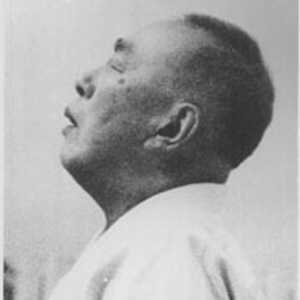
Itsuo Tsuda, ca 1970. Photo by Eva Rotgold

Q.: And then you decide to create l’École de la Respiration. That is quite a singular term! Can you tell us why you say “school”? Surely this was not a school in the traditional sense of the word?

I. T.: No, not at all (laughs). It’s the only name I could come up with to make people understand that there’s a whole… thing behind the breath. For the uninitiated, breathing is the work of the lungs. But here the word “breathing” takes on a greater and greater extent, doesn’t it?

Q.: Yes, so at l’École de la Respiration, people practise the Regenerating Movement. You described the Regenerating Movement as an exercise of the extrapyramidal motor system.

I. T.: Yes. The Regenerating Movement is not a discipline in the usual sense of the word.

Q.: The word extra-pyramidal may not be immediately comprehensible to our listeners. In any case, the term “extra-pyramidal” basically refers to an area of the brain, as compared to another considered to be the seat of voluntary movement.

I. T.: Yes. In humans, there are two motor tracts. One is the pyramidal motor system, which is the source of all voluntary movement. That’s what we learn in school, like the interweaving of the nervous systems, and so on.

Q.: It’s a term from physiology…

I. T.: …yes, that’s right. But for a long time we neglected the extra-pyramidal system, which supports this voluntary system, because we were afraid of leaving the voluntary system, and that is precisely what Master Noguchi started to do. When he himself began, he was a little surprised because the body starts to move on its own. When you believe that the whole body obeys your will, it is strange, isn’t it? But the truth is, we do not control all the body’s movements. If that were necessary, what would we do when we’re asleep?

Q.: There is a whole area of our activity that is covered by the voluntary system. But that system does not govern all our activity. There is an area that is beyond the reach of the will.

I. T.: There’s a Japanese doctor who says that voluntary movement accounts for only three per cent of our total bodily movement. But for Noguchi, nothing is voluntary. That’s (laughs) really strong.

Q.: In short, the action of the extra-pyramidal system is somehow superimposed on the action of the pyramidal system.

I. T.: Yes.

Q.: You’ve specified that the Regenerating Movement exists in two forms…

I. T.: … Yes…

Q.: … on the one hand, in all individuals, it exists as a form of natural bodily reaction, for example, yawning, sneezing, restlessness during sleep. And then there is another form, developed about fifty years ago by Master Noguchi. Master Noguchi, it should be pointed out, is the creator of the so-called “Seitai” method.

I. T.: He embarked on this career by pure chance. It was the time of the great earthquake of 1924 that hit the entire Tōkyō area. He was twelve at the time. He was very interested in that sort of thing, he had fun with it. But the whole region was devastated, and there were people who were homeless and wandering around; diarrhoea was spreading, and so on. He saw a woman crouched down in great pain. So he rushed over to her and simply applied his hand…

Q.: … applied his hand to the spine…

I. T.: … and then she said, “thank you, child”, or anyway, she smiled at him. That was the starting point of his career. The very next day, people started coming to see him. Starting on that day, he was no longer able to leave this path. This is what we practise now under the name of “yuki”: you put your hand on the spine or the head and then exhale through your hand, and that’s it. Well, when you see it done, at first glance, it doesn’t seem like much. But as you concentrate on it, you feel that it’s working inside you.

Q.: So yuki is one of the elements of the technique developed by Master Noguchi. There’s something that surprises me a little about the technique you’re describing: Seitai, as you explain, is a technique used to provoke something spontaneous. Isn’t that a little paradoxical?

I. T.: Seitai is a word that Noguchi coined later. In the beginning, by force of circumstance, he simply became… a healer. He practised therapeutics. But, around 1950, there, he abandoned this notion of healing, of therapeutics; he rejected all that and created the notion of “Seitai”, meaning “normalised terrain”. When the terrain is normalised, problems disappear on their own.

Q.: Perhaps we could temporarily summarise the Regenerating Movement with two important elements: the exercise of the extrapyramidal motor system. This exercise is not really a technique. In fact you say, “at l’École de la Respiration, we work without knowledge, without technique and without purpose”. As for the second important element, the Regenerating Movement is a spontaneous movement that virtually exists in all individuals, and we cannot say that the Movement is provoked; it becomes activated in individuals.

[end of Broadcast N° 3/6]

continue with Broadcast N° 4:

Would you like to hear about the next article?

Subscribe to our newsletter

What Binds Us Together: Microbiota and Human Terrain

On 30 November 2022, Tenshin dōjō in Paris will welcome biologist Marc-André Selosse for a lecture entitled: The Human Microbiota: From Our Bodies to Our Civilisations.

Here we offer you a reading of his book Never Alone (in French) and its points of convergence with Seitai.


What binds us together: microbiota and human terrain

Since the dawn of civilisation, microbes have shaped our diet, enabling food (bread, cheese, wine, vegetables, etc.) to be preserved and consumed. Domesticated empirically for thousands of years, the microorganisms involved in these processes were only identified relatively recently, less than 200 years ago.

And it is only even more recently that scientists have begun to study the microbiota, i. e. all the bacteria, fungi, viruses, etc. that are harboured by a host organism (e. g. a human being) and live in a specific environment of that host, such as the skin or stomach.

Most of us are unaware that our lives depend on a close association, called symbiosis, that we naturally establish with tens of billions of bacteria that populate the surface of our bodies and even the depths of our intestines. We consider ourselves to be above and independent of all this microbial influence, with the notable exception of people with colds, who often hear the phrase, ‘Ah, but don’t give me your germs!’ The microbiota is therefore considered, at best, only for or in terms of its pathogenic potential.

This now outdated but still omnipresent view of microbes as harmful has profoundly influenced our relationship with nature, our bodies and, more broadly, life itself. Whether it be pesticides in agriculture or antibacterial soaps and disinfectant gels on our skin, these products indiscriminately eliminate both beneficial and harmful microorganisms, creating conditions that impoverish the soil – both in our fields and in our mucous membranes.

These hygienist actions, repeated over time, starting at birth, prevent the human immune system from maturing, so that later on it will no longer be able to recognise the body of which it is a part, or will have disproportionate reactions. Our era is also one of autoimmune diseases and allergies.1Marc-André Selosse, Jamais seul — Ces microbes qui construisent les plantes, les animaux et les civilisations [Never Alone — The Microbes That Build Plants, Animals and Civilisations], 2017, pub. Actes Sud (Arles, France), p. 185

The Seitai principles, in the work of Haruchika Noguchi2See the work of Itsuo Tsuda (9 volumes), available from pub. Courrier du Livre (Paris), and Haruchika Noguchi, 3 books in English available from Zensei Publishing, start from a radical point of view: intuitive rather than analytical. Based on his thirty years of experience as a healer, H. Noguchi abandoned the idea of therapy in the 1950s because he had observed that it weakened individuals’ bodies and made them dependent on the practitioner. This led him to consider health in a completely different way, acknowledging that the body’s reactions are manifestations of an organism responding to restore its balance.

‘Illness is natural, the body’s effort to recover lost balance.’ ‘It is good that illness exists, but people must avoid becoming enslaved to it. This is how Noguchi happened to conceive of the notion of Seitai, the normalisation of the terrain, if you will.’ 3Itsuo Tsuda, The Dialogue of Silence, Chap. IX, Yume Editions, 2018 (1979), pp. 75 & 76

This rebalancing is the work of the involuntary system; it does not depend on our will. It causes symptoms that involve the microbiota. For example, the flows that expel harmful germs from the body (colds, diarrhoea)4Never Alone (op. cit.), p. 156, the regulatory function of fever, or the antibiotic function of iron deficiency in pregnant women.5 See the blog article Marc-André Selosse: La disparition silencieuse des SVT [M.-A S.: The Quiet Disappearance of Earth and Life Sciences], Café pédagogique [Pedagogical Coffee], 7 May 2019

The Seitai philosophy has the distinctive feature of viewing human beings as an indivisible whole. There is no separation between the psychological and the physical. The word seitai (整体) translates as ‘normalised terrain’. H. Noguchi‘s concept of terrain is comprehensive. It partly overlaps with the concept of microbiota. For us, the latter is like the soil surrounding the roots of a tree; it is Nature living in harmony and collaboration within each of us, without us even being aware of it. That is why we are never alone.

Whether we consider microbes to be harmful and fight them, or take advantage of their help and collaborate with them naturally, is a question of inner orientation. Favouring excessive hygiene or promoting what Mr. Selosse calls ‘clean dirt’6Never Alone (op. cit.), p. 156 and p. 197 is part of this same choice. The expression ‘cultivating one’s garden’7ibid., p. 169 takes on a new and concrete meaning. It all depends on us.

Where instinct has disappeared, scientific discoveries must be made available. Although self-taught, H. Noguchi was fully aware of the science of his time. This fuelled his reflections and intuitions. In this same spirit, we are honoured to welcome Prof. Marc-André Selosse, who will present the latest discoveries on the human microbiota and engage in a discussion with the audience.

Reservations required
jamais seul selosse

Notes

  • 1
    Marc-André Selosse, Jamais seul — Ces microbes qui construisent les plantes, les animaux et les civilisations [Never Alone — The Microbes That Build Plants, Animals and Civilisations], 2017, pub. Actes Sud (Arles, France), p. 185
  • 2
    See the work of Itsuo Tsuda (9 volumes), available from pub. Courrier du Livre (Paris), and Haruchika Noguchi, 3 books in English available from Zensei Publishing
  • 3
    Itsuo Tsuda, The Dialogue of Silence, Chap. IX, Yume Editions, 2018 (1979), pp. 75 & 76
  • 4
    Never Alone (op. cit.), p. 156
  • 5
    See the blog article Marc-André Selosse: La disparition silencieuse des SVT [M.-A S.: The Quiet Disappearance of Earth and Life Sciences], Café pédagogique [Pedagogical Coffee], 7 May 2019
  • 6
    Never Alone (op. cit.), p. 156 and p. 197
  • 7
    ibid., p. 169

To Live Utopia – Interview with Manon Soavi

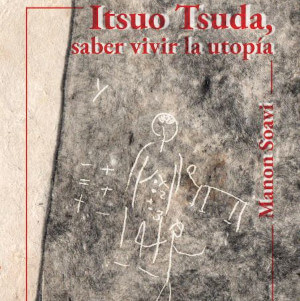
[Oct. 23] In this interview, Manon Soavi talks to us about her book Itsuo Tsuda, The Anarchist Master — The Art of Living Utopia.

Itsuo Tsuda, The Anarchist Master — The Art of Living Utopia is available at your local bookshop or on L’Originel publishing website.

In this interview, Manon Soavi discusses several aspects covered in her book:

  1. A free childhood
  2. The roots of Taoism and anarchism
  3. Itsuo Tsuda and anarchism
  4. Itsuo Tsuda‘s practical philosophy: Aikidō and Katsugen undō
  5. The tools of a revolution
  6. The dōjō, a place for collective experimentation
  7. A daily tool: the hot bath
  8. The science of the particular
  9. Children’s natural abilities
  10. The upper body society
  11. The relationship between men and women

To find out about meetings and events related to the book, visit this webpage.

An interview conducted in Paris at Tenshin dōjō.

Would you like to hear about the next article?

Subscribe to our newsletter

Tenshin Dojo – ‘Every Day is a Good Day’

When visitors walk through the door of the dojo, after pausing for a moment, they often exclaim, ‘How lucky you are to be here!’ Over 200m² of tatami mats in the heart of Paris, a cosy coffee corner, a small garden – it’s quite something! However, it’s not a matter of luck, but rather the decisions made by a small group of individuals for their practices over thirty years ago.

The need for an autonomous and dedicated space

Upon his arrival in France in the 1970s, Tsuda Itsuo sensei emphasised the need for a place dedicated to the practice of the way. He himself created several dojos exclusively for the practice of Aikido and Katsugen Undo. The Tenshin association was founded by students of Régis Soavi sensei, himself a student of Tsuda sensei. At first, they experimented with practising in public places, but after a few months it became necessary to find a dedicated space: a place for themselves and for everyone. However, creating such a space requires a lot of work and ongoing commitment. Why bother with renovations, paying rent, dealing with heating, rubbish collection and cleaning, rather than just going to a gym? In our School, a dojo is less a physical place than a space charged with atmosphere, with ki1See Manon Soavi‘s article ‘Dojo, another spacetime. In any case, it is impossible to create this atmosphere in a public place, where no one really takes care of it.
Dojo Tenshin Paris

Inner awakening through practice

The first Tenshin dojo was located on Quai de la Gare, in a former SNCF2[France’s state-owned railway operator] building. Major renovations were carried out by the members. Due to an urban development project, this dojo was demolished seven years after our arrival. ‘So much energy expended for so little time!’ one might say, but acting here and now was nevertheless essential.

Making do with what we had and working together

The premises at 120 Rue des Grands-Champs, former offices, were not immediately suitable. Without significant financial resources, the work was done with recycled materials, pooling everyone’s knowledge, which gave everyone the opportunity to learn. All the dojos of the Itsuo Tsuda School were built according to these principles, described in detail by the Yuki-Hō dojo in issue 9 of this magazine, in April 2022.

Le 120 rue des Grands-Champs 75020 Paris Dojo Tenshin Paris

A full emptiness

So we have a beautiful place that is empty most of the day, with no logic of profitability! Apart from the morning session and certain evenings: emptiness. But a full, charged emptiness. Although it is a silent interlude in the urban cacophony, it is also a place for discussions, meetings, readings, screenings: it is a place of culture. And it is also a place of life, for all ages. So when small children discover the dojo, they say nothing, but many pause at the entrance to the tatami mats before quickly making themselves at home in this space. To embrace all these apparent contradictions about what is and is not done there, it is important to understand that Tenshin is a place of transmission. In our eyes, it is the ‘hombu-dōjō’ of our school, where Régis Soavi sensei teaches daily. Being able to come every day to practise Aikido in the presence of our Sensei and exchange ideas with him is invaluable. It is impossible to sum up in a few words what takes years to understand.

Dojo Tenshin Paris

A self-managed utopia

Our dojo has been in existence for nearly forty years. An independent and autonomous dojo allows members to decide how it is used. The Tenshin dojo is open every morning and some evenings, 365 days a year, for Aikido and Katsugen Undo sessions and courses. Everyone can come at their own pace. After two years of retreat, we are organising several events this year to introduce everyone to this place that is so dear to us.

This utopia is possible thanks to the responsibility and decisions of each individual. It is an opportunity that we give ourselves.

The library corner of the Tenshin dojo, Paris

Would you like to hear about the next article?

Subscribe to our newsletter

Article published in January 2023 in Self & Dragon Spécial Aikido n° 12.

Notes

Bamboo Bends but Does Not Break

This old Chinese proverb is the source of many martial arts, both Chinese and Japanese, but we often find it very difficult to live by it on a daily basis. Our society leads us to be either dominant or dominated, strong or weak, fighting or giving up. Staying the course without being rigid, bending without breaking: this is what the members of the Scuola della Respirazione dojo in Milan have had to face for three years. Since 2020, they have been doing everything they can to buy the dojo premises, which are up for sale. A sale that threatened the very existence of the dojo. But as Itsuo Tsuda sensei said, ‘sometimes it is better to fail than to succeed’1Itsuo Tsuda, One, Foreword, Yume Editions, 2016, p. 9, and as in ancient tales, it is when all is lost that we discover ourselves.

The story of a ‘failure’ by Eloïse Soavi

Three years! 1,095 days, 26,298 hours, 1,576,800 minutes. Our entire being focused on a single goal: to purchase the premises located at Via Fioravanti 30. In this, we failed. But we gained something else, something far more valuable. Although the beginning was difficult and many arguments broke out over the slightest thing, the daily obstacles in our path eventually erased these differences. Just as the river polishes pebbles by knocking them together every day, this daily struggle punctuated by setbacks eventually smoothed us out. On 30 October 2023, the purchase of the premises located at Via Conte Verde 4 in Milan was signed. Work has begun and, drop by drop of sweat, it is time to conquer our new space and build our new dojo.

Click on the arrows to scroll.

The exterior and interior in their original condition

The first blows of the hammer

Creating the changing rooms, mezzanine and staircase

Plumbing, electrical work and tiling

The future Workshop of Painting-Expressing

strong>Would you like to hear about the next article?

Subscribe to our newsletter

Notes

  • 1
    Itsuo Tsuda, One, Foreword, Yume Editions, 2016, p. 9

Dôjô, Perpetual Motion

by Manon Soavi

The opening of a new place to practise is always a joy, which is why we are delighted that a new dojo is opening in Pescara, a city located in the Abruzzo region on the Adriatic coast. Manola D. P., who, together with a group of people, was behind the creation of the Bodaï dojo in Rome, is now opening this second venue, after 18 years of travelling the 200 kilometres between Pescara and Rome to practise and keep the dojo alive.

On this occasion, we wanted to share with you some thoughts and photos that put the history of our school’s dojos into perspective. With a selection of photos illustrating how dojos are both places and concrete spaces, imbued with years of daily practice. Places carried by the energy and direction given by our sensei Régis Soavi for over forty years. And at the same time, places that are built by the will of the members themselves, by themselves and for themselves.

Let’s start by taking a look at what the premises in Pescara currently look like, and although it may seem discouraging, if you look further down at what the dojos looked like before the members started work, you’ll see that everything is fine!


To accompany this look back at the dojos that have already gone through the creation stage, here are some thoughts from my book The Anarchist Master, Itsuo Tsuda.

Excerpts from Chapter 8 Creating Situations: ‘Itsuo Tsuda, like Chuang Tzu, the Mamá Kogui, and the Situationists, also creates “situations” that enable and encourage the discovery of the philosophy of Non-Doing. It is not entirely certain that he thought of it in these terms, but his attachment to certain things – showing the importance he attached to them, the power he gave to these possibilities, to these situations – seems interesting to me, which is why I will highlight several of them.’

‘When he arrived in Paris, Itsuo Tsuda wanted to create a dojo very quickly. For the work he came to do in the West, he needed this tool, this place: a dojo, not a gym or a club. We could stop at the idea that Itsuo Tsuda, a Japanese man in his late fifties, was a traditionalist and that dojo is a Japanese cultural concept – there are dojos for kyudo, kendo, karate, etc. Nevertheless, Tsuda does not create Japanese dojos in the strict sense of the term. He imbues these places with a function of self-emancipation.’

Yuki Hō, Toulouse, since 1983


‘The dojo is not a place of consumption, nor is it solely for personal practice. In Japan, it is inseparable from the concept of uchideshi, or live-in students. These students live on site and take care of everything, sweeping the floors, preparing the master’s bath, cooking, gardening, etc. This teaching by immersion, by sharing a collective life with the master’s family but also with the other uchideshi, is a strong element of Japanese culture. The basic principle is that it is the student who wants to learn and not the teacher who seeks to impart knowledge. In Japan, they talk about “stealing the teaching”: the whole positioning is therefore reversed.’

Tenshin, Paris, since 1985


‘From this culture, Itsuo Tsuda retained the “total teaching” aspect of lived experience and working together. Of course, there would be no uchideshi, as Tsuda never wanted to mimic traditions or engage in Japonism. On the contrary, he extracted the essence of these traditions and, although stripped of their local colours, sought ways to reuse them in the contemporary world. The dojo is open every day, with a session at 6:30 in the morning and two evenings a week. Throughout the year, without interruption, the sessions are led by Tsuda and the members themselves.’

Scuola della respirazione, Milano, since 1983


’For the dojo is a place for individual and collective experimentation, for practising autonomy, where, like the uchideshi, everyone takes responsibility for different aspects of daily life in the dojo – discussing, deciding, DIY, gardening, repairs, leading sessions. It is a matter of moving away from the logic of dependence and the “ease” of relying on experts. As the philosopher Ivan Illich points out, individuals have forgotten how to recognise their own needs and, “intoxicated by the belief in better decision-making, they find it difficult to decide for themselves and soon lose confidence in their own power to do so”. (Ivan Illich, La Convivialité, pub. Seuil (Paris), 1973, p. 126.)’

Bodai, Roma, since 2004


‘The dojo does not welcome clients. Tsuda refuses to take responsibility for anyone, so every step must be an individual act of self-care. […] Thus, everyone is at home in the dojo, and at home with others at the same time. It is a place for both the individual and the collective.’

Akitsu, Blois, since 2007


Excerpt from the chapter Cultivating Sensitivity and Attention: ‘To do without rules, laws and leaders, one must pay close attention to both oneself and the collective. As the rebels of the Invisible Committee perfectly summarise: “Suddenly, life ceases to be divided into connected segments. Sleeping, fighting, eating, caring for oneself, partying, conspiring, debating are all part of a single vital movement. Not everything is organised, everything is organising itself. The difference is notable. One calls for management, the other for attention.” This state of distraction and insensitivity, which leads to a lack of attention, is often what causes many community experiments to fail. We are so used to following orders and rules and being assisted in all aspects of our lives that we do not even realise the degree of sensitivity and attention required to live “order without power”, as proposed by anarchism.’ (excerpt from The Anarchist Master, Itsuo Tsuda)

Dōjō, conceived in this way, is an excellent tool for rediscovering our abilities to focus, be sensitive and organise ourselves.

Ryokan, Ancona, since 2005


Our school has two other dojos that required less work but are still worthy of mention in this article:

Zensei, Torino, since 2013
Katsugen kai, Amsterdam, since 2005


Living Without Certainty or Uncertainty

by Régis Soavi

It is undoubtedly certainties that cause the most harm in the practice of martial arts, as they often stem from thinking that has become stuck in patterns that others have tried and tested in the past. By keeping doubt at bay, we confine ourselves to a familiar world that is certainly reassuring, but which risks blocking the mind and body.

Certainties often lead to repetition – which is reassuring – and monotony – which is demotivating –, if not to pretension or complacency – which, for their part, prevent any real progress. Uncertainty, on the other hand, if not a pretext for shying away from a situation that could have been dealt with courageously, and if it does not block action already undertaken with doubts that are often unfounded and lead to going round in circles, can be a source of understanding, originality, creation, and therefore open-mindedness which leads to intelligence. By questioning established certainties, it can reveal the origin of techniques that were previously misunderstood, their importance at a given time and, consequently, their sometimes uselessness at another. When certainty is the result of the practitioner’s personal experience and is based on concrete practice devoid of presumptions, it can bring about a sense a tranquillity that is not artificial and encourage the awakening of an inner strength that knows how to use intuition in order to be in harmony with the situation at hand.

incertitude
favouring neither certainties nor uncertainties

Teaching

One of the difficulties in teaching is to avoid promoting either certainty or uncertainty, and to avoid idealisation that could arise from overly peremptory statements about the power of certain techniques, certain schools, etc. It is entirely possible and even very healthy for some students to have uncertainties and questions about their practice. All they need to do is react simply and ask for an explanation of the reason for a particular posture. This does not mean questioning the person in charge of the session, nor is it an opportunity to doubt their abilities in order to provoke them into demonstrating their skill. The principle of uncertainty should not be used to question the teacher’s qualities, with the aim of proving that there are flaws and causing problems by not following the rules of training, breaking them, or mixing techniques. When used correctly, uncertainty forces us to look further and deeper, both physically and mentally, to understand why this art has already convinced so many people before reaching us, and how it has been able to survive for years and sometimes centuries in hundreds of countries while remaining perfectly relevant in essence.

Certainty

Certainty can be very useful if one has a good understanding of the Taoist philosophy of Yin and Yang, each of which contains an active though small part of the other. There is therefore no disadvantage in using our conviction in the worth of a technique that is essentially considered Yang, as it intrinsically contains doubt (its Yin component). If this technique is undermined despite our certainties, an adaptation immediately arises to compensate for the imbalance that has been created, and order is restored. It is not the technique itself that is called into question, nor the certainty of its worth, but rather its overly rigid use due to overconfidence, poor mastery due to lack of training or a certain level of incompetence, or even a misunderstanding of the action being performed. Competence can sometimes lead us to certainties, which is important in terms of survival, for example, because there are circumstances where we cannot afford to have doubts; being uncertain could cause terrible damage. In this case, it is essential to set aside anything that could hinder the desired outcome.

While certainty drives us forward, with all the risks that this sometimes entails, uncertainty tends to hold us back or immobilise us. But it also forces us to reflect on reality, to escape the confusion created by the virtual and thereby unreal images, series and films that the world around us offers us. An individual will achieve greater balance if, after reflection, they move from uncertainty to certainty, even if it is relative, rather than following the opposite path, because uncertainty, if it is the result of this approach, can present itself as wisdom, serving as an excuse for fear or mistrust. In this case, it leads to hesitation, blockages and very often regrets about not having found the right path.

incertitude
regular practice of Aikido transforms our perspectives

Living with uncertainty

In fact, each of us lives day by day and therefore in uncertainty about what will happen the next day. Who can say with certainty when our life will end or what will happen tomorrow? Even though we have no certainty about anything, we live as if we were sure of the future, or to be more accurate, we avoid worrying too much because we instinctively know the consequences of worry. If this uncertainty prevents us from living normally because of the tension it causes, the logical consequence will be illness, debilitating blockages or mental problems, or even some form of neurosis. It is always possible to live with the conviction that our ideas are unquestionable, but if, on the occasion of an event, perhaps fortuitous, we step out of the illusion, we very quickly realise the falseness of the path we have taken.

Fundamentally, in order to live with certainty, it might seem almost unavoidable to embrace an ideology, whether religious, political, sectarian, scientific or otherwise, even unconsciously. It is an extremely reassuring and calming solution, and it makes life enviable because it seems to be a recourse, perhaps even the ideal refuge from the daily difficulties faced by human beings. It is not necessarily weak individuals who adopt this solution; there are many people who, thinking themselves free from influence or even being rebellious, find themselves drawn in by reasoning that, although fallacious, seems extremely convincing to them. Very often, it is also a mode of behaviour made indispensable or simply necessary by those around them in certain types of societies, whether modern or ancestral, and which thus makes relationships easier. Education and the media coverage of certain ideologies have ended up indoctrinating entire populations, with the result that people have become apathetic and thereby more easily manipulated.

Aikido to get through

Without certainty or uncertainty, the practice of Aikido allows us to reach that moment in the present so often described in Taoism or Zen Buddhism. It is through Non-Doing that we can rediscover the serenity that is essential to our practice. No technique is of any interest if it does not support the flow of a Ki that aims to purify our mind and body of what burdens us.

It is a matter of awakening phenomena buried deep within our humanity, which may escape rational understanding but bring us closer to childhood and, by the same token, to the Sacred in its simplest sense. From the moment we begin practising, we embark on an initiatory journey that takes us to shores that were unknown to us, but which we suspected existed because we had sensed them for a very long time.

At the end of each session, when the “free movement” part begins, we have the opportunity to escape for a few moments from the issues of certainty or uncertainty and, being in the present moment, busy feeling and even merging with our partner, communicate with a different dimension, one that is familiar to us but too often blocked in everyday life. Our attention, focused on what is happening “here and now”, is freed from what hinders it, allowing us to let the movements and techniques flow, unfolding with the greatest freedom and at the same time with the rigour that is essential to their realisation.

Les aveugles et l'éléphant par Katsushika Hokusai
The Blind Men and The Elephant, by Katsushika Hokusai

The story of the blind men and the elephant

This Indian fable, which has become one of the most famous philosophical parables, has been around for at least two and a half thousand years. It tells the story of six learned blind men who wanted to increase their knowledge and compared their information after touching an elephant, but because of their blindness, each of them had only had access to one part of the animal’s body. The result was disastrous because none of them had the same answer. One said it resembled a wall, another a long tube, and a third, who touched the leg, thought it was like a tree or a column. Each was individually convinced that he was right and, based on his past knowledge and his experience of yesterday and today, he was certain that he was correct. Their certainty could even lead them into conflict; a wise man who was passing by brought them the solution, resolving their problem and dispelling the conflict, thus restoring their peace of mind. They left feeling calm because neither of them was wrong, but simply because their truths were incomplete.

As in this tale, certainties can lead us in the wrong direction if we do not know how to look beyond appearances whenever we encounter and recognise them. Like blind people, we can recognise that our certainties are indeed a reality, but certainly not the only one, and if we search sincerely within ourselves, we may find answers that are different from what we thought. Where there were uncertainties or certainties, we may find understanding and intelligence.

Unimaginable

Regular practice of Aikido transforms our perspectives and takes us further than we initially thought possible. We cannot imagine what lies behind this practice, or perhaps I should say, at its core. It is a return to self-confidence, which is based on and verified by the experience gained during years of practice without competition but not without emulation. This confidence becomes both assurance and spontaneity, which we often thought we had lost due to disillusionment or disappointment over time.

It is no longer a question of seeking certainties in order to live in peace, or of feeling persecuted by the uncertainties of everyday life, but of facing reality and living it to the full, relying on our own unsuspected and unimaginable abilities, which are in fact more real and concrete than the world had, until now, allowed us to imagine. It is less a hope of resolving something that prevented us from fulfilling ourselves than an awareness of who we really are, which, thanks to this union of body and mind resulting from working on the circulation of Ki, finally blossoms to allow us the satisfaction of living without uncertainties or certainties.

Régis Soavi

Would you like to hear about the next article?

Subscribe to our newsletter

Article by Régis Soavi published in January 2023 in Self & Dragon Spécial Aikido n° 12.

Sport, Violence and Women #1

by Manon Soavi

Part 1: Getting Out of Denial


The Olympic Games have drawn attention on women’s sport, implicitly underlining the extent to which sport remains a competitive and aggressive world designed by and for men.

Ranging from the sexualisation of the body with compulsory tight and uncomfortable outfits, to the sexist and misogynistic rhetoric of the commentators, including the magnificent low-angle shots of the athletes’ buttocks, not to mention the veil ban for Muslim athletes, the sequence of the 2024 Olympics Games has spared us nothing.

Just for a few women who shine – and at what cost? – how many are broken, disgusted or discouraged? Reports of abuse by coaches, mentors or peers are, unfortunately, “only” the tip of the iceberg. Underneath lies a continuum1 of violence that contributes to the domestication, objectification and annihilation of women. This abuse also affects amateur sport, as every year one in two women does not take part in physical activity despite wanting to2.

As an aikido teacher and a feminist, I feel anger: the world of martial arts is no exception. As the bearer of a fantasy that equates fighting and virility, this world is a true preserve of masculine identity. Under the guise of martial efficiency, violence against women is silenced, their difficulties to gain access to the tatamis are denied, and criticism is rejected, when these practices could be used as emancipatory arts for the benefit of all, including women who are deprived of their benefits.

Don’t keep silent any longer

Nevertheless, some voices are being raised: that of judoka Patrick Roux, who has denounced3 the violence inflicted on children under the pretext of training. That of American aikidoka Neilu Naini4, who was drugged and raped by her sensei (an aikido master), with the complicity of a tatami peer. Founder of #metooaikido, she campaigns for safer dojos through prevention work. Or yet Djihene Abdellilah5, grappling and MMA champion, who keeps denouncing the traumatising violence inflicted for the sake of combat preparation.

It is time to rebel and to remind the world that martial arts are not a ridiculous display of sweaty virility, nor a free pass to violence, but millenary tools rich in philosophies of life: respect, body work, flexibility, breathing, pushing one’s limits, development of sensitivity and intuition…

Even aikido which claims to be universal and open to all is in crisis: numbers are in free fall6, practitioners are getting older and the number of women is still as low as ever: 20% to 30%. But any criticism of its androcentric orientation is dismissed as “feminist hysteria”. The old recipe: a pinch of gaslighting7 mixed with a healthy dose of mansplaining8.

When I set up a women-only aikido session in Paris9, I received – fortunately – a lot of support but also a lot of criticism from aikidokas: epidermal reactions warning me not to create divisions within this universalist art at the risk of provoking an unlikely disaster. However, I believe it necessary not only to denounce abuses, but also to take a closer look at the reality of women and what prevents them from engaging in sport and martial arts.

Systemic inequalities

Several studies have provided revealing figures in this regard. The Move Her Mind study10 is the world’s largest11 research carried on gender inequality in sport.

The first finding of this study is the disparity between men’s views and women’s daily reality. 54% of men think that women have given up sport because they do not like it, and 56% believe that the main obstacles are physical complexes, fear of harassment and fear of being judged. However, lack of time is the number one barrier cited by the women concerned.

In fact, women worldwide are dissatisfied with their level of physical activity – 53% in Europe – and face systematic barriers to exercise. When asked, they identified five main obstacles12.

Time (76%)

Influenced by gender conditioning, women lack time. According to them, the main obstacle is the distribution of domestic tasks and care work – care, education, care of dependents, emotional support – within the family13. According to INSEE14, when both parents work full time, 70% of women do at least one hour of domestic work a day, compared with 28% of men.

Costs (62%)

Men earn (on average) 32% more than women, which puts a strain on the budget the latter can devote to sport. In addition, mothers’ purchasing power falls after divorce: they lose 14.5% of their standard of living, while men increase it by 3.5%15.

Environment (43%)

The common – and daily – experience of being subjected to violence leads women to adopt strategies of self-exclusion from any situation that is perceived as unsafe. The paradox is that this inculcated fear makes them afraid of strangers outside, while they are in greater danger with their close relatives in familiar surroundings. As a reminder, 91% of rapes and attempted rapes are committed by family and friends16.

Women’s vulnerability, presented as a “natural” characteristic, leads to hyper-vigilance in the public spaces, fuelled by unpleasant, intimidating or humiliating experiences – punishment through sport as a child, violence by physical education coaches, compulsory swimming, etc. Unwanted comments will always call women to order, so that this male social control continues17.

Even in martial arts, the contempt shown towards women and beginners or occasional practitioners contributes to this vicious circle of lack of self-confidence. Traumatic experiences suffered from an early age have a lasting effect: ‘When I was twelve, the aikido teacher told me to lie down to demonstrate the strength of the hara. He stood on my belly. The pain was terrible, I thought I was going to faint. I stopped practising martial arts forever.’ 18

Female aikido beginners talk: ‘I got on the tatami for the first time, we did the salute, a man grabbed me without a word and I found myself on the floor with my nose against a stinking tatami. I never went back.’ Another: ‘After a 3-minute warm-up, my aikido teacher sets off for 20 minutes of techniques with a breakfall19. The ten beginners who don’t know how to fall in this way have no explanation nor any accessible alternative’.

This mistreatment also applies to older people. Between the ages of 40 and 70, women can lose 40% of their bone mass and are therefore more prone to fractures. A Parisian woman reports: ‘Starting aikido when I was over 60, I practised with a tall, burly man. I had never seen the proposed technique, but without any explanation he lifted me up, put me on his hip and threw me straight down to the ground (koshi nage)’.

A study carried out by the Women’s Commission of the French Aikido and Budo Federation20 deplores the same situation in aikido clubs. Instead of putting all their energy into their art, female aikido practitioners exhaust themselves trying to protect themselves from the brutal behaviour of their partners: ‘I’m physically afraid, some of them slaughter your wrists, force you to take a breakfall, don’t let you fall safely. They don’t pace their force or hold back the blow’.

Under the guise of training, female practitioners are subjected to aggression: ‘I get real blows to the face on the pretext that I am in the wrong place and that it is natural for me to get them in the face’. When I visited another aikido school, I saw an older teacher, armed with a stick, repeatedly hitting a young girl in the plexus. She ended up with a bruise.

Djihene Abdellilah reminds us that there is no justification for beating and insulting people to supposedly toughen them up, and that being beaten does not create “warriors”, but victims. The violence she herself has suffered did not make her stronger, but normalised in her mind the physical and psychological violence she now denounces. ‘According to sociologist and sport & gender specialist Christine Mennesson’s work, some women adopt “warrior” attitudes not by choice, but in order to be accepted and respected in male-dominated environments. This dynamic creates an illusion of consent to violent practices’ 21.

Physical condition (42%)

The self-limiting beliefs due to gender stereotypes and to lack of female representation lead to feelings of exclusion. This lack of self-confidence leads some women to believe that they are not fit enough for physical activity.

Aikidokas would also like22 to see more female teachers and practitioners highlighted in communications, seminars and demonstrations. As Yeza Lucas says: ‘If another woman joins the group, I am no longer alone. And if a third woman comes and already sees two women on the tatami, she too might feel less intimidated’ 23.

Lack of places (38%)

Women have learnt to see their biology as a “disadvantage” that must be set aside, even at the cost of losing their health, in order to gain a foothold in a world that idolises strength. Lola Lafon sums it up with humour: ‘Firmness is worshipped: firm breasts, firm thighs, “muscular” political and ballsy speeches. Anything but being a Flanby24. Horror of the fragile, the soft, the trembling’ 25.

Anything rounder, more flexible or tender is condemned to contempt and to endure violence. In this suffocating world, women, like the fish that has to climb a tree to prove its worth26, think they are stupid and incapable, or they take the blows while hurting themselves. This is why the younger generation (45%) demands places where they can exercise according to their wishes, in safety, and where their specific biology is taken into account.

I have in the above taken stock of the situation and it is not encouraging. Does this mean that the situation is hopeless? No, not at all: as we will see in the rest of this article, the solution exists, and it is very simple. All you have to do is become a ReSister27, or even to turn into a dragon.

Manon Soavi

To read the sequel, follow The Path of the Dragon

Article by Manon Soavi published on 13 Sept. 2024 on Élise Thiébaut‘s Mediapart blog

Subscribe to our newsletter

Notes:   [all notes in square brackets are added by the Translator]
  1. See Christelle Taeraud (ed.), Féminicides. Une histoire mondiale [Feminicides: A World History], 2022, pub. La Découverte (Paris)
  2. Move Her Mind 2023 study, 53% in Europe do not do as much as they would like. Source Santé Publique France [France Public Health], 2024, 41% of women do not do enough to maintain their health. 81% forget about themselves, putting their health and the needs of their loved ones first.
  3. Patrick Roux, Le revers de nos médailles [The Other Side of Our Medals], 2023, pub. Dunod (Paris)
  4. Read Neilu Naini’s story and commitment online
  5. World and French MMA grappling woman champion; founder of Djihene Academy
  6. Since 2016: Karate -15%, Judo -16%, Aikido -35%. Find out more on the aiki-kohai and paressemartiale blogs
  7. Gaslighting is a psychological concept that describes manoeuvres used to manipulate another person’s perception of reality. Information is distorted or presented in a different light, selectively omitted to favour the aggressor or distorted to make the victim doubt their perception and their mental health. See Hélène Frappat, Gaslighting ou l’art de faire taire les femmes [Gaslighting or the Art of Silencing Women], 2023, pub. L’Observatoire (Paris)
  8. Mansplaining refers to a situation in which a man explains to a woman something she already knows, or is even an expert in, in a patronising and paternalistic tone
  9. Women-only sessions and workshops at Tenshin dojo in Paris 20th district, Yuki-ho dojo in Toulouse and Yume dojo in Milan
  10. Commissioned by ASICS, a Japanese company that has been creating sports footwear and clothing since 1940
  11. Move Her Mind 2023 study, op. cit.
  12. Ibid.
  13. L’Observatoire des inégalités [The Inequalities Observatory]
  14. INSEE, 2022, online data
  15. INSEE data, available here and here
  16. Le Monde, “Viols: plus de neuf victimes sur dix connaissaient leur agresseur” [‘Rape: More than Nine Out of Ten Victims Knew their Attacker’], 2018
  17. Marylène Lieber, “Le sentiment d’insécurité des femmes dans l’espace public: une entrave à la citoyenneté?” [‘Women’s Feeling of Insecurity in the Public Space: a Barrier to Citizenship?’], Nouvelles Questions Féministes [New Feminist Issues], Vol. 21, pp. 41–56
  18. Oral testimony collected (in French) by the author
  19. [Falling from standing position in a swift, lively and powerful manner. It is a very constrained ukemi, very difficult to execute if you are not well-centred.]
  20. 2019 report, available online
  21. Djihene Abdellilah, Arrêtons de normaliser la violence dans l’entraînement sous couvert de formation de guerrières [Let’s Stop Normalising Violence in Training Under the Guise of Training Women Warriors], 1 Sept. 2024, pub. on LinkedIn
  22. FFAB 2019 report, op. cit.
  23. Yeza Lucas, Communiquer vous permet de fidéliser vos adhérents ! [Communicating Helps You Build Loyalty Among Your Members!]
  24. [This expression became popular during the presidency of François Hollande, who was criticised by some for being too soft, and pejoratively nicknamed Flanby, which is the name of a famous brand of French flan.]
  25. Lola Lafon, Prendre notre place dans ce monde [Taking Our Place in This World], podcast Chaud Dedans [Hot Inside], 12 June 2024
  26. Phrase attributed to Einstein
  27. [A play on the French and English words meaning: to resist as sisters (résister in French means to resist). An eponym comics has been published in 2021 by French artist Aurore Chapon and philosophy teacher and ecofeminism specialist Jeanne Burgart Goutal.]

We Have to Lose Our Heads So As to Inhabit Our Bodies

by Manon Soavi

We offer here to the reader the text of a talk given by Manon Soavi at the High-Alsace University’s Research Institute in European Language and Literature1 as part of the European Ecofeminisms seminar held on 14 and 15 November 2024.

One afternoon of the conference was devoted to author Françoise d’Eaubonne. Her son Vincent first presented a paper entitled The Place of the Body in the Life and Work of Françoise d’Eaubonne. This was followed by Manon Soavi’s speech drawing a link between the urgent need expressed by d’Eaubonne to reconnect with our bodies in order to overcome the dualistic patriarchal ideology and the proposition of an emancipatory self-practice coming from Tsuda Itsuo‘s philosophy of Non-Doing.

The afternoon continued with a screening of Manon Aubel‘s film Françoise d’Eaubonne, an Ecofeminist Epic1 and a round-table discussion with the participants.

Speech by Manon Soavi

Tsuda Itsuo was a Japanese writer born in 1914. He studied sinology with Marcel Granet and sociology with Marcel Mauss at the Sorbonne University in the 1930s. He strove tirelessly for freedom and took an interest in his Japanese culture, the relationship with the body and ancient Chinese thought. He is the author of ten books in French, published by Le Courrier du Livre (Paris), [all of which have been translated into English]. His philosophy of Non-Doing combines anarchist thinking with a subtle understanding of the Tao.

We are going to see how this philosophy resonates with ecofeminism, not by its label, but by its very nature.

D’Eaubonne‘s programmatic phrase ‘We have to lose our heads so as to inhabit our bodies’4 will serve as my starting point. What Françoise d’Eaubonne and Tsuda Itsuo had in common was their belief that emancipation required the integration of other patterns5 of thought in order to break out of dualism, and that the body was essential to this process.

Criticising and proposing other possibilities

As Vincent d’Eaubonne has shown, the body was a central subject in the life and thought of Françoise d’Eaubonne. Ahead of the feminism of her time and without yielding to any essentialism, she pointed to the primary role of the body in the mechanisms of domination and the urgent need to reappropriate it as a condition for liberation.

Critical of dualist thinking, like all ecofeminist women, Françoise d’Eaubonne emphasises that the materiality of the body, mired in the living, brings us back to our nature. It prevents us from looking at nature as an object. The body is a source of freedom and allows us to take hold of reality. Françoise d’Eaubonne warns of the worsening taming of the body, which can even disappear with virtualisation.

To tear oneself away from the body, to deny the living within us, is the appalling development against which she challenged us back in 1998 in Virtual and Domination6. As the paroxysm of the culture of distancing, the reign of the virtual is going to overturn man’s relationship with the world and perhaps cause an internal collapse by affecting the perceptible difference between the real and the virtual.

For her, this difference ‘can only be re-established by the old formula, the proof of the pudding is that you eat it, for the day when the first drug addict in the cybernetic labyrinth is found dead of hunger in his cabin, wearing the smile of the satiated of the imaginary.’7

For d’Eaubonne it is clear that the mind cannot survive healthily in the face of the annihilation of its senses, with the absence of touch8 and de-realisation. The loss of the locomotor, sensitive body, replaced by ‘a body hybridised with micro-processors and medical nano-machines, will lead to a significant decline in vitality’. While every innovation is frightening, none has ever had such a profound effect on human beings, and the enslavement of the virtual is of an unprecedented nature.

On the one hand, Françoise d’Eaubonne is sounding the alarm, but on the other she is also shaking up the socio-political framework that structures and determines what can and cannot be said to be a subject, what is perceived as sensitive, vital and intelligent and what is not. Frameworks of experience inscribed in our institutions, our perceptions, our bodies and our narratives. Through her writing, d’Eaubonne brings to light another, reunified world where dualisms and exploitation no longer apply.

In The Satellite of the Almond9, the first volume of her Losange Trilogy10, she shifts the centre of subject and object using the story of the exploration of an uninhabited planet that turns out to literally BE a body. Blurring the boundary between explorer and planet11. It is through their bodies that a fusion of carnal, rhythmic sensibility will take place between them.

In the next volume – The Shepherdesses of the Apocalypse12 – d’Eaubonne describes the beginnings of Anima, the civilisation of women. In the text, she weaves together nature and humanity, using plant vocabulary to describe women’s societies: ‘Everything sprouted, grew, leafed through in the women’s groups, communities and communes. Everything was rustling, speeches, quarrels, murmurs, comments and songs, and the Revolution was working with little noise and great clatter, sounding like a tree full of creaks and birds’. Further on, the sequence of bagpipes, seagulls and heather underlines the continuity between the human and non-human worlds13.

Very lucid, d’Eaubonne also describes the failure of the avant-garde‘s revolutionary action. In The Shepherdesses she writes of this failure that, in any case, ‘their liberation could only be intimate’14. It could not be achieved from the outside, by force or revolutionary theory. Only life experiences can change the intimate dimension of our bodies and our actions.

Remedying distance: I feel, therefore I am

How can we touch this dimension? This was also a crucial question for Tsuda Itsuo. For him, as for d’Eaubonne, we need to unlock the internal structures that have underpinned our ways of being and acting for centuries. By relying on other thought patterns and on the body.

According to researcher Barbara Glowczewski, myths and rituals are not symbolic. People act with these patterns. For the aborigines, the dream is a rhizomatic becoming, a ‘concept to think about’15. This is what d’Eaubonne does through her writing.

She points to us an essential key in the passage from The Shepherdesses where we witness the rebirth of a unified, cyclical world: ‘animal cries were born with the same timidity, far away, isolated, coming closer: “I’m here!”’16

This is a key. This ‘I am here’ neutralises the ‘I think, therefore I am’. This historically dated conception of man surrounded by objects, reified animals and an exploitable landscape.

But there are other conceptions of the world. Diverse cultures with common modes of existence that escape utilitarianism, the abstract universal and the human/environment divide. They are organic and unique. Action finds its reasons and purposes in the interiority of situations. Anthropologist Rodolpho Kush, who studied the indigenous cultures of South America, calls them the Cultures of Estar Siendo, Being There17.

On the other side of the Pacific, Japanese ecologist Imanishi Kinji identifies a similar notion with Ba 場, There or Being there18. It is a founding concept of Japanese culture that can be found in many aspects, including the word baai 場合19, to be somewhere, in the flesh, on a particular occasion. Geographer Augustin Berque18, Imanishi‘s translator, calls this situational ontology being-thereness21.

Imanishi also insists on the fact that living beings link what they are and where they are. And that it is through sensation, through intuition, that we can grasp the commonality of the human and non-human worlds. This is also reflected in Chinese writing. The ideogram Sei生, life, is not a concept, it is a trace that evokes perception. The sensation you get when you see a bud and feel that you yourself are alive within life on earth. Imanishi used to say: ‘I feel, therefore I am’.

This pattern reintegrates us into the earthly world, living among the living. Now, how can we act without falling back into the dualistic pattern? Ancient China provides us with another very interesting pattern: the 無爲 Wu-wei, Non-Doing. We shall see that this has nothing to do with withdrawal from collective action or any individualistic meditative stance.

Sabotaging Cartesian thinking: Non-Doing

Ursula Le Guin wrote: ‘All I’m trying to do is figure out how to put an obstacle in the way’22. Our mental structure, deformed by Cartesianism and dualism, cannot free itself from its straitjacket. That is why we have to put obstacles in the way. This is the aim of Tsuda Itsuo when he declares ‘Even if I do not think, I AM’23 Following the example of Tchouang-tseu, to provoke a collapse of logic in order to allow another understanding to emerge.

In Chinese and Japanese culture, there are techniques for hacking your brain. Short-circuiting the will to make way for a deeper, more connected intelligence. Practices such as Zen, calligraphy, martial arts, etc., aim to use bodily techniques to encourage the abandonment of calculating thought in order to allow Wu-wei (Non-doing) to emerge.

This is the meaning of the calligraphy Naka, the target. It represents bow, arrow, target and archer all in the same unit. Here thought and action are one. Non-doing is therefore a mode of activity24 in which action and speech are highly effective, precisely because of the absence of intentionality.

The ancient tales of Europe also used symbols to teach us how to find the right way to act. Whether it is kissing a frog, listening to the words of a fox, or waiting for the night to bring advice. It is all about letting go, clearing the air to listen and enter into the flow.

In the same way, Japanese craftsmen co-produce objects with living materials: iron, earth, water and fire. The craftsman is grateful for the unexpected turn his creation takes. So the act is no longer the result of ONE will, ONE subject. It is a multiplicity that expresses itself.

This pattern takes us away from colonial action, from DOING, from the engineer advocating abstract and external solutions to situations. The Kogi people suggested this situational Non-action by proposing the reintroduction of the tapir in Brazil rather than spending millions of dollars restoring primeval forests. Tapirs eat the fruit and make their droppings where there are no fruit trees, thus ‘planting’ the forest. Acting in/with the web of the world.

Native sciences in symbiosis have always existed. Just as animals and plants have always acted in ways that we have probably only glimpsed.

Here, with our urbanised and fragmented lifestyles, one way of entering these paradigms in concrete terms is to rediscover our bodies in everyday practices. To listen to our own involuntary resources, to reactivate our senses and to begin to re-establish a relationship between a rehabilitated wild way of thinking and a relativised learned way of thinking.

Emancipating self-practices

Marcel Mauss pointed out that the body is not only an expression of ourselves, but also of a cultural conception, social organisation and systems of representation of the world25. Social training and our alienation are therefore inscribed in our bodies.

In the East, body and mind are not separate, so philosophy and practice are inseparable. For Tsuda Itsuo, Aikido and Katsugen undo are part of the path of the philosophy of the Non-Doing. They are practices of emancipation in which we experience a gap between our habits and their recalibration.

It is through sensitive touch and movement that we experience a different kind of relationship, one which involves neither speech nor vision. We rediscover ‘knowledge about ourselves’ and ‘practices of ourselves’ that involve both the individual and the collective.

Seen in this perspective, Aikido is not about learning to fight and destroy. It is a study, through the body, of the possibilities of relating to others, despite and with conflict. To re-establish balance within ourselves, and within relationships.

Faced with the domestication of women and what Elsa Dorlin calls the ‘factory of disarmed bodies’26, d’Eaubonne emphasised the importance of reclaiming the ability to react. As an Aikido teacher, I join d’Eaubonne‘s call to rediscover ‘the ignored, repressed attitudes that frighten us so, the simplest fighting positions of the body’27.

The generation paradigm

Philosopher Émilie Hache28 underlines a very important point: extractivist industrial societies no longer show any concern for generation, i. e. the reproduction of conditions of existence. Historically replaced by the idea of Providence. A world created once and for all, no longer needing to be perpetuated on a daily basis. Generation is a total social phenomenon, concerning the perpetuation of humans, the clan, relationships with ancestors and the living amongst whom we live.

I would add that our societies no longer show any concern for the vital capacities of human (re)generation. The machine vision of a fragmented body leads us to think that we can wear out our bodies like we wear out a bicycle. From time to time, you have to apply the brakes and change pieces. Except that biological processes and metabolism do not at all respond in the same way as these mechanical processes, to which they have too often been compared.

Vital processes regenerate themselves and return to equilibrium on a daily basis if given the chance. But involuntary movement is repressed. The rigid body has difficulty reacting, keeping its balance and recovering from fatigue. As ecofeminist Ariel Salleh puts it: ‘Sensitivity to the flows of nature is lost when knowledge insists on the precise operations that need to be carried out to transform nature’29.

Conversely, in the paradigm of generation, human life is part of a holistic vision. Vernacular practices take care of internal resources, i. e. the innate ability to balance through the involuntary movement of the body on a daily basis.

The practice of Katsugen Undo, which is a kind of involuntary gymnastics, is part of this paradigm. It is the manifestation of the internal work that humans already possess, but which in our modern world needs a space-time to make room for the expression of the activity of the living within us.

Of course, it is not a question of miracle recipes, but of taking into account practices that balance and emancipate over the long term.

Conclusion

To conclude, when Françoise d’Eaubonne wrote ‘We have to lose our heads so as to inhabit our bodies’, she was expressing her radicalism. Refuse rather than continue. Lose our head if we have to rather than maintain patriarchal dualism. And then build something else, here and now.

I find in her the same integrity and determination that my parents had. In their case, it was because of their refusal to perpetuate the educational formatting that my sisters and I never went to school. Libertarian dojos were born out of their refusal to accept existing social relationships.

Most of them are urban, self-managed, egalitarian and subsidy-free. Where women are in the majority. Dojos made up of resourcefulness and tenacity over the last 40 years. Like the ZADs, they are breaking with neoliberal individualism as much as with the old forms of protest. They are places and practices from which changes affecting the individual and the collective can emerge.

The point is not to ape unhistorical practices, outside their own cultures. As Anna Tsing writes in The Mushroom at the End of the World30, ‘the ruins are closing in and encircling us on all sides, from industrial sites to devastated natural landscapes’. However, ‘the mistake would be to believe that we are content to survive in them, for it is also in these ruins, these margins, that life is sometimes more lively, more intense.’31

Indeed, these practices originated in Japan, in the ruins of the Second World War. They are a resurgent rhizome, an update of ancient vernacular wisdom. It is through the power of the use that people make of them to live out other possibilities here and now that they become strategic practices of resistance-creation that are profoundly ecofeminist.

Thank you for your attention.


Manon Soavi

A talk given by Manon Soavi in November 2024 in the High-Alsace University’s Research Institute in European Language (France).

Subscribe to our newsletter

Notes:
  1. [Original French: Institut de recherche en Langues et Littératures Européennes de l’Université de Haute-Alsace. All notes in brackets are Translator’s notes.]
  2. [Orig. Fr.: La place du corps dans la vie et l’œuvre de Françoise d’Eaubonne]
  3. [Fr.: Françoise d’Eaubonne — une épopée écoféministe]
  4. Françoise d’Eaubonne, personal correspondence with Alain Lezongar
  5. [In English in the text – the footnote explains the French use.] Term used in the human sciences: simplified model of a structure of individual or collective behaviour (psychological, sociological, linguistic). Synonyms: template, schema.
  6. [Fr.: Virtuel et domination] Françoise d’Eaubonne, « Virtuel et domination », review Temps critiques [Critical Times], #10, May 1998
  7. ibid.
  8. Anna Berrard and Anaïs Choulet-Vallet, « Mettre en contact plutôt que mettre à distance le monde sensible. Pour une épistémologie écoféministe du toucher » [‘Connecting Rather Than Distancing With The Sensitive Sphere. Towards an Ecofeminist Epistemology of The Sense of Touch’], review Tracés [Tracings], n° 42, 2022
  9. [Fr.: Le Satellite de l’Amande]
  10. [Fr.: La Trilogie du Losange]
  11. [The word planet in French is feminine, as is the explorer in the novel]
  12. [Fr.: Les Bergères de l’Apocalypse]
  13. See Mathilde Maudet’s analysis: Perspectives sur une écriture littéraire écoféministe dans Les Bergères de l’Apocalypse de Françoise d’Eaubonne et The Fifth Sacred Thing de Starhawk [Perspectives on Ecofeminist Literary Writing in Françoise d’Eaubonne’s Les Bergères de l’Apocalypse and Starhawk’s The Fifth Sacred Thing], M1 thesis in French and Comparative Literature, University of Montpellier 3, June 2023
  14. Françoise d’Eaubonne, Les Bergères de l’Apocalypse [The Shepherdesses of The Apocalypse], pub. Des femmes (Paris), March 2002, p. 367
  15. Barbara Glowczewski, Réveiller les esprits de la Terre [Awakening The Spirits of Earth], pub. Dehors, June 2021, p. 48
  16. The Shepherdesses of The Apocalypse, op. cit., p. 392
  17. Miguel Benasayag and Bastien Cany, Contre-offensive : Agir et résister dans la complexité [Counter-offensive: Acting and Resisting in Complexity], pub. Le Pommier, 2024
  18. Imanishi Kinji, Comment la nature fait science : Entretiens, souvenirs et intuitions [How Nature Produces Science: Interviews, Memories and Intuitions], pub. Wildproject (Marseille), 2022, p. 139
  19. Baai 場合, lit. an agreement (ai 合い) of different there (ba 場)
  20. Augustin Berque, ‘Fûdo and Edo—a note on Watsuji’s nipponity’, Feb. 2023 (contribution to an upcoming collective book on Watsuji, coordinated by Hans Peter Liederbach)
  21. [Fr.: y-présence. English translation by Berque himself (personal communication)]
  22. Quoted by Corinne Morel-Darleux in « Placer des obstacles sur la voie » [‘Placing obstacles in the way’], review Terrestres [Terrestrial], 6 Feb. 2020
  23. [Tsuda actually gives credits for this phrasing to Zen master Inoue Gien, cf. Even if I do not think, I am, Chap. I, Yume Editions (Paris), 2021, p. 13 (1st ed. in French: 1982)]
  24. Definition proposed by Jean François Billeter, see his Études and Leçons sur Tchouang-tseu [Studies and Lessons on Zhuangzi] published by Allia (Paris)
  25. Marcel Mauss, Les techniques du corps [The Body Techniques], talk given at the Société de Psychologie, 1934
  26. Elsa Dorlin, Se défendre. Une philosophie de la violence [Defending Oneself. A Philosophy of Violence], pub. La Découverte, 2017
  27. Françoise d’Eaubonne, Contre-violence. Ou la Résistance à l’État [Counter-violence. Or Resistance to The State], pub. Cambourakis (Paris), 2023
  28. Émilie Hache, De la génération et de son remplacement par la production [On Generation and Its Replacement by Production], pub. La Découverte, 2024
  29. Ariel Salleh, Pour une politique écoféministe [For an Ecofeminist Politics], co-pub. Wildproject & le passager clandestin, 2024, p. 244
  30. [Fr.: Le champignon de la fin du monde]
  31. Anna Tsing, Le champignon de la fin du monde. Sur les possibilités de vivre dans les ruines du capitalisme [The Mushroom at The End of The World. On the Possibilities of Living in The Ruins of Capitalism], pub. La Découverte, 2017

Tradition is Not the Cult of Ashes, but the Preservation of Fire #1

by Manon Soavi & Romaric Rifleu

Part 1: The investigation

Throughout their history, all martial traditions have been caught in the tension between evolving to adapt to the world and preserving their past skills. It is actually thanks to the alternation between these two poles that a tradition can continue; followers themselves are divided between those who modernise and those who delve into the origins. We need to get rid of any idea of hierarchy between them in order to appreciate the necessary work that each follower brings to this dynamic.

An example of this can be found in Western music with the research carried out in the 1990s by certain musicians on the manufacturing of instruments during the Baroque period. Their research led to a qualitative rediscovery of a repertoire that had been neglected because it was difficult to perform correctly on 20th-century instruments. Other musicians, on the other hand, such as Beethoven and Liszt, pushed the limits of the instruments of their time and led piano makers to modify their instruments, thus giving birth to the piano of today.

Miyamoto Musashi was one of those who, in order to create his two-sword school, modernised a martial tradition by ‘a reorganization of existing knowledge of technique’ 1 coming from his familial jitte2 school and own fighting experience. For us, this development is a thing of the past. A past that, on the one hand, we must keep alive through practice and, on the other hand, is nourished by the qualitative rediscoveries of certain researchers. The aim of this research is to provide a better understanding of the riai of a given martial tradition – that is, of the coherence of its principles. With the developments and contributions of each generation, one sometimes tends to lose sight of the riai. This is precisely why there are times when some adepts turn to the past to rediscover the roots of a school’s principles. This is the kind of work we want to discuss in this article on Musashi’s two-sword school.

Of course, the legacy of Miyamoto Musashi – like, incidentally, the legacy of Aikido itself – is historically controversial, with each branch claiming to be more authentic, more important, more realistic, and so on. In the same way that each of Ueshiba O Sensei’s disciples received his teaching at a different point in the master’s evolution and passed it on in their own way, so Musashi’s disciples received and passed on things that were similar but over the years became different. Once again, instead of looking for a hierarchy between these schools, these branches, instead of looking for a single truth, we can choose to nourish ourselves with the completeness that these differences bring in order to make Musashi’s art something alive.

Manon Soavi et Romaric Rifleu. Niten ichi ryu. Musashi ryu.
Manon Soavi & Romaric Rifleu, Niten Ichi ryū, training in Japan, 2023

Tatsuzawa Kunihiko senseï

When we were lucky enough to start studying Musashi ryū with Tatsuzawa sensei more than fifteen years ago, we knew almost nothing about the world of ancient Japanese schools. We had already been practising Aikido for about ten years, but we did not know what we were getting into, because these schools are not just a repertoire of ancient techniques and archaic weapons, they refer to a universe, a culture, a “cosmovision” you might say.

Tatsuzawa Sensei is Professor Emeritus of International Space Law and Vice Rector of Kyoto Ritsumeikan University. Descendant from a samurai family, he studied his family school, Jigo ryū, from an early age, before becoming a 10th master of Ioriden Niten Ichi ryū and the 19th master of Bushūden Kiraku ryū. The latter is a 500-year-old koryū that includes jūjutsu, iai, nagamaki, bō, tessen, kusarigama, kusari-fundo, yari and chigiriki. A martial tradition rich in around 180 katas, which represent a genuine dive into feudal Japan.

As a 10th generation master of Ioriden Niten Ichi ryū, Tatsuzawa sensei teaches several branches of what is known as Musashi ryū: Sakonden Niten Ichi ryū, Ioriden Niten Ichi ryū and Santo-ha Niten Ichi ryū. These three branches correspond to three periods in Musashi’s life: Sakonden in his youth, Ioriden in his middle age and Santo-ha at the end of his life. In the Musashi ryū, this ensemble forms a curriculum based on the traditional system of transmission by levels – Shoden, Chūden, Okuden. Each level allows you to deepen your understanding of Musashi ryū by discovering a branch and its specificities (without confusing them).

Tatsuzawa sensei explained that his own master, Hirakami Nobuyuki sensei, had carried out extensive research since the 1970s to find the forgotten traces left by various students of Musashi, which had finally enabled him to gain a better understanding of the power of Musashi’s kyokugi (lit. prowess, performance, art, ability).

Tatsusawa sensei, Ioriden niten ichi ryu.
Tatsusawa sensei, Ioriden Niten Ichi ryū

Miyamoto Musashi

Miyamoto Musashi (1584–1642) is an almost legendary figure in Japanese popular culture. He lived at a turning point in the history of his country, at the beginning of the Edo period. Japan was emerging from feudal warfare and beginning to stabilise around a strong power, but also a very rigid social structure. Tokitsu Kenji, in the research book he dedicated to him, says: ‘Because of the extension of his art into so many domains and the way in which he explored the limits of the knowledge of his time, Miyamoto Musashi reminds us of Leonardo da Vinci’3. Indeed, Musashi was also a painter, a sculptor, a calligrapher, and left a written work that occupies an important place in the history of the Japanese sword. He wrote several treatises on strategy, the most famous of which is Gorin no sho [The book of five rings], a compendium of the art of the sword and a treatise on strategy.

Living at the beginning of the Edo period, before the Tokugawa family’s policy of closing and stabilising Japan, Musashi also seems to have been a pivotal figure, the bearer of very ancient martial traditions and at the same time aware of his posterity and of a very different future, where some guidance would be needed. ‘[The strategy of combat] as well as reflection on it constitutes the basic background of Musashi’s life and conferred on it several dimensions. It was his constant reaching toward creating an expression of his art in writing that gives a unique quality to Musashi’s work.’ 4

Hirakami5 Nobuyuki has been researching the martial arts and the history of science and technology in the Edo period6 since the 1970s, and is passionate about the various schools of Miyamoto Musashi’s successors. He recalls his early days when he was already practising kendo: ‘The first person to teach me Santo-ha Niten Ichi ryū was Komatsu Nobuo Sensei in Kobe, who lived near my parents’ house. I rode my bike there and we’d train at his house and in the park next door’.

Hirakami sensei was already a practitioner of two other koryū (old schools), Jigen ryū and Shibukawa ryū, so he was very intrigued by the fact that there were so few katas in the transmission he received from Santo-ha Niten Ichi ryū. Although it is true that Musashi was critical of schools that accumulated many different techniques, five katas still seemed very few to him. He felt that he lacked the elements to understand this martial tradition in more detail, which led him to look further afield.

The School of the End of Musashi’s Life: Santo-ha Niten Ichi ryū

The Santo-ha Niten Ichi ryū branch is transmitted by the students of Musashi’s last years and is the most widespread today. Hirakami had the opportunity to meet a shihan of this school, Inamura Kiyoshi, who had studied with Aoki Kikuo Hisakatsu before the war. He had therefore benefited from the transmission of Santo-ha Niten Ichi ryū forms that were prior to post-war modernisations and dated back to the end of the Meiji era. Again, there were only five two-sword katas, but Hirakami learned from him that the tradition of the twelve one-sword katas had been added after Musashi whereas the katas with only one kodachi (short sword) had been added by Aoki Sensei after the Second World War.

This encounter gave Hirakami a better understanding of the ancient forms of the Musashi tradition. The forms of the Meiji era were different from those developed after the war. By comparing both, he was able to see the additions and modifications made in the post-war techniques of the Santo-ha Niten Ichi ryū. The discovery that there were other, older forms was a first step in his research that encouraged him to continue.

The school of Musashi’s maturity: Ioriden Niten Ichi ryū

In the course of his research into the art of Musashi swordsmanship, one lineage in particular caught his attention. It was in a Kendo Nihon magazine special issue on Musashi that Hirakami discovered the existence of a living successor to the Miyamoto Iori lineage in Tokyo. A line passed on by Aoki Jôzaemon7, who had studied with a middle-aged Musashi. From then on, Hirakami went from surprise to surprise:

‘I checked the registers and, to my great surprise, there was indeed an heir in Setagaya (a district of Tokyo), as indicated in the old registers. What was even more surprising was that Akimitsu Shikou Sensei was 92 years old and still practising.
When I met him, I found that he had a clear mind and was able to perform katas with ease. But he had practically no students. He and only one other student were able to perform the kata of Ioriden Niten Ichi ryū. This student was the famous kendoka Kosan Yanagiya (master of traditional and sports Kendo, declared Japan’s Living National Treasure as a master of Rakugo8).
Thus and to my great surprise, Akimitsu sensei called Kosan Yanagiya and gave me a demonstration of all the Ioriden Niten Ichi ryū katas.
When I saw these katas I was surprised again. First of all because the katas were not performed with a wooden sword but with a fukuroshinai and the forearm was protected with leather.
Secondly, the katas were completely different from the Santo-ha Niten Ichi ryū, in terms of style, technique and spirit. It was a very particular and direct technique.

These katas, handed down from generation to generation, had a unique style and atmosphere that could not be found in Santo-ha Niten Ichi ryū. I was fascinated and wanted to learn this unique form at any cost. Akimitsu Sensei told me that he would be happy to accept my request for initiation and that I could come at any time.’ 9

Akimitsu Shikou senseï, 92 ans et Kosan Yanagiya. Ioriden niten ichi ryu Musashi ryu
Akimitsu Shikō sensei, aged 92, and Yanagiya Kosan

Note by the way that the use of fukuroshinai did not originate in Musashi’s time, but was a later development10. Here again we find the tension between preservation and innovation. Practising with fukuroshinai, although a modern contribution, allows us to get closer to the real fighting distances, something the bokken does not really allow; it also allows us to strike genuinely, without fear of injuring or killing our partner. What we have here is a pedagogical choice made by the masters of this lineage.

The School of Musashi’s Youth: Sakonden Niten Ichi ryū

Continuing his research into the lines of transmission, Hirakami was fortunate enough to find a copy of a historical document on Musashi’s swordsmanship, dating from his youth. It was a book called Niten ryū Kenjutsu Tetsugisho: inside it was clearly written ‘Niten Ichi ryū’ and it also contained a copy of Gorin no sho. What was original was that the book contained a description of nine two-sword katas with very detailed commentary. Hirakami then realised that it was a document containing specific technical forms passed down through the lineage of Fujimoto Sakon from the Owari region.

The content was fairly easy to understand, although very different from that of the Niten Ichi ryū transmitted in modern times – yet with possible overlaps with current katas transmitted in other lineages. The restoration of these katas took Hirakami several years and, after several unsuccessful attempts, nine katas were restored: five omote katas and four ura katas.

The “Edo” style

What Hirakami sensei observed as a result of his research was that these Iori and Sakon lineages had characteristics that he recognised as typical of the koryū of the Edo period, characteristics that have more or less been lost in modern budō such as Judo, Karate-do and Aikido. These characteristics were not kept in the creation of modern budō because they did not correspond to the Western “cosmovision” imported after the Meiji Restoration and reinforced even further after the war. Budōs were then built mainly on the model of Western sports. They were rationalised in terms of names, katas and dan systems. In the same way that modern Western architecture imposed itself on the building of hospitals, schools, airports, etc., this way of “managing” in a systematic way imposed itself on traditional martial arts.

In order to survive in a new world, on the ruins of ancient Japan, the transmission of the Musashi schools modernised by distancing itself from certain traditions, although none of these branches became a sport for all that. Nevertheless, they have also moved away from the “cosmovision” of the time which supported their transmission and allowed a better understanding of the set of principles that irrigated a particular martial tradition.

This is why it was so important for Hirakami to have access to the Meiji style of the Santo-ha lineage, the first step in understanding the kyokugi, the potential of this art. Going back even further allowed him to discover that the lineage had retained some very Edo-style peculiarities, peculiarities that make sense in a martial system linked to its era. In the second part of this article we will look at some of these specific features of Ioriden Niten Ichi ryū.

Sequel to follow shortly…

Manon Soavi et Romaric Rifleu

A text by Manon Soavi & Romaric Rifleu published in January 2024 in Dragon Magazine Spécial Aikido n° 16.

Notes :
  1. Tokitsu Kenji, Miyamoto Musashi: His Life and Writings, Chap. 1, Eng. transl. by Sherab Chödzin Kohn, 2004, Shambhala Publications, p. 24 (1st ed. in French: 1998, Éditions DésIris, p. 172)
  2. La jitte (十手): a short, non-cutting weapon with a sort of claw, used to block the blade of a sword.
  3. Miyamoto Musashi: His Life and Writings, op. cit., Introduction, p. ix (1st French ed.: p. 5)
  4. ibid., p. xiii (French: p. 7)
  5. Hirakami Nobuyuki is a bujutsuka and master of several koryū. His research into the martial arts has been published in specialist magazines and books, including: Gokui Sōden [Secret transmissions], vol. 1 & 2, 1993 & 1994.
  6. Articles on this research, in Japanese, can be consulted on his website.
  7. Tokitsu Kenji also mentions Aoki Jôzaemon in his book Miyamoto Musashi (op. cit.), p. ?? (French: p. 255)
  8. Rakugo (落語, literally “story with a punchline”) is a form of humorous Japanese literary entertainment from the early Edo period (1603-1868). Rakugo is said to have originated in the comic stories told by Buddhist monks. At first, rakugo was performed in the street or in private. At the end of the 18th century, theatres were built exclusively for this performance. The storyteller, kneeling in seiza, uses a paper fan and sometimes a cotton hand towel as props. These were used to represent a paintbrush, a sake jug, a sword, a letter, and so on. There is no scenery or music. [Footnote added by the authors.]
  9. Hirakami Nobuyuki’s website, op. cit.
  10. [Actually, this recent article by Ellis Amdur dates the use of fukuroshinai to at least 1563, during a duel between Shinkage ryū founder Kamiizumi Ise-no-kami Hidetsuna and a certain Yagyū Munetoshi. (Translator’s note)]

Subscribe to our newsletter

We Have to Lose our Heads so As to Inhabit our Bodies

by Manon Soavi

In our everyday lives it is often difficult to take the time. Take the time to go to the dojo, to practice, to breathe. Take the time to let other types of relationships with the world and another inner power than the one given by money or domination develop. Sometimes we have read articles and books, we have listened to very interesting speeches on body practices as means of emancipation, on dojos as tools to discover relationships of mutual aid, a way of “commoning”, other ways of acting, possibilities of feeling “Non-doing” as a regime of action etc. But… But we lack time. One session per week, sometimes two. Although the dojo is open every day, the world grabs us as soon as we set foot outside the dojo. Problems and small worries monopolize us. Work, children, debts, the car, the ecological disaster, wars, taxes… we feel swallowed up.

Sometimes we are also in small groups, few in number, dojos that are still fragile and it is difficult to really feel other ways of doing things. The way of acting and thinking of our society constantly invites itself to the dojo, often due to the lack of experience of those who make the group. Or it is theoretical rigidity that reigns, controlling the slightest sweep and thus losing the basic idea of ​​a rediscovery of freedom. The momentum runs out of steam. What’s the point, we don’t have time. We lack time.

Of course, we lack it because we do not take it. We do not “stop” time. It is precisely to “stop time” that a workshop like our school’s summer workshop was born. Stop the race, at least for a few moments and “lose our heads so as to inhabit our bodies” as Françoise d’Eaubonne wrote1.

Mas-d’Azil, the meeting

The first summer workshop of our school was born in July 1985, when Régis Soavi created with a few students a first dojo in Toulouse. The walls were not even finished yet, the ceiling was not painted, and yet, they were already practicing. They were only a dozen on the tatami for this workshop, coming from Toulouse, Paris and Milan. Two other summer workshops will follow in Toulouse, in 86 and 87.

Le premier stage d'été 1986
The first summer workshop, 1985, in Toulouse. Walls and ceilings are not finished.
Régis Soavi à Toulouse en 1985 lors du stage d'été
Régis Soavi in ​​Toulouse in 1985.
Stage d'été 1987 Toulouse
1987 summer workshop, Toulouse

However, being in the city, the lack of accommodation, the stifling heat, all of this did not make the situation ideal. Régis Soavi and his partner Tatiana are then about to go in search of a “place” in the countryside to organize a summer workshop there.

They take their car and set off on the roads of Ariège, acting as they were used to with the situationist drift, which they practiced in Paris for ten years. They also act according to the mode of action of Non-doing, where it is a question of orienting oneself in a direction and perceiving how “something” reacts. What some also call “situational action”, that is to say, in perfect alignment with the present moment. To do this, we must let go of our “reason”. Accept and act in a “flow” if we wish. This is illustrated by the famous story of the swimmer of Zhuangzi:

‘Confucius admired the Lü-leang Falls. The water fell from a height of three hundred feet and then rushed down foaming for forty leagues. Neither turtles nor crocodiles could stay there, but Confucius saw a man swimming there. He thought it was an unfortunate man seeking death and told his disciples to go along the bank to come to his aid.
But a few hundred paces further on, the man came out of the water and, his hair disheveled, began to walk along the bank singing.
Confucius caught up with him and questioned him: “I took you for a ghost, but up close, you look like a living person. Tell me: do you have a method for staying afloat like that?”
— “No,” replied the man, “I don’t. I started from the given, I developed a natural and I reached necessity. I let myself be caught up in the whirlpools and rise up in the ascending current, I follow the movements of the water without acting on my own account.
— What do you mean by: starting from the given, developing a natural, reaching necessity?” asked Confucius.

The man replied: “I was born in these hills and felt at home there: that is the given. I grew up in the water and gradually felt at ease there: that is the natural. I do not know why I act as I do: that is the necessity.” ’ 2

Sinologist Billeter comments on this passage (which speaks of acting in Non-doing, of course) by noting that ‘The art consists of drawing on these data, of developing through exercise a naturalness that allows one to respond to the currents and whirlpools of water, in other words, to act in a necessary way, and to be free by this very necessity. There is no doubt that these currents and whirlpools are not only those of water. They are all the forces that act within a reality in perpetual transformation, outside of us as well as within us.’ 3

Developing a naturalness that allows one to follow the currents and whirlpools while going in the direction one wants is something that needs to be practiced, as the swimmer says. By practicing with one’s body and also by agreeing to “follow” rather than “choose”.

After three weeks of searching the region, Régis and Tatiana realize that they cannot find the right place. They are staying at the campsite with their two little girls and things are starting to get long, so they decide to go back to Toulouse. On the morning of their departure, Régis has a coffee at the village bar and the owner tells him about Mas-d’Azil, advising him to go and see this village.

So they decide to make one last visit, on the day of their departure. When they arrive at Mas-d’Azil, they realize that this village, less than ten kilometres from where they have been camping for three weeks, they have already been there ten years earlier.

Mas-d’Azil, the cave is at the back on the left
Mas-d’Azil

Ten years ago, while returning from Spain, Régis and Tatiana had noticed the circular flight of a bird of prey in the sky, which had been “following” them for a while. As they continued on their way, they saw the raptor land on a signpost at the intersection of a road: “Le Mas-d’Azil”. They had then taken this road, intrigued, which had brought them to a village, enclosed in a rocky relief at the foot of the Pyrenees, crossed by a tumultuous river and dominated by a very beautiful prehistoric cave.

The prehistoric cave of Mas-d’Azil
The river crosses the cave

That day, ten years later, Régis and Tatania encounter the same village with astonishment! From there on things go very quickly, in two hours the municipal officials welcome the idea of ​​a workshop with open arms. Although small in size, the village is a cantonal capital, it has a gymnasium, two hotels, a campsite, a post office, shops and at the time a furniture factory still in business.

It will also turn out that Mas-d’Azil has a long history of resistance, in addition to being a high place of prehistory (which gives its name to an era: the Azilian). After the Reformation, it served as a refuge for Protestants. Protestant resistance lasted there for more than a hundred years. The most famous event was the month-long siege and the fierce resistance that the city put up against the royal army of Louis XIII, a thousand against fifteen thousand. But nestled in the rocky relief and protected by solid battlements, the inhabitants, despite many deaths, defeated the army and its cannons.

The siege and battle of Mas-d’Azil

Even today, although the number of inhabitants has fallen with the rural exodus of the twentieth century, it is a place where many of those called “neorurals” meet and settle. Kokopeli, an environmental association that distributes royalty-free and reproducible seeds, with the aim of preserving seed and vegetable biodiversity, is also established there.

Mas-d’Azil is not the perfect place, it does not meet a specification, but it is here.

A transformation

From 1988, the summer workshop took place in the municipal gymnasium. For the first workshop, there were only about fifteen participants. The facilities were fairly minimal.

The gymnasium was little equipped at the beginning
A fairly old gymnasium

But as the years went by, the participants, including Régis Soavi, carried out work, developments and improvements. The number of participants increased, to around a hundred today.

The fifteen or so people who voluntarily arrive a week in advance to prepare for the workshop temporarily set a square of tatami in order to practice in the morning during the preparation week. However, for the moment it is “just” tatami in the middle of a gymnasium. The idea is to transform this place into a dojo for the first day of the workshop.

Régis Soavi describes this transformation as follows: ‘When we arrive, nothing is ready. Everything has to be done.

The gym as we find it every year

The gym is dirty, there are tags, broken windows. But since people are used to practicing in a dojo, they want to recreate dojo. Master Ueshiba said: “where I am, there is dojo”. For that, we need tatami, it has to be clean. That is why a certain number of people come a week in advance, erase the tags, repair, repaint. We go and get the tatami by truck. People do all this because they are interested, they want the workshop to be pleasant, for there to be a certain atmosphere. It is a whole bunch of little details, we put curtains, a coat rack here, we have to screw there. It takes a whole week to install everything.

And so, for the first session of the workshop. Now, it is ready.

Now we can devote ourselves, concentrate on the practices (Aikido and Katsugen undo), for 15 days. But all this agitation is needed before, this bubbling, this pressure too, and finally everything is ready.

We are ready.

The dojo is ready

This is how we recreate “dojo”, the sacralised space. The sacred is not the religious, it is something we feel with the body. It is very clear. When we arrive at the beginning of the week, it is a mere gym with wall bars, equipment, concrete on the ground. During a week, through our preparation activity, we bring ki, ki, yet more ki. Thus at some point it “becomes” a sacred space. But it is we ourselves who bring the sacred into the place.

Besides, it is not because we would have a magnificent wooden dojo, with a Japanese bridge and bamboo in front of the door, that it would necessarily be a sacred space. It could just be an artificial space.’ 4

Régis Soavi, demonstration during an Aikido session, summer workshop

The summer workshop: the irreversible ephemeral

The summer workshop is therefore a bit like an interlude. A moment when time stops and when time stretches at the same time. We live it and it changes something in us. This is why we can say that the summer workshop is not intended to make another world emerge, but rather to directly experience another relationship with the world. An experience which, even if ephemeral, is no less irreversible. Everyone remains free about what to do with this experience.

Régis Soavi : ‘During the workshop too, everything is organized by the practitioners themselves, breakfasts together, cleaning, we are close to what was done in Japan with the Uchideshi, the boarding students who took care of everything. It is a bit like this state of mind. There is no one paid, there is no staff. We are not in an administrative organization. Everyone gives the best of themselves. It allows, as in the dojos throughout the year, to deploy one’s abilities or, sometimes, to discover them. There are a good number of people who arrived at the dojo and did not know how to hammer a nail. As soon as something was asked, it was “whoa! We need to sweep, I don’t know how to sweep! Make coffee, I don’t know how to make coffee! How do you do it?”

Little by little, they discover the pleasure of doing things by themselves, of being capable. Some have discovered abilities that they did not suspect they had. We discover this because there is this collective daily life, as in the dojos, which is a little different from daily life at home, it is a “collective home”.’ 5

It is therefore through concrete experimentation, in the situation, that we experiment another way of being and interacting. Because subverting our way of making society means attacking a whole that makes a system. As Miguel Benasayag describes it, it is first of all ‘a social organization, an economic project, a myth, which configures a type of relationship to the world, to oneself, to one’s body, a certain way of desiring, loving, evaluating one’s life…’ It is also ‘attacking a very concrete system, which can be summarized by the image of the modern European city with its walls, its relationships to space and time, its modes of circulation, work, commerce, which again induce a certain way of feeling, thinking and acting, and whose influence goes beyond the strictly urban perimeter.’ 6

Creating another situation means very concretely allowing another way of being in the world to emerge. In our society we tend to think that a situation is determined by an external perimeter, in the case of the summer workshop we could say: the number of days, the number of sessions, the number of people, the geographical location etc. However, according to philosopher Miguel Benasayag, taking up Rodolpho Kush, a situation is characterized first as an intensity. Taking the example of the forest, he explains that what makes a forest is not the perimeter, the number of trees etc. What makes a forest is an intensity: the trees, the animals, the mosses, the drops of water, the mushrooms and he points out that intensity attracts what feeds it… To paraphrase this example I will also say that the summer workshop is an intensity. An intensity made of the place, of the people who meet, who organize themselves, who practice, of the bodies that move, of the practice of yuki etc.

Beginning of the Katsugen undo session (Regenerative Movement)

Françoise d’Eaubonne wrote in a letter: ‘We have to lose our heads so as to inhabit our bodies’. Itsuo Tsuda said: ‘empty your head’. The summer workshop is this intensity where at a certain point, fatigue helping, the work of the involuntary in the body is done more deeply, the “head” finally lets go a little. Leaving a little free rein to the needs of the body, to its involuntary movement. Inhabiting one’s body leads to another way of feeling, thinking and acting. The predominance is no longer in the external principles of modernity (rationality, progress, utilitarianism, abstract universalism), we return to the dimension of immediate and unreflective knowledge of ourselves.

Régis Soavi : ‘For people who are arriving for the first time, a workshop is a first step. We rediscover that our body moves and that it moves involuntarily. It has nothing to do with a workshop where we would go to recharge our batteries to better start again. No. It is a start. Then it is a regular practice. In the dojos we practice Katsugen undo (Regenerative Movement) two to three times a week, we can also practice alone at home. But we have to re-train this involuntary system that we have blocked a lot.’

‘The summer workshop is also a mix, there are people from all over Europe, we discover people through the practice of Aikido and Katsugen undo. Through sensation.

It moves a lot! Some meet people, they arrive alone and leave in two! Some arrive in two and leave alone! Because sometimes it highlights problems that were kept under wraps. We tried to hold on, to silence, but now with the workshop, with the practice of Katsugen undo which awakens our body, we clearly feel that it is no longer possible to hold. When the will to control finally lets go, it emerges, that is all. What is unbearable is finally felt as such. But somehow, it is a liberation. Katsugen undo is a liberation, nothing else.’ 7

Manon Soavi

Information on the next summer workshop is here:
https://www.ecole-itsuo-tsuda.org/stage_ete/

6.30 a.m., the sun rises over Mas-d’Azil, leaving for the morning session
Notes:
  1. Françoise d’Eaubonne, private correspondence with her adopted son Alain Lezongar, 1976
  2. Jean François Billeter, Leçons sur Tchouang-tseu [Lessons on Zhuangzi], 2002, pub. Allia (Paris), p. 28
  3. Ibid., p. 33
  4. Régis Soavi, remarks taken from the film A Transformation, directed by Bas van Buuren, 2009
  5. Ibid.
  6. Miguel Benasayag et Bastien Cani, Contre-offensive : Agir et résister dans la complexité [Counter-offensive: Acting and Resisting in Complexity], 2024, pub. Le Pommier, p. 43 & 44
  7. Régis Soavi, op. cit.

Fear: An Acquired Congenital Origin?

by Régis Soavi

Fear has a twofold origin: firstly, it is a primitive, atavistic response, already perfectly well known, but it also has an acquired congenital origin, and is therefore a consequence of civilisation.

Although it can be one of the means of self-preservation, it has all too often become a handicap in our industrialised societies.

In today’s world, fear tends to precede almost every action taken by a large number of people, and it doesn’t just randomly appear, it takes the form – I have found thirty-two synonyms for this emotion – of fear, apprehension, worry, anxiety, etc., all of which multiply and intertwine. Each time, it cancels out the act, the gesture, the approach, or diverts them from the intended objective, presenting itself as if, at the very least, it were already “the” indispensable response to every problem that arises.

Breathing, its mechanism

The blocked respiration and breathing difficulties experienced by many of our contemporaries in the face of aggression or, even more so, the threat of conflict, can be explained by a wild, i. e. a primitive, involuntary mechanism, which has become rigid. It’s less a question of a lack of training in fighting or overcoming fear, than of a habit born of that very fear. We block the air, we compress it, to respond in the most appropriate way to what is likely to happen. We hold our breath to be ready to act, we store air by breathing in quickly, because to act, to defend ourselves, to flee, or even just to shout, we need to breathe out. It is the expiration that enables an aggressive or defensive action to be taken and it is therefore the inspiration that precedes it, reassuring us because it positions us favourably in relation to the actions that seem inexorably bound to follow. We instinctively act in this way every time we think we need to defend ourselves, and have done so since childhood.

In reality, regardless of the fact that we might have intended to do so, we cannot always defend ourselves, society doesn’t allow it, there are rules. In many cases, we are forced to stay with an anxiety, stage fright, shortness of breath, without being able to liberate ourselves. All we have to do is to recall our childhood or teenage years, our physical reactions during exams or simply when one of our teachers gave us a surprise interrogation or asked us a question on a subject that we hadn’t worked hard enough on or had skipped over. There are too many people for whom schooling has been a tragic journey during which anxiety, even internalised anxiety, has been one of their most faithful companions in adversity. It is not so certain that, to paraphrase Nietzsche‘s aphorism, ‘that which does not kill us makes us stronger’. It depends far too much on the individual, the moment and the situation, among other things. Difficulties in childhood are not necessarily the origin of abilities for resistance or resilience, as some might think; they can lead to weaknesses or handicaps, and this often derives to a large extent from the starting point, birth, family environment, and so on. But since fear has become a habitual primary reaction, arising beforehand in every circumstance, the solution adopted by the body via its disturbed involuntary system remains systematically the same. Blocking your breath, which was the right response, becomes its very opposite. ‘The solution becomes the problem’ 1. The body can no longer exhale or move, or even speak, let alone scream. If something unblocks, for whatever reason, then exhalation comes and with it action reveals itself, the need finds a response to the situation, fear takes a back seat and gives way to reactions that are sometimes even presented as courage or unconsciousness, cowardice or common sense, based on the moment or the idea we have of it.

Régis Soavi - La peur - être instinctif
Being instinctive

Prior to birth

It was particularly in the mid-twentieth century that the ideology of preserving the human species by protecting the manifestations of life was born. This concept of protection led Western society into a race towards the medicalisation of bodies that had never been thought of before. This preventive approach, which could be understood as a modern, life-saving response, was unfortunately carried out using warnings against simple risks that were previously considered normal, and which were part of the very fact of living. The fear it engendered gave rise to a negative side-effect on an unprecedented scale.

Over the years, prevention during pregnancy has become a form of hyper-medicalisation that is now a common practice and which has deprived women first and foremost, but also fathers though to a lesser extent, and consequently, of a simple relationship with the body, with their own body. The joy of carrying a child, and the strength that comes with it, has been transformed into anxiety about its future, and even its present in-utero, the life of the unborn child suffering the trauma of the contraction it feels due to the anxiety of its parents. Unfortunately, anxiety is communicated more than we think. In spite of desiring the contrary, the desire to bring serenity to the baby, this preoccupation quickly turns into fear, a fear of movement, of changes and more generally an apprehension in facing the unknown. The consequences are easy to foresee: the risk of emotional shocks and a vulnerability to difficulties that can last throughout the child’s future life. At birth, if tranquillity is lacking and if it is replaced by agitation or anxiety, tension and contraction are produced, blocking the respiration of the newborn who does not understand what is happening, but suffers viscerally without being able to do anything about it. As the baby grows up, little by little, the lack of response to this incomprehension will initially lead to crying and screaming, followed by a certain form of apathy, of giving up, by not fighting anymore when the need is met with no satisfactory solution.

Régis Soavi - La peur - Ne pas se laisser submerger
Not letting yourself be overwhelmed

Taiheki, a tool for understanding

I have already had the opportunity to explain in Dragon Magazine (n° 23, January 2019) how knowledge of taiheki can be a useful tool in particular circumstances for understanding people’s reactions. The classification of taiheki developed by Noguchi Haruchika sensei2 is based on human involuntary movements. It is not a typology that fits individuals into small boxes, but rather identifies usual behavioural tendencies while taking account of their possible interpenetrations. Tsuda Itsuo sensei gives us a brief description in this extract from one of his books:

‘These are the 12 types of taiheki:
1. cerebral active  5. pulmonary active  9. closed pelvis
2. cerebral passive  6. pulmonary passive 10. open pelvis
3. digestive active  7. urinary active   11. hypersensitive

4. digestive passive 8. urinary passive   12. obtuse

From 1 to 10, we can see the five areas of polarisation which are: the brain, digestive organs, the lungs, the urinary organs, and the pelvis.
11 and 12 are a bit special because they refer to conditions rather than to parts of the body.

For each area, there is an odd and an even number. The odd numbers refer to the people who act out of an excess of energy, in the realm of their respective body aria. The even numbers refer to people who are subject to outside influence out of a lack of energy’ 3

Faced with danger when fear arises, our responses will be multifarious, but they will be so not only as a result of our training or our abilities, but also, and even above all, because of the circulation of ki in our body, that energy which can be coagulated at one point or another, leading to specific stagnations and therefore to different results and responses.

The vertical group

For the action to be triggered, ki has to go to the koshi, but when the coagulation occurs in the first lumbar vertebra, the energy goes to the brain and has difficulty descending. This is why type one people, cerebral active, tend to sublimate their fear, objectify it, turn it into an object they can contemplate and analyse to find a solution that satisfies their intellect because action, especially immediate action, is not their main ambition. We often misunderstand this kind of stance which may seem stupid. We wonder why the person did not react in such or such circumstances, and we may find, thanks to the taiheki, an answer to the questions we may ask ourselves about the mystery of certain human behaviours.

Type two people, cerebral passive, are fully aware of what’s going on, but their body does not react the way their brain intended, although there is nothing unpredictable here. They cannot control their energy, which in this case goes down but causes uncontrollable physical reactions such as stomach aches or trembling that make it difficult to respond adequately.

Régis Soavi - La posture est essentielle
Posture is key
The lateral group

In this group, coagulation occurs in the second lumbar vertebra and affects the digestive system. This is why type three, digestive active, panics while trying to ease their fear, quickly crunches a little something, what they always have on hand in case of need. If there’s a bit more time, they eat something more substantial, a sandwich or a pastry. The important thing is to have a full stomach, so their solar plexus softens and their fear diminishes or even disappears. So they become diplomatic and try to work things out, but if they can’t, they get angry and rush ahead in a haphazard manner, without thinking about the consequences.

Type four, digestive passive, remains inert in the face of fear, unable to react. This is a friendly person, and you almost get the impression that he or she is not concerned. From the outside, we see very little of their nature because they have difficulty expressing their sensations or feelings. From the point of view for action, these persons will appear to be considerate and courteous, seeking to smooth things over and play things down.

The forwards-backwards group

Type five, pulmonary active, has a tendency to lean forward, which facilitates forceful action, regulation or coagulation, or even blocking of their energy which is located in the fifth lumbar vertebra. When faced with danger and therefore with fear, they see it as a face-to-face confrontation. They often act in an outgoing way, but they are also reasoning and calculating individuals, if the fear they feel is logical, they will confront it methodically and will only back down if it is in their own interest, i. e. if they risk losing their feathers. They take action in cold blood because they have prepared for it. For them, training always has a reason to exist, apart from any feelings.

Type six, pulmonary passive, on the contrary, is introverted, inhibited, has a feeling of frustration, but on the other hand is quickly set ablaze, especially with words; in the face of fear they stiffen even more than usual but can either explode as during a hysterical crisis or close up like an oyster, to sulk and wait.

The twisted group

Here the vertebra concerned is the third lumbar vertebra, which is the furthest forward in relation to the axis of the spine and is also the pivot from which the body moves from the point of view of rotation. Without lumbar rotation and curvature there is little koshi action possible.

Type seven, urinary active, twists themselves in such a way as to protect their weak points, both physical and psychological, they want nothing to do with fear, they want to ignore it, and that works. They know they can’t fight it or it will grow stronger and block them in their actions, so they believe it’s best not to think, but to go straight ahead, whatever it takes. They are often seen as heroes or as unconscious people, but they don’t care, they simply can’t resist to what pushes them forward, action is their reason for living and their modus operandi.

Type eight, urinary passive, gets a hard koshi and his fighting spirit tightens up inside. On the contrary, they have a tendency to boast and to get offended by anything. They face their fear if there is an audience, or if they enter a competition, if an opponent challenges them. Even if they can’t win, they will persist so as not to lose, whereas type seven is absolutely determined to triumph. They exaggerate the conditions that have caused them to be afraid, and because they have a loud voice, they can sometimes impose themselves by their screams alone.

The pelvic group

In the case of type nine or type ten people, polarisation occurs throughout the body. We could say that there is a tendency towards tension and concentration for some, or conversely towards relaxation, or even permanent slackening for others.

With type nine, closed pelvis, tension is predominant. They are not easily frightened because their intuition enables them to sense danger before it arises. In any case, fear, even if it is present at a given moment, never stops them in their endeavours. These are persons for whom intuition is more important than reflection. They are vigorous but extremely repetitive, tenacious and rather introverted. Their energy is internalised in their pelvis. They are an example for those who want to observe continuity in human beings.

Type ten, open pelvis, is most capable of dispersing energy. In the face of fear, they find more strength in protecting others than in protecting themselves. We think they act out of kindness, but in fact, by doing so, they forget their fear and their own difficulties. In the case of danger, if they’re on their own, far from trying to fight they may try to flee, because what matters is staying alive and they can therefore easily be considered as cowards, whereas if other lives are at stake, it’s their primitive survival instinct that involuntarily springs into action “to ensure the future of the human race”. They risk suffering from the opinion of others who obviously don’t understand them in such cases and therefore react according to morality or instilled ideas of bravery.

Type eleven, known as “hypersensitive”

They react very quickly to fear because it’s familiar to them, but this reaction doesn’t lead to action; it’s more of an emotional response and they have a strong tendency to exaggerate it. Even if almost nothing happens, they dramatise the situation because their heart rate increases as soon as their Kokoro is disturbed and they can easily faint or have an asthma attack. Because of his heightened sensitivity, they are the ideal candidate for all kinds of mockery, even if they do escape, they know that they can become the scapegoat and suffer harassment to which they would not know how to respond.

Type twelve, known as “apathetic”

For them to react to fear, they need to be given clear orders. Although they may look robust and square, it’s only an appearance, because they don’t know how to react, sometimes by overreacting and sometimes by giving up. They tend to follow the crowd, to act if others act, to do as everyone else does or to wait while enduring.

As society tends to over-protect its citizens, even denying them the right to defend themselves on their own, except in certain circumstances that are strictly regulated by law, individuals become numb, which is likely encouraging a direction that shapes bodies of type twelve, regardless of the original taiheki.

Senza incidenti, così va l'uomo dabbene, calligrafia di Itsuo Tsuda
Without incident, so goes the good man (calligraphy by Tsuda Itsuo)

Aikido, a prospect

Normalising the terrain does not mean fighting fear. If this “something” continues to live in us, yearning for greater freedom, but does not awaken, then the fight is likely to be only superficial. The teaching of aikido aims to make individuals independent and autonomous, not to train warriors, which in no way detracts from the fact that it is the learning of a martial art. It’s perfectly possible to learn carpentry or music without wanting to become a professional, but instead aim to be an educated amateur, capable of making a table or a cupboard, capable of appreciating a symphony as well as a quartet or a lied. If you are well primed, you will be able to react correctly in all circumstances, you will be able to gauge the situation, you will be able to sense when to intervene and how, or whether to refrain from intervening at all. The practice of aikido transforms people regardless of their past or their tendencies, but only on condition that they agree to stop in their mad rush to acquire psychological or physical techniques that are supposed to provide the solution to all problems and all fears. If deliverance is needed, it sometimes comes in the act of going “full reverse”, to rediscover the balance and strength that each of us possesses and that is just waiting to emerge and unfold.

Régis Soavi

Would you like to hear about the next article? Subscribe to the newsletter:

Abonnez-vous à notre newsletter

Article by Régis Soavi published in Self et Dragon Spécial n° 8 in January 2022.


Notes:

  1. Watzlawick Paul, Palo Alto theory (cf. title of Chapter 3 of Change; principles of problem formation and problem resolution, 1974, Norton (New York))
  2. Noguchi Haruchika (1911–1976), founder of Seitai
  3. Tsuda I., Le Non-faire [The Non-Doing], 1973

The Only Thing that Doesn’t Change is that Everything Changes All the Time

Thunderclap in the daily life! The place in which the dojo “Scuola della Respirazione” has been for thirty years in Milan is for sale. As a result, the existence of the dojo is threatened.

Five years after the tour de force of the dojo Yuki Hō in Toulouse, once again one of our places of practice is in danger. Like Toulouse, the dojo is a beautiful space located in a quiet courtyard, within a district of the city now quite popular and in this case too, the selling price is very high.Yet, rather than giving up, we have taken this challenge and turned it into an opportunity.

The dojos are associations, with modest funds, but we cannot imagine these places disappearing, swallowed up by real estate developers. We must therefore look for solutions, pool them, move heaven and earth in order to buy the place ourselves. Starting from 0 a few months ago, most of the capital was raised by private individuals and a bank loan. Today, we are not far from being able to make this dream come true. To achieve this goal, the dojo Scuola della Respirazione is starting a crowdfunding and needs help.

Each participation counts, and each of us has the chance to change the course of history so that these places of practice, exchanges, culture, these places of life remain in the cities. Some defeatists think that we act like Don Quixote who leads useless combat, but the experience of the dojo Yuki Ho in Toulouse has shown us that it is possible, if we all get into it, brick by brick. ‘The only thing that doesn’t change is that everything changes all the time,’ says the Book of Transformations, the Yi Jing, and in the hexagram K’an – The Abysmal, Water – says: Water sets the example for the right attitude under such circumstances. It flows on and on, and merely fills up all the places through which it flows; it does not shrink from any dangerous spot nor from any plunge, and nothing can make it lose its own essential nature. It remains true to itself under all conditions.

Participate in this adventure by allowing this purchase: go to the crowdfunding page.

Seitai and daily life #4

Why is practising Katsugen Undo important in our life? Régis Soavi, who has been teaching and introducing people to Katsugen Undo for forty years now, gives a brief answer and provides an overview of the impact that an individual gives on their daily life when orienting themselves according to Seitai.

Subtitles available in French, English, Italian and Spanish. To activate the subtitles, click on this icon. Then click on the icon to select the subtitle language.

Would you like to hear about the next article?

Subscribe to our newsletter

Some additional information

Seitai was developed by Haruchika Noguchi (1911-1976) in Japan. Katsugen Undo (or Regenerating Movement) is an exercise of the extrapyramidal motor system that is part of Seitai. Itsuo Tsuda (1914-1984), who introduced Katsugen Undo in Europe in the 70s, would write about it: ‘The human body is endowed with a natural ability to readjust its condition […]. This ability[…] is the responsibility of the extrapyramidal motor system.’ 1Itsuo Tsuda, One, Chap. VI, 2016, Yume Editions, p. 46 (1st ed. in French: 1978, Le Courrier du Livre (Paris)

Excerpts from the video

‘We no longer see things in the same way. Obviously, our relationship with illness changes completely. Once we understand that illness is a response from the body, that illness as a symptom is a response from the body, we accept the symptoms and get through the illness. It changes everything. You are no longer dependent on the doctor or therapist; you no longer need them. You realise that lots of things are returning to normal. Before, you always had pain here and there, you had trouble digesting, you couldn’t sleep – and now, little by little, it’s all disappearing.

That doesn’t mean that afterwards we are an elite… a super elite… no, not at all! But when we have small problems that arise, they are resolved more quickly. So in terms of health, we react more quickly. Our immune system works faster. Skin reactions are faster. Digestive reactions are faster. Our minds also open up. We no longer see things in the same way. And there are things that no longer seem acceptable to us. We can no longer accept that children, women or foreigners are treated like animals… Something inside us changes. We are no longer the same. Our outlook on life changes. That’s why, after a while, people who knew us before look at us and say, “Hey, it’s funny, you’ve changed…” They don’t really know how to put it… Well, yes, we have changed. We haven’t changed. We’ve found ourselves, that’s all. We’ve found ourselves inside.’

Notes

  • 1
    Itsuo Tsuda, One, Chap. VI, 2016, Yume Editions, p. 46 (1st ed. in French: 1978, Le Courrier du Livre (Paris)

Noguchi on Chuang-Tzu #3

Concerning Chuang-Tzu’s chapter ‘The spirit of cultivating life’ (III) by Noguchi Haruchika. You can read the beginning here.


Living is a more important matter than thinking. Being alive is not a means, but an end. So life should be carried on naturally only with the aim of maintaining life: a breathing in, a breathing out, a raising of the hand, a movement of the leg – all these should be for the cultivation of life.
Therefore, simply dwelling in health is a very precious thing. Zensei, which is to say, “A fulfilled life”, is nothing but the road men follow, and it is the road, of nature. Fulfilling the life that is given in peace of spirit is not for the sake of spiritual content, but is what should already have been undertaken before all else. We have to live in a vital way human life, which is health. Living always cheerfully and happily – this has always been what is of true value to human beings.

Human beings live because they are born, and because they are living, they eat and they sleep. They are born as a result of a natural demand, and they live as a result of the same demand. To live is natural. And so to die is also natural. Human beings’ accomplishing the life that is given them comes before all else. But this does not mean being attached to life at all. Chuang-tzu disliked any craving for particular things. For him, the arising of any attachment is at once a departure from the way. So he speaks about cultivating life and maintaining the body in order that the present moment that is given, precisely because it is the present moment, may be used fully, and certainly not because the thing given is life.

Chuang-tzu saw as a single whole the contraries of good and evil, of beauty and ugliness, and of the useful and the useless, and for him life and death were also a single whole, what comes into existence passing out of it and what passes out of existence coming into it. ‘Life arises from death and death arises from life’ he wrote.

When Tsu-yu contracted a crippling illness, Tsu-szu visited him and asked, ‘Do you think your fate is unpleasant?’ Tsu-yu’s answer was astounding: ‘Why should I find it unpleasant? If changes are brought about and my left arm turns into a rooster, I’ll use it to herald the dawn. If my right shoulder is transformed into a bullet, I’ll use it to bring down a pigeon for roasting. If my buttocks become carriage-wheels and my spirit a horse, I’ll ride along on them. Then I would need no other vehicle but myself – that would be wonderful!’

Time does not cease even for an instant, and if it is destiny for a human being to be born, then it is natural that living form should be lost. If you are content with time’s flow and in accord with the order of things, then there is not especially any joy or sorrow. This is what the ancients called “deliverance from bondage”. You put a noose round your neck and you can’t get it off; this is because it is tied by the mind that thinks in terms of right and wrong and good and bad. Nothing can overcome heaven. Nothing comes of hating heaven.

Chuang-tzu’s point about cultivating life is clear in the words that come in the passage where Kung Wen Hsien speaks to the Commander of the Army: ‘The work of man is still the work of nature.’ This is the road he walks. Within his attitude – that whatever happens, it is proper, and that when something happens, you go forward and affirm reality – there is not a trace of the resignation that lies in submitting tu destiny. His affirmation of reality is nothing but the affirmation of reality. The dignity of the man is conveyed only by Lin Chi’s words: ‘Wherever you are, be master.’

From Chuang-tzu’s point of view, the security of the bird-cage is no better than being obliviously asleep. He feels the vitality of life only so long as existence is unconstrained.

[to be continued…]

Picture: Chuang Tzu. Lu Chih (1496–1576)

#4 The Idea of the Body in Japanese Culture and its Dismantlement

End of #1,2 and 3 The Idea of the Body in Japanese Culture and its Dismantlement

by Hiroyuki Noguchi, published in 20041


Part 4/4

The Philosophy of Kata

It is the way we view our own bodies – whether consciously or unconsciously – that decides which perceptual experiences we choose to value. In trying to achieve those experiences, we then establish the ways in which we use and move our bodies. In short, each and every motion made by a human being is a reflection of his or her own idea of the body. This is not limited to visible physical movement. For example, while it is true that our breathing is restricted by the structure of our respiratory organs, exactly what we consider a “deep breath” is determined by each individual’s view of the body. Similarly, while the act of eating cannot deviate from the structure of the human digestive system, it is our idea of the body that dictates exactly what feeling we consider “satisfying”, and when we feel we have had enough. And whereas our physical balance is affected by the force of gravity on the structure of our bodies, exactly what bodily sensation we choose to call “stable” depends on each person’s concept of the body.

Therefore, if a group of people possesses a distinct way of moving or using the body, it follows that they must share a common view of the body. The formal way of sitting in Japan, called Seiza, may generate nothing but a sense of restriction to most Westerners. For the Japanese however, sitting in Seiza traditionally brought a sense of peace to the mind. This way of sitting with both knees bent results in a sense of complete immobility. It halts the mind from intending any following motion, and in fact, executing sudden movements from this position is quite difficult. Sitting in Seiza forces one to enter into a state of complete receptivity, and it is in this position that the Japanese wrote, played music, and ate. In times of sadness, of prayer, and even of resolve, Read more

#3 The Idea of the Body in Japanese Culture and its Dismantlement

continuation of #1 and #2. The Idea of the Body in Japanese Culture and its Dismantlement

by Hiroyuki Noguchi, published in 20041


Part 3/4

The Idea of the Body in Asceticism

Hiroshige,_The_moon_over_a_waterfall_512

With the arrival of Buddhism fifteen hundred years ago, the era of kings, symbolized by the great tombs, came to an end, and Japan was ushered into a new era, ruled by religion. As with the Meiji Restoration, the lifestyles of the Japanese people were dramatically transformed. Curiously enough though, in contrast with the Meiji Restoration, the changes that occurred with Buddhism’s arrival actually seemed to clarify the distinct nature of Japan’s culture.

Fortunately for Japan, Buddhism was not transmitted directly from India, coming through China instead. During its travels in China, Buddhism had no choice but to merge with the antecedents of China’s indigenous Taoism, such as the various practices of mysticism including fangshu, and the philosophies of Lao-Tzu and Chuang-Tzu. These practices, which were later integrated into Taoism, all involved ascetic practices for the purpose of cultivating longevity. Therefore the Buddhism that arrived to Japan was one already baptized by the Chinese, meaning that it was characterized by a strong emphasis on Taoist-like ascetic practices [Sekiguchi, (1967)].Read more

#1 The Idea of the Body in Japanese Culture and its Dismantlement

by Hiroyuki Noguchi  published in 20041.

In four sections1 The scenario of death in modern society. 2 Perceiving life in all things. 3 The idea of the body in asceticism. 4 The philosophy of Kata


Part 1/4

At the heart of a culture lies a certain view of the body, and this view decides which perceptual experiences the culture chooses to value. In trying to achieve those experiences, certain principles for moving and handling the body are established, and these principles then set the standards for the mastery of essential skills that penetrate through all fields of art, creating a rich foundation from which the culture can flourish. The culture of traditional Japan, which disintegrated at the hands of the Meiji Restoration, indeed possessed such a structure. The idea of the body, the shared perceptual experiences, and the principles of movement that existed in traditional Japanese culture were radically different from those that arrived from the West and have been blindly disseminated by the Japanese government ever since the Meiji Restoration.

This paper discusses the feeble underpinnings of modern Japan as a culture built upon the destruction of its own traditions, and explores the possibility of giving birth to a new culture by looking into the structure of its lost traditional culture.

The Scenery of Death in Modern Society

There is a national policy in Japan that has continued without pause to this day, for nearly one hundred and forty years since the Meiji Restoration in l868. This is the policy of Westernization, which has led to the continuing disintegration of the traditional Japanese view of life and body, as a whole. By accepting this policy, the Japanese people did gain the practical lifestyles of a modernized society filled to the brim with Western scientific technology. At the same time, however, they have, by their own hands, effectively dismantled and obliterated a culture with a 2000-year tradition. It is still not known who actually instigated the most drastic social reform that ever occurred in Japan’s history; of which class they belonged to, or what their objectives were [Oishi, (1977)]. In any case, the Meiji Restoration was triggered by the opening of Japan’s ports to foreign trade in 1854, when the Tokugawa Shogunate, succumbing to military pressure by the United States and European countries, made the decision to end its 200-year policy of isolation. This decision by the Shogunate caused chaos throughout the nation. Samurai, angered by the cowardly stance of the Shogunate, rose in rebellion, while the exportation of raw silk led to economic turmoil caused by drastic rises in prices. As a result of internal and external pressure, Tokugawa Yoshinobu, then Shogun, had no choice but to surrender his power in 1867.

The new Meiji administration established an Emperor system based on the constitutional monarchy of Prussia, deploying State Shinto, a nationalistic form of Shintoism, in place of Christianity – the core of Western culture – and quickly proceeded to recreate the nation. While politics, economics, and industry went through reforms based on Western models, the policy of modernization. Westernization, and scientific progress would also extend to the lifestyles of the general population.

On the surface, this policy of Westernization seemed to be a measure for guiding the people of Japan to adjust to their new government, constructed in the short span of just two years after the collapse of the Shogunate. In reality, however, it aimed to reject and dismantle every aspect of traditional Japanese culture through the unyielding glorification of Western civilization. The policy consisted of three main factors – agitation, governmental orders and regulations, and information control – none of which permitted room for traditional culture to coexist with the new order.

It was the imperial and royal families who first adopted Western lifestyles, as though setting an example for the rest of the nation, inciting a sense of yearning amongst the people for all things Western. Thus the emperor – the symbol of Japan – came to serve also as the symbol of Westernization. The media followed, spreading shallow words glorifying Western civilization and boycotting tradition. Their slogan, “Bunmei Kaika” (the blooming of civilization), resounded throughout the nation.

Even the historically adored wild cherry trees were cut down and used as firewood all over the country, because they stood as a reminder of the former feudal system.

Hasegawa Ky?z? - Shimizu, Christine: L'art japonais, Flammarion, Public Domain,
1592 Hasegawa Ky?z? – Shimizu, Christine: L’art japonais, Flammarion, Public Domain,

And instead, Someiyoshino, an artificially created hybrid cherry tree, was prized because it was a product of “science”: it flourishes in most any type of soil condition, blooms gloriously and almost simultaneously, and possesses a sense of uniform beauty, where its flowers bloom before any leaves appear on its branches. But like all other artificially bred plants, the Someiyoshino has no scent; it did not inherit the intense scent of the wild cherry. And while the life span of wild cherries is said to be three hundred, sometimes five hundred years, Someiyoshino lasts for only seventy or eighty [Horibe, (2003)]. This uniformly beautiful, artificial cherry, deprived of scent and longevity by human hands, was planted all across the nation, and would eventually be designated as the national flower of Japan. If the birth of modern Western civilization could be compared to the blooming of a flower rooted in the soil of the traditional cultures of the West, then modernity in Japan is an artificial flower that did not come from any real soil. The fate of the cherry trees suggests the true nature of the emergence of an artificial and deformed modernity in this country.

Naturally, the destruction of wild cherries was only a small part of the monumental changes taking place. Perhaps the most significant of the Restoration’’destructive activities was the government order to separate Shinto and Buddhism. This act, which was carried out in order to establish State Shinto, triggered the anti-Buddhist movement, leading to the destruction of historically valuable Buddhist temples, statues, and tea huts throughout the nation.

Even staging of the traditional theater art, Noh, was prohibited after the Restoration, forcing almost all Noh actors to switch occupations or terminate their careers.

Amidst such an atmosphere of total rejection of anything traditional, the Westernization of clothing was popularized, first through military and government uniforms. At the same time, Western food culture was introduced through hospital meals, and Western architecture through public facilities. Wearing neckties and clothes with buttons, eating beef, drinking cow’s milk, entering buildings with one’s shoes on such things never done by the people of Japan in its two thousand years of history became the first tests of loyalty imposed by the Meiji government.

The government proceeded to issue increasing numbers of prohibitions and orders to switch trade or leave public service. For example, with the decision to introduce Western medicine as the official medicinal practice of Japan, the government devoted enormous effort into eradicating the long-standing practice of Chinese medicine. Resistance by doctors of Chinese medicine was strong, and in the end, it took more than forty years until this effort was finally realized. During this time, in order to decide which of the two was superior, a hospital was established in order to gather data on the effectiveness of both medicines on the disease, beriberi. The result of the so-called East-West beriberi competition however, was an equal match, and conflicts between the two schools intensified – even lea-ding to the attempted assassination of Sohaku Asada, famous doctor of Chinese medicine and leader of the resistance [Fukagawa, (1956)]. Here is where we see the shameless scheming nature of the Meiji government’s policy of Westernization. A look at the newspaper articles in those days reveal series of irrational writings such as, ‘Compared to the ugly black liquids prepared by doctors of Chinese medicine, look how beautiful the snow-white powders of Western medicine are!’ Practitioners of Chinese medicine were forced to fight such unfair accusations spread by the media.

The introduction of Western medicine sought to accomplish more than the Westernization of medicinal practices. It was by nature, an anti-Shogunate policy. For example, the preserving of acupuncture practices, which did not exist in Western medicine, seemed from the outside to be a salvation measure for the blind, who were traditionally relegated to this line of work. However, the practice of acupuncture recognized by the Shogunate was Japanese acupuncture, the system of which was created after a thorough scrutiny and revamping of Chinese acupuncture. So it was Japanese acupuncture that was prohibited, and those who practiced it were ordered to switch to Chinese acupuncture instead [Machida, (1985)]. In other words, the policy of Westernization was characterized by the complete rejection of Japanese tradition, and anything of foreign origin was valued and welcomed.

Students of various fields such as architecture, cooking, and medicine, were all forced to learn Western theories if they desired to acquire official trade licenses, newly required by the government. It was through the establishment of such systems that the government attempted to cut off the transmission of experiential knowledge and thereby end the tradition of the apprenticeship system. For example, by imposing the study of Western architectural theory – based on the metric system – on Japanese architects, the government effectively obstructed the passing of knowledge from master carpenters, who based their building art on the traditional Japanese scale system, to their apprentices.

1877-1878
woodwork, ca 1877-1878

The traditional architectural methods of Japan, which enabled construction of the world’s largest wooden structure with no less than a thousand years’ lifespan, were based on an entirely different theoretical system from Western architectural methods. Riding the wave of Western theory worship, the Japanese government, however, has continued to force the Westernization of architecture to this day, without due investigation or recognition of the value of its country’s traditional methods. In 1959, the government officially adopted a resolution proposed by the Architectural Institute of Japan, to prohibit the construction of wooden architecture. Six years later it issued an order that forbid use of the traditional Japanese scale system [Matsuura, (2002)]. Japan’s building codes promote the construction of concrete structures that are advantageous in making fortresses out of cities, and this is leading to the disappearance of wooden structures, born from this land and climate, which have upheld the lifestyle of the Japanese for two thousand years. As a result, the magnificent forests of Japan are now in deterioration.

Governmental control of information also occurred within the new educational system, established in 1872. With its curriculum constructed entirely on Western theories, the educational system became a stronghold for the process of Westernization. The biased education system, which again glorified Western studies, would lead the intellect and sensitivities of the Japanese people towards ignorance of, and disdain for, their own traditional culture.

Even such subjects as art, music, and physical education, designed to cultivate students’ aesthetic sensibilities – not to mention more general subjects – played a major role in dismantling traditional culture and spurring the process of Westernization.

The curriculum of art introduced the brilliant colors of the West, while traditional Japanese colors were thoroughly forgotten; their principles of harmony left untaught. The traditional Japanese rich sensitivity for colors is obvious when we look at kimonos or the traditional mountings used for calligraphy and painting. A book of sample dye colors from kimono makers in the Edo period reveals one hundred shades of grey and forty eight shades of brown, each with a name of its own [Nagasaki, (2001)]. The dye-makers’ ability to create such an enormous variety of colors through the use of plant materials is a testament to their superb skills. But more astonishing is the fact that clothes-makers and even consumers were able to distinguish all of these shades. To the Japanese, colors were something that seeped into the materials; they worked to enhance the inherent quality of the raw material. The new colors that arrived from the West, on the other hand, coated over raw materials. This encounter shocked and confused the subtle sensitivity toward colors that the Japanese had held until then. One hundred and forty years later, the result of such education is demonstrated in the vulgar sense of colors seen in the cities of modern Japan. On the streets, store signs and handout pamphlets show no sign of subtlety. It is as if the use of loud and flashy colors alone could suffice in imitating the Western sense of colors. Such education has surely squandered more than a few fine talents out of which excellent Japanese paintings could have been born [Nakamura, (2000)].

1877-1878.
ca 1877-1878

Meanwhile, music education disarranged the traditional concept of sound. The Japanese sense of sound was developed through religion. Sound created through deep and focused intensity was considered to have the power to cleanse impurities. The Ki-ai techniques handed down by Shinto priests and mountain ascetics, the chanting of Buddhist monks, and even the act of cleaning were all religious practices, or music, based on the mystery of sound. The use of the hataki – a duster made of paper and stick – broom originates from Shinto rituals, which invited the Divine by purifying the surrounding environment through the use of sound. They were not used for the purpose of achieving sanitary cleanliness. The sound of the Noh-kan (bamboo flute used in Noh drama) was for resting the dead, the Shino-bue (reed flute) for inviting the dead to visit this world. The sense of depth held by sound in traditional Japanese culture was based on a sensitivity towards sound that was entirely different from that found in Western music. Yet music education in schools taught only Western music, with its theory based on an equally tempered scale that is essentially an exception among all other music born on this planet, and students who sang according to the traditional Japanese scales were looked down upon as being tone-deaf.

Physical education likewise dismantled traditional ways of moving the body (explained later in this article), teaching only exercises and movements based on the mechanics of movement transmitted from the West. This resulted in the creation of great disparity between perceptions of the body held by old and new generations, making transmission of the body-culture from pa-rent to child unduly difficult. As a consequence, today there are countless adults who cannot even use chopsticks properly, let alone sit in the traditional form of Seiza.

1869-1942
Japan, 1869-1942

The one hundred and forty years of biased education has forced the Japanese intellect to be utilized solely for translating, interpreting, and imitating Western civilization. Certainly, du-ring those years, Japan has produced high-quality electronic goods, and automobiles that were jokingly called “mobile living rooms”, but those things have nothing to do with Japanese culture. They are rather simple expressions of the shock experienced by the Japanese in encountering the modem civilization of the West. In other words, those things are copies of the image of modem civilization reflected in the Japanese eye. That strange and exaggeratedly soft car seat and suspension is a simulation of the sweet soft feeling the Japanese people, who up to that point had never sat on anything but hard Tatami mats, felt when they sat in Western-style sofas for the very first time. The excessively pragmatic electronic products, filled with more conveniences than the average person can handle, is an expression of the impact felt by the Japanese as they were blinded by the brilliantly bright light of the electric bulb, after living so long under the wavering light of old Japanese candles.

The lengthy closed-door policy of Japan warped its encounter with Western civilization. Lacking any common denominators with modern societies of the West, the Japanese had turned their tremendous sense of disparity into glorification and worship, as a means of self-protection.

Since the Meiji Restoration, Japan has been quite successful in dismantling its own traditional culture. However, it has not been able to create any kind of new culture through the assimilation of Western civilization. This is of course only natural, for culture cannot be born from imitation and yearning alone. Blinded by that brilliant image of modern civilization, the Japanese were not able to meet with the actual culture, which gave birth to, supported, and managed that very civilization. In other words, they never truly understood the traditional sensitivities of the Western people, and therein lies the tragedy of today’s Japan. Of course, there is no way to transplant a culture. The culture of a country, nurtured through the accumulation of experiences over centuries of tradition, belongs to the land from which it was born, and to that land only. It does not permit absorption or imitation by another. Scientific thought, founded on pragmatism, objectivism, and positivism, which Japan so avidly attempted to emulate since the Restoration, must then also have been an inevitable product of the culture – the land and spirit – of Western countries. Japanese scientists who participate in international academic gatherings for the first time are always startled to find that Western scientists mention God without any hesitation during discussions. This is because in Japan, being a scientist necessarily means being a materialist and atheist at the same time. For post-Restoration Japan, science was virtue and also religion or faith.

Modern Japan has thus become an anomaly in world history – a pure product of “modernity”, established without ever possessing a foundation of true culture. It is a nation, in which experiments of the most extreme “modernity” occur.

After all, “culture” is nothing but the ability to make the world in which we live one of richness and beauty. It is the perceptual ability to convert and recompose objective time-space into human time-space. Through the discovering and sharing of this ability, “culture” enables the people belonging to its land to appear in all of their beauty. Yet, at the same time, it comes with the dangerous potential for self-destruction because, by nature, its existence and value cannot be perceived by those who live within it, those whose very lives are supported by it.

It is the scenery of birth and death that symbolizes, most directly, the culture of any country. The scenery of death in today’s Japan is a mechanical one. Its background is the hospital, where people are detained by life-support systems. Behind the closed doors of their waiting rooms, doctors call this the “spaghetti syndrome”. This is the scene we find in geriatric wards, where our elders are restrained with belts around their arms and legs so as to prevent them from their unconscious attempts to pull off the numerous catheters attached to their bodies. What we see here is not the sacred image of one greeting the final chapter of his or her life. It is not the image of transmission from parent to child of the final and most profound word, the drawing of one’s “final breath”, which throughout history was considered one of the most important activities in human life. In a mere thirty minutes after death, salesmen from funeral services appear in front of the surviving family. In recent years, merchants asking for organ transplants will arrive beforehand. It is this empty, “scientific” image of death that symbolizes our nation’s modernity, and this has come to be because modern society separates body from life, body from character, body from self. Our “freedom-loving” modern government may not govern its citizens’ lives, but it does govern its citizens’ bodies. While they do recognize freedom in most other aspects, not one “developed” country recognizes freedom of choice when it comes to medical treatment. If our bodies were considered inseparable from the lives that we lead, then choosing methods of medical treatment, birthing, and dying, would naturally be an issue belonging to each individual’s ideology and thought. Modern nations, however, have implemented Western medicine, which considers body and life to be of separate spheres, as their official form of medicine. Thus, they try to control birth, medical treatment, and death, or in other words, our bodies. In Western medical science, the body is only a tool: a machine to be used by its owner’s will. Therefore receiving medical treatment is no different from repairing broken machinery, and death becomes merely the production of waste material. Hospitals have already turned into processing facilities for industrial waste, with organ transplants serving as part of their recycling business. Anybody who senses something strange about this mechanical image of death that is now the norm in the hospitals of Japan will realize immediately that science in itself can never become “culture.

As we greet the 21st Century, perhaps the time has come to reconsider the disintegration of our traditional culture that began with the Meiji Restoration. Time passed can never be reclaimed, but at least we must come to understand our past to the point that we are able to genuinely mourn its loss. We should look back now at our lost culture so that we can move forward towards the shaping of the new culture that is to come.

[end of Part 1/4]

Next chapter: #2 Perceiving Life in All Things

Would you like to hear about the next article?

Subscribe to our newsletter

1Journal of Sport and Health Science, Vol. 2, 8-24, 2004 (available online: cir.ni, pdf)

Pictures: