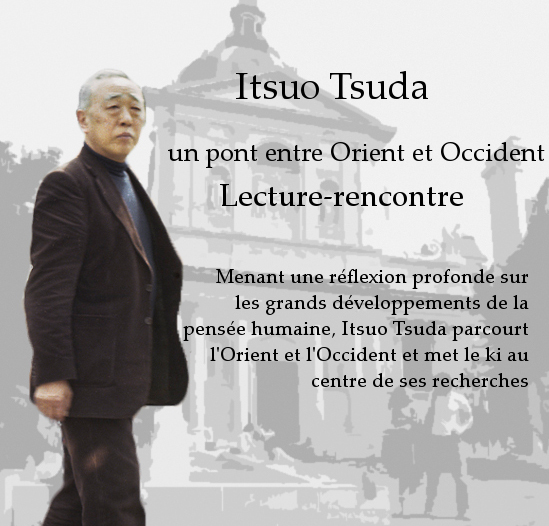
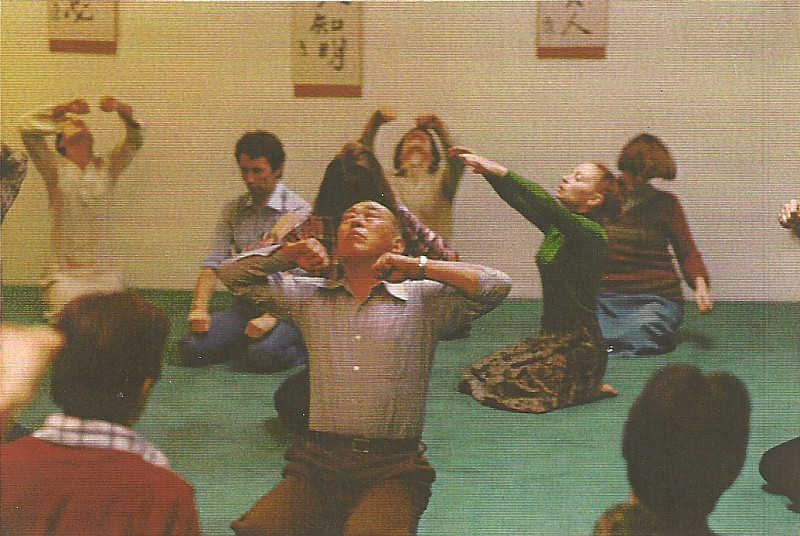
Many thing are being said and circulated on the internet about Seitai and Katsugen Undō (Regenerating Movement). In this round of interviews, Régis Soavi, who has been teaching and introducing people to Katsugen Undō for forty years now, gets back to basics to address the question: ‘What are Seitai and Katsugen Undō?’
Subtitles available in French, English, Italian and Spanish.To activate the subtitles, click on this icon. Then click on the icon to select the subtitle language.
Would you like to hear about the next article?
Subscribe to our newsletter
Some additional information
Seitai was developed by Haruchika Noguchi (1911-1976) in Japan. Katsugen Undō (or Regenerating Movement) is an exercise of the extrapyramidal motor system that is part of Seitai. Itsuo Tsuda (1914-1984), who introduced Katsugen Undō in Europe in the 70s, would write about it: ‘The human body is endowed with a natural ability to readjust its condition […]. This ability[…] is the responsibility of the extrapyramidal motor system.’ 1Itsuo Tsuda, One, Chap. VI, 2016, Yume Editions, p. 46 (1st ed. in French: 1978, Le Courrier du Livre (Paris)
Régis Soavi starts practising martials arts with Jūdō when he is twelve. He then studies Aikidō, especially alongside Masters Tamura, Nocquet and Noro. He meets Tsuda Itsuo sensei in 1973 and will follow him until his death in 1984. With the permission of the latter, Régis Soavi becomes a professional teacher and disseminates his Aikidō and Katsugen Undō throughout Europe.
Notes
1
Itsuo Tsuda, One, Chap. VI, 2016, Yume Editions, p. 46 (1st ed. in French: 1978, Le Courrier du Livre (Paris) ↩︎
Continuation of Régis Soavi Interview’s about Katsugen Undō (or Regenerating Movement), a practice made by Haruchika Noguchi and spread in Europe by Itsuo Tsuda. An article by Monica Rossi, published in Arti d’Oriente #4, May 2000.
– It helps, in the case where one has done the three exercises, or the exercises for Mutual Movement (activation through stimulation of the second pair of points on the head; that is another way to activate the Movement). Yuki helps because it activates; It’s very important for me to say that Yuki is fundamentally different from what we often hear spoken of, because when we do Yuki, we clear our heads, we don’t cure anyone, we don’t look for anything. We are simply concentrated in the act. There is no intention, and that is primordial. In the statutes of the dojo, in fact, it is underlined that we practice without a goal”.
Interview of Régis Soavi about Katsugen Undō (or Regenerating Movement), a practice made by Noguchi Noguchi and spread in Europe by Itsuo Tsuda. Article by Monica Rossi publisehd in the review Arti d’Oriente (#4, May 2000).
Part 1
‘After reading the books of Tsuda Itsuo (1914-1984), I was fascinated by his arguments, which range freely from the subject of Aikido to that of children and the way they are born, illness, or his memories of Ueshiba Morihei and Noguchi Haruchika, and I wanted to know more. I continued to have a sensation of something beyond my understanding.
So I began to ask, what exactly is this Regenerating Movement (Katsugen Undo) that Tsuda spoke of, a spontaneous movement of the body that seemed able to rebalance it without needing to intoxicate it with medication; an ancient concept but still revolutionary, above all in our society. I was unable to get any satisfactory answers to my questions: those who have practiced the Regenerating Movement couldn’t describe it or explain; the answer was always: “You should try it yourself in order to understand; the first time, it will probably unsettle you a bit.” So I decided to try it. In Milan, the school that refers to the teachings of Itsuo Tsuda is the “Scuola della Respirazione”. There, one can practice Aikido and the Regenerating Movement ( in separate sessions ). But, in order to go to the sessions of Movement, one must first participate in a week-end course conducted by Régis Soavi, who has continued the work of Tsuda in Europe.
One often tends to consider the spirit of an art as a mental process, a path that should be consciously taken, or rules to observe. All this because in the West we live in a world of separation, division. On one side there is spirit, on the other side body, on one side the conscious, on the other the unconscious, this is what is supposed to make us civilized beings while this separation actually generates inner conflicts. Conflicts which are strengthened by the systems of prohibition set up in order to protect society, to protect ourselves against ourselves.
The practice of Aikido leads us to the reunification of the human being.
Towards the reunification of human being, this is the Path we head for through practising Aikido. This reunification is necessary in a world where the human being is objectified, where the human being becomes both a consumer and a commodity. Without realizing the way taken, the civilized person executes life instead of living it. This society that leads us to consumption leaves little room for inner work, it leads us to search outside for what lies inside. To buy what we already have, to search for solutions to all our problems outside ourselves, as if other people had better solutions. This leads to the individual being cared for and supported by the different protection systems, which are at the same time social, ideological or health care, thus increasing supply and creating an ideal market for dream-sellers of any kind, charlatans, gurus and co.
Today I have heard that a new practice has just been created: “Respirology”, and as usual, customers abused by the power of words will certainly flock. Should we, in the name of body and mind normalization, of people getting back into shape, change the name of our art into: “Aikido therapy”?
The spirit of Aikido cannot be taught
I do not believe it can be told that there is a specific spirit of Aikido but rather that Aikido must be the reflection of something much greater that we, little human beings, have difficulties to realize during our life.
The spirit of an art cannot be taught, it is rather a transmission, but an Aikido without a spirit, what would it be: a struggle, a fight, a kind of brawl without head nor tail. Teaching the technique without transmitting anything of the spirit is quite possible, but then, it happens to be a totally different thing. It may be self-defence or a wellness technique.
Like in any martial art, we have the Rei, the salute, which is obviously the most immediately visible expression of it, but what is most important will be transmitted through the teacher’s posture. By posture I mean an extremely complex set of signs that students will find recognizable: of course the physical aspect, dynamics, precision, etc., but also the way of conveying a message, the attention given to each practitioner according to thousands of factors that the teacher must perceive. It is through developing intuition that one can get the greatest and finest pedagogy, and so provide the elements needed by practitioners to deepen their art, to better understand its roots.
The spirit of Aikido cannot be learnt
The spirit of Aikido cannot be learnt, it is discovered, it does not change us, it enables us to recover our human roots, to join what is best in human being.
‘Aikido is the art of learning in depth, the art of knowing oneself.’
The Aikido founder’s desire was to bring human beings closer, to him the world was like a big family:
‘In Aikido, training is not meant to become stronger or beat the opponent. No. It helps to get the spirit of placing oneself at the centre of the Universe and contribute to world peace, bring all human beings to form a big family.’
A hymn to joy
O-sensei used to say: ‘Always practice Aikido in a vibrant and joyful manner’.
We do not talk about joy often enough, our world incites us to sadness, to react violently to events, to criticize the systems’ failures, to see other people’s flaws, to be competitive. But all this eventually makes us grumpy, harsh and spoils our pleasure of living, quite simply.
Joy is a sensation that I consider sacred. The joy of living, of feeling fully alive in everything we do, or don not do. Joy enables us to experience in a totally different way what many people consider as constraints, to consider them as opportunities allowing us to go further, to deepen what my master used to call respiration.
Joy leads us little by little to inner freedom, which is the only freedom that is worth discovering, as so well told by the Taji Quan master Gu Meisheng (1926-2003) who discovered it in Chinese prisons during Mao’s era.
It enables us to get out of the conventions that different systems impose on us.
Aikido is the art of learning in depth, the art of knowing oneself
The spirit of Aikido is to be found in nature, not in a nature external to the human being but rather in the human being as a part of nature, as nature.
‘The practice of Aikido is an act of faith, a belief in the power of non-violence. It is not a type of rigid discipline or empty asceticism. It is a path that follows the principles of nature, principles which must be applied to daily life. Aikido must be practised from the moment you get up to welcome the day until the moment you withdraw for the night.’
To start every morning in the dojos quiet with a two or three minute meditation in order to refocus, to concentrate. Then switch to the Respiratory Practice, as Tsuda sensei named it, and which O-sensei Ueshiba Morihei used to do at every session. It is then possible to turn to the second part, the practice with a partner, the pleasure of communication through technique, the Ka Mi respiration and all of this very early in the morning while many people outside have just emerged from sleep.
When nothing is planned, when we are devoid of any thought, in these sublime moments when fusion with the partner takes place, then we are in the spirit of Aiki.
Like in Zen, it is suggested to us to live here and now, to be no different from what we are, but to look with lucidity at what we have become.
The transmission of the spirit
In order to understand the spirit of Aikido, one must, in my opinion, dive into the past, not only that of Japan but also, and maybe even mostly, that of ancient China. Go and search for the thinkers, philosophers, poets who enriched reflexion and gave weight to the Oriental way of thinking.It is thanks to my master Tsuda Itsuo that I dug in this direction: not that he gave lectures on philosophy or held seminars on the matter, he who only spoke with parsimony, but on the other hand he bequeathed to us through his books a reflexion on the East and the West, bridging the gap between these two worlds which seemed antinomic.
The immense culture of this master whom I was fortunate enough to know had flabbergasted me at the time but little by little I was able to enter the understanding of his message and philosophical work which had nourished me. But this man I had admired had also left traces I could see without understanding them, other signs in the way Zen masters did: he left calligraphies. As in this art nowadays called Zenga he transmitted a teaching to us through ideograms, maxims by Zhuangzi, Laozi, Bai Juyi, or folk proverbs. Each of these calligraphies introduces us to a story, a text, an art which actually enables us to go further in the understanding of this spirit which underlies our practice.
Awakening the inner force
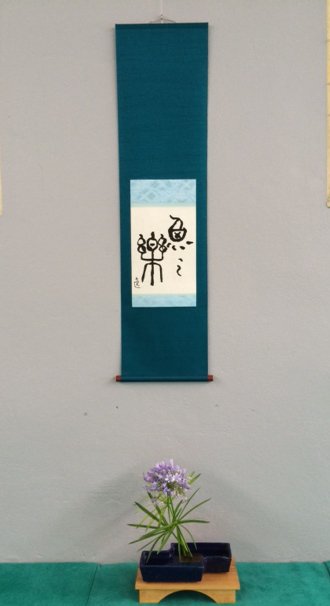
‘There are forces in us but they remain latent, dormant. They must be awakened, activated’, wrote Nocquet sensei in an article published in 1987. To me this sentence echoes Tsuda sensei’s calligraphy The dragon gets out of the pond where it remained asleep, talent shows through. In both cases, these masters were referring to ki and they incite us to search in this direction.
Without the concrete sensation of ki we miss the point. How can we talk about the spirit of Aikido without making it a sequence of rules to observe, other than by following, rediscovering the foundations of the human being. Our modern, industrial society makes life so easy for us that we move no more, we get around too easily, in the cities we just have to cover a few meters to find food instead of running, hunting or cultivating. Aikido enables us to spend this excessive energy which otherwise would make us sick. But this is not only about the physical, motor aspect, its our whole body which needs to recover, normalize itself. Our mind, overloaded with useless information, also needs to rest, to find peace in the middle of the surrounding agitation.
The spirit of Aikido is Aikido
The spirit of Aikido just lies in practice and little by little it comes to be discovered. And this discovery is real enjoyment. Beginners, when becoming aware of its importance, get fully involved in this art of ours. That is often the moment when difficulties to explain what we do begin. We feel like talking about it, inviting friends to participate at least to a session.
We try to make what we feel understood. Other people witness our enthusiasm but do not come to understand what it is about. And the answers we get to our explanations, to what we try to hand down are often rather disappointing. They may vary from: ‘Ah yes, me too, I practised Yoga last year during my holiday at Club Med. But I don’t have time to do a stuff like this, you see, I really don’t have time.’ to ‘Yes, your stuff is nice but it racks brains, I practice Californo-Australian self-defence, you know, and it’s really efficient’. To move from a world to another requires to be ready, ready to just discover what you do not know yet but have sensed. We start practising because we have read a book, an article, and we have been shocked, we said to ourselves: ‘Strange guy but I like what he tells, I like this spirit, it’s close to me, to what I think’.
An art to normalize the individual
It is the spirit of the practice, quite often, that makes us go on for many years, and seldom physical or technical achievements which anyway will be limited by ageing. The only ageless thing is ki, attention, respiration as Tsuda sensei used to call it. This can be deepened without any limit and thats why there have been great masters.
If you awaken your sensibility, if you have persistence, and if you are well guided; if the teaching is not limited to surface but enables us to dig deeper, to open by ourselves doors that we did not suspect, then everything is possible. When I say everything is possible I mean that everyone becomes responsible for oneself, for one’s life, for the quality of one’s life.
As Yamaoka Tesshū says: ‘Unity of body and mind can do everything. If a snail wants to ascend mount Fuji then it will succeed.’
No seeking for reputation, no attempting to become something but rather seeking to be, thanks to self fulfilment. Pacifying internal tensions, unifying body and mind which quite often work in the wrong way if not one against the other. Heres the deep meaning of the research we can do in the practice of martial arts.
Article by Régis Soavi (about the spirit of Aikido) published in October 2017 in Dragon Magazine Spécial Aikido n° 18.
Quotations are from O-sensei Ueshiba Morihei’s collected talks, some through the book: The Art of Peace, teachings of the Founder of Aikido, compiled and translated by John Stevens, pub. Shambhala.
Aikido is an instrument of my evolution, it made me evolve, I just had to follow with perseverance and obstinacy the road that was opening in front of me, that was opening inside me.
Like many other people, I came to this practice for its martial aspect. However, its beauty, as well as the aesthetic of its movements, quickly fascinated me, and this with my first teacher Maroteaux Sensei already. Then, when I saw Noro Masamichi Sensei, and Tamura Nobuyoshi Sensei, I had confirmation of what I had sensed: Aikido was a wholly different thing from what I knew.
I came from the world of Judo, with the images transmitted to us, for example, that of the cherry tree branch covered with snow which all of a sudden lets the snow slide down and the branch straightens up. I had already gone beyond the ideas that had been conveyed by the beginning of the century and the fifties, of a “Japanese Jiu Jitsu which turns a small thin man into a monster of efficacy”.Read more →
For as long as human beings live, they will at some point die. This statement has been tested for thousands of years, and so it is not a misapprehension. People generally do not accept the irrefutable fact that men die, and as they draw closer to death and feel death in their hearts, they worry and act impatiently, since they don’t want to die. But human beings are creatures that die. Bach composed the Goldberg variations for the sake of someone’s sound sleep, and this piece says again and again that men are mortal. Read more →
When Kung Wen Hsien saw the Commander of the Army, he said in surprise, ‘I wondered who it was, and it‘s you. That one foot is it the work of man or of Heaven?’ The Commander replied, ‘It was Heaven’s, and not man’s work. Essentially, a man’s form is determined. From this, I know that being one-footed, too, is the work of heaven, and not of man.’
The Commander’s words are followed with: ‘A pheasant that lives in a marsh walks ten paces for one beakful of food and a hundred paces for one sip of water, but it doesn’t want to be kept in a cage. Though a bird may be filled with vitality there, it cannot enjoy its life.’
Chuang-tzu broke the various cages that environ people’s lives: the attachment that comes from being ruled by the things around you, the sense of values that goes against life, partial philosophies that hinder the development of life. He demands that we should step out from these prisons and conveys the Buddhist priest’s spirit of renouncing the world by casting off all attachments. Again, Yun-men wondered why a priest should robe himself at the sound of the bell, when the world, so full of splendours, is very wide; and there was the European thinker who threw away all his books and possessions.
‘Common people breathe from their throats. Those who are slaves to the world choke out their words as though they were vomiting… Human life is it in its essence as murky as this? Is it I alone who see it as murky? And is there someone who does not see it as murky?’
Is it not because people don’t comprehend the pleasure a pheasant has from walking ten paces for a beakful of food and a hundred paces for a drink of water ? Is it because the children of men do not enjoy the fate of having no place to rest their heads ?
Because past knowledge is attached even to a single action like raising a hand or kicking out with a foot, human activity lacks buoyancy. Because with every breath drawn in and breathed out people vomit for joy or anger, or love or hate, human life lacks transparency.
When, as soon as someone spreads his wings, he injures them, it is because he is in a cage. To spread your wings is life’s demand. So long as they remain shrunken, without spreading their wings, human beings do not become strong. Breathe expansively and get out of the cage that hinders you from doing so. Throw off the weight of duty and act buoyantly. This is what cultivating life is. Chuang-tzu never stopped hoping that human beings would live actively without being hindered by anything.
‘Life arises from death and death from life. What comes into existence passes out of it, what passes out of existence comes into it.’ As for Chuang-tzu’s thoughts on the problem of what happens after death, he believed neither in the immortality of the soul, not in eternal life. ‘At one time, I may become a rooster… or a bullet.., or an insect.’ In the one real world, there is nothing but the continuation of ceaseless change as various forms of life disperse and come together.
The last sentence of the chapter entitled ‘The Spirit of Cultivating Life’ goes: ‘Although there is an end to the fingers putting fuel on the fire, the fire endures and we don’t know the end of it’. These words should be understood in the light of what has just been said. Chuang-tzu points to the continuity and flow of life, conceived of as fire, not for a moment entertaining the idea of any opposition between mind and body.
It is an especially interesting point that this chapter ends by broaching the question of death.
Living is a more important matter than thinking. Being alive is not a means, but an end. So life should be carried on naturally only with the aim of maintaining life: a breathing in, a breathing out, a raising of the hand, a movement of the leg – all these should be for the cultivation of life. Therefore, simply dwelling in health is a very precious thing. Zensei, which is to say, “A fulfilled life”, is nothing but the road men follow, and it is the road, of nature. Fulfilling the life that is given in peace of spirit is not for the sake of spiritual content, but is what should already have been undertaken before all else. We have to live in a vital way human life, which is health. Living always cheerfully and happily – this has always been what is of true value to human beings.
Human beings live because they are born, and because they are living, they eat and they sleep. They are born as a result of a natural demand, and they live as a result of the same demand. To live is natural. And so to die is also natural. Human beings’ accomplishing the life that is given them comes before all else. But this does not mean being attached to life at all. Chuang-tzu disliked any craving for particular things. For him, the arising of any attachment is at once a departure from the way. So he speaks about cultivating life and maintaining the body in order that the present moment that is given, precisely because it is the present moment, may be used fully, and certainly not because the thing given is life.
Chuang-tzu saw as a single whole the contraries of good and evil, of beauty and ugliness, and of the useful and the useless, and for him life and death were also a single whole, what comes into existence passing out of it and what passes out of existence coming into it. ‘Life arises from death and death arises from life’ he wrote.
When Tsu-yu contracted a crippling illness, Tsu-szu visited him and asked, ‘Do you think your fate is unpleasant?’ Tsu-yu’s answer was astounding: ‘Why should I find it unpleasant? If changes are brought about and my left arm turns into a rooster, I’ll use it to herald the dawn. If my right shoulder is transformed into a bullet, I’ll use it to bring down a pigeon for roasting. If my buttocks become carriage-wheels and my spirit a horse, I’ll ride along on them. Then I would need no other vehicle but myself – that would be wonderful!’
Time does not cease even for an instant, and if it is destiny for a human being to be born, then it is natural that living form should be lost. If you are content with time’s flow and in accord with the order of things, then there is not especially any joy or sorrow. This is what the ancients called “deliverance from bondage”. You put a noose round your neck and you can’t get it off; this is because it is tied by the mind that thinks in terms of right and wrong and good and bad. Nothing can overcome heaven. Nothing comes of hating heaven.
Chuang-tzu’s point about cultivating life is clear in the words that come in the passage where Kung Wen Hsien speaks to the Commander of the Army: ‘The work of man is still the work of nature.’ This is the road he walks. Within his attitude – that whatever happens, it is proper, and that when something happens, you go forward and affirm reality – there is not a trace of the resignation that lies in submitting tu destiny. His affirmation of reality is nothing but the affirmation of reality. The dignity of the man is conveyed only by Lin Chi’s words: ‘Wherever you are, be master.’
From Chuang-tzu’s point of view, the security of the bird-cage is no better than being obliviously asleep. He feels the vitality of life only so long as existence is unconstrained.
‘In doing what is considered good, avoid fame; in doing what is considered wrong, avoid penalties; make it a principle to keep a middle course, and you will preserve your body, fulfil your life, support your parents and live out your natural span of days.’
Read and accepted as they are, these words are the principles of health. I feel in them, close to me, the force of the man’s spirit.
When the king of So heard of Chuang-tzu’s cleverness, he sent, with a great show of courtesy, officials to Chuang-tzu, asking him to become prime minister; but Chuang-tzu laughed and remarked that ten thousand pieces of gold was a large amount and a prime minister’s position was very superior. But he asked the officials whether they had ever seen a sacrificial bull decked for a festival. Such a bull, he said, is fattened with various nourishing foods for the occasion, decked with beautiful cloth, and driven into the chamber of the gods. However much the bull wants to be merely a bull at this time, it cannot. He told the officials to leave without making a fuss and not to sully his life, and he said that he simply wanted to enjoy himself in his own squalid situation. Words like these are extremely characteristic of Chuang-tzu, and they still raise a smile after two thousand years.
In the end right and wrong and praise and blame are one, Chuang-tzu said.The distinguishing of things involves definition. Definition involves disruption. With things, there is neither definition nor disruption, only one-ness. Only the true sage knows that everything is one. In this way, Chuang-tzu stamped on the world of oppositions and shattered it. That is why he said unworriedly, ‘In doing what is considered good, avoid fame; in doing what is considered wrong, avoid penalties.’
When someone sleeps on the damp ground, strength drains from him and he develops rheumatism. Put an eel on a treetop, and it trembles with fear; do the same to a monkey, and this doesn’t happen. ‘Within these three, is there any one that doesn’t know the place that is proper for its life?’
The human being eats pork, the deer likes grass, the centipede finds worms delicious, the crow delights in rats. ‘Within these four, is there any one that doesn’t know what it likes to eat?’
The male monkey takes the female monkey in its arms, the stag copulates with the doe, the eel plays with fish. Mao Chiang and Li Chi were reputed to be the most beautiful women under the heavens, but at the sight of them, fish dived into the depths, birds flew up into the sky, and deer ran away. Which of these does not know the proper object of its affections?
Standing beyond good and evil and merging with the nature of all things: this is the secret of Chuang-tzu’s cultivation of life.
Chasing after a healthy life and running to avoid an unhealthy one only makes you hot and bothered. Being proud of your talents and wanting to become first in the world in something is to have forgotten the most important principle of cultivating life.
A great tree is toppled by the wind; the high status of a minister attracts the envy of the masses, but for the person who has cast off every fetter and enjoys a life of freedom, a minister, though he has a high status and receives a high salary, is no more than a broken sandal.
‘A pheasant that lives in a marsh walks ten paces for one beakful of food and a hundred paces for one sip of water, but it doesn’t want to be kept in a cage.’
Chuang-tzu teaches that there is no need to be over-pernickety about a “healthy” or an “unhealthy” life and to make yourself hot and bothered. He teaches that one breathes quietly and follows disinterestedly and calmly the body’s demands, and that this is the essence of preserving life and living fully.
How can we live up to this? Do we adopt the attitude of someone who sees a fire on the other side of the river and folds his arms? Or is there something more to be done, something positive?
Prince Wen Hui’s cook said, ‘I handle things with the spirit, and not with the eye. When the senses cease functioning, the spirit leads.’ This is to close yourself off from appearances and at once to forget them; essentially it is the same as the Zen priest Lin Chi’s saying, ‘Mind does not differ from mind.’
Thus, in all this there is nothing but the unfolding of a pure act, and this, fundamentally, is what is asserted in the master swordsman’s adage: ‘Forget your skills and forget your opponent; let him cut skin-deep, while you carve his flesh; only if you abandon yourself to the flood may you reach the shallows.’
Can we not say that within the way the art of killing leads to the road of being in true earnest, the road of cultivating life is concealed? Conquering attachment to things, the adherence to rule and the fear of death, and making the spirit free allows you to use the sword freely in the swordsman’s world without damaging anything, and in the ordinary. world it allows you to enter on the road of cultivating life and to foster the essence of life. I suspect that Wen Hui learned from his cook’s words that it is by following the nature of things that one cultivates life; the important thing was his recognising that the cook’s knife moved without the intervention of the self and without the knife’s being damaged. One Zen priest was asked, ‘You come and go, come and go. What do you mean by it?’ ‘I wear out shoe-leather to no purpose,’ he replied.
Chuang-tzu’s chapter ‘The Spirit of Cultivating Life’ is an exposition of the way to cultivate the spirit of life, that is to say, one’s whole being. Nevertheless, if – still reading the first two Chinese characters in the usual way – one takes the title as meaning something like “The Rules for Maintaining Health”, the result is very interesting. Hitherto, where rules for maintaining health or rules of hygiene are concerned, the only things that have been preached are “Treat life as precious” and “Be careful”; and one hasn’t been able to feel, even a little, the vital activity of life in such preachings. It may be because of a lack of any Chuang-tzu-like element in them.
I shall look at “The Spirit of Cultivating Life” not as a means to spiritual development, but as one of the sciences of health, and I hope to be able to discern what is concealed within it: the true lineaments of life, which is exuberant and positive.
Chuang-tzu begins his chapter with the words: ‘Our lives are limited, knowledge is unlimited. It is perilous for what is limited to follow what is unlimited. It is still more perilous to apply knowledge.’
Rather than using knowledge to bore seven holes in the Formless (as in the parable he concludes his seventh chapter with), Chuang-tzu wanted to remain within undifferentiated nothingness, and he taught that human beings should remain within this.
Our lives are limited, there is no limit to shoulds and shouldn’ts, and if, possessing limits, one tries to abide by limitless shoulds and shouldn’ts, one is left only with the anxiety that one is unable to abide by them. Nevertheless, people still chase after shoulds and shouldn’ts. And their anxiety grows.
The way of hygiene is pursued with the sole result that shoulds and shouldn’ts are multiplied; the shoulds and shouldn’ts that people must heed multiply more and more; and then the anxiety to heed these rules coupled with the ‘ fear that they are not able to do so makes people ever more timid and weak-spirited, and the other side of the coin is that this anxiety and fear increase the powers of disease-causing agents and of unhealth.
Noguchi Haruchika. Photo from http://noguchi-haruchika.com
Separated from the fundamental matter of enhancing life, hygiene strives only to avoid unhealth, to keep away from harmful things, to escape from things that are feared; and so it becomes difficult for people to live in a vital way. Eating all one can, sleeping as much as one wants, sparing oneself trouble as much as possible, resting as much as possible, taking lots of medicine, avoiding heat and disliking cold, wearing more clothes than is necessary, and living in a safe way by these meansshould we call this health? Should we call these methods, for which human beings have used every bit of knowledge they have, hygiene?
What force is there in an enumeration of forms? It only vitiates the human spirit. Does it not only make life wither?
Living in a healthy and vital way means not being daunted by cold, heat, wind or humidity, working without being fatigued, sleeping without dreaming, finding whatever you eat delicious, and always enjoying life; it does not mean not falling ill. Not falling ill should not be a purpose, but a result. Healthy people are not daunted by illness, and they pass through an illness when they have one in a splendid manner, becoming all the more energetic and full of fife; and you don’t need to read about Nietzsche’s experience in order to understand this. When shoulds and musts control human activity, then human beings have already forged fetters for themselves. Knowledge is a weapon for human beings, and a power for accomplishing their intentions. But when knowledge is piled up and the freedom of human beings is restricted, people become unable to live in a lively way because of shoulds and shouldn’ts, rather as a deer’s antlers become a hindrance to it. And then there’s nothing better than to become free by cutting that knowledge off and throwing it away.
When you want to eat, eat; when you want to sleep, sleep; when you want to work, work. It is not a matter of having to eat, it is not a matter of having to sleep, it is not a matter of working because you should. Much less is it a matter of eating, sleeping or working because of what the clock says. It is not a matter of living tomorrow’s life in accordance with yesterday’s knowledge. Tomorrow is for opening up the new on the basis of tomorrow’s experience. Past knowledge, customary fettersseparate yourself from such things and live in a vital way. The vital activity of life that is always renewed belongs to the person who lives always in an unfettered way.
The magnificent Grechetto Hall of Palazzo Sormani, in Milan, which has hosted, on Friday, 12 Feb. at 6am, the presentation of the book The Path of Less by Itsuo Tsuda, published [in Italian] by Yume Editions.
The event, organized by the Scuola della Respirazione in collaboration with the Central Municipal Library of Milan, took place in front of a large and attentive audience. After a short video presentation on the philosophy and thought of Master Tsuda, some practitioners of the Scuola della Respirazione read a selection of excerpts from The Path of Less.
Later, Régis Soavi, host of the evening, by answering to the questions of the interested public, talked about his experience on the importance of the practice philosophy and Itsuo Tsuda‘s books may have in everyday life.
The organization of the evening has involved a lot of us and it was an interesting exchange with the library staff, who contributed to the unfolding of the evening with care and sensitivity.
Certainly the Jō, the stick, has always been used in Aikido. But does it really belong to our Art? Its teaching has always been particular and often even separated from the regular courses. Many of us have tried, through other schools of Jūjutsu, to find some forms, some kata, some “secret thrusts”. Some have taken an interest in Kobudō. Yet the art of the Jō in Aikido has its own specificities, its rules.
Personally, what has always fascinated me, is more the extreme accuracy that can be obtained by following a certain type of training. Instead of working on power, I found it more profitable to concentrate on motion, movements and above all precision.
Training to precision
I was a young instructor when I started to train more regularly with the stick. Back then, I tied a soda cap at the extremity of a rope that I hung from the ceiling. My training consisted in making tsuki on the soda cap and each time that it moved to immobilize it again. Then I changed heights. Later I worked on the yokomen and the hits from below, always trying to be precise and without increasing the speed.
I worked slowly looking for the right angle, using the displacements and little by little I increased the speed of the execution. Finally I started to hit by using the movement of the cap that flied around to the left, the right, with sudden leaps that were sometimes odd, or even scary if it had been the Jō or the Bokken of an adversary. I could go around that axle that I hung from the centre of the small dojo that used to be in the backyard of number 34 in rue de la Montagne-Sainte-Geneviève in Paris.
I still remember it with emotion because it was thanks to Master Henry Plée that I could do this type of work. Indeed, he had allowed and even supported me in this direction (an accomplished Budōka, he loved that we trained to the very best of our ability). After several months of this type of training, I moved on to the work on makiwara, but I have to admit, without insisting too much because I found it tedious. Instead I loved the hits in all directions, in the “shadow boxing” style.
In this exercise I found the difficulties of the work with the soda cap, plus the power that I had to control, the circular movements, the speed and above all the visualization. That work of visualization that I already glimpsed in the teaching of my master Tsuda Itsuo. It is also thanks to this that I have discovered the importance of having your own stick, I mean a personal working instrument. I am one of those teachers who believe that the Jō must not be a manufactured product of a predetermined length, thickness, or weight. The Jō has to be in proportion, with no exaggeration, otherwise we will be dealing with a Bō, to the person who uses it, his or her height and musculature: as there are enormous differences, it seems to me a mistake not to take this into account, but in any case it is the way the Jō is used that remains the most important point.
Pedagogy
As far as I am concerned, I now use the stick more as a pedagogical tool. As always it is about retrieving and understanding the ancient forms, of course, but above all about channelling the released energy, feeling it circulate and flow along this piece of wood.
Master Tsuda used to tell us: ‘The Jō has three parts, the two ends and a centre, unlike the Bō that numbers four parts due to the way one seizes it, with both hands at an equal distance from the extremities’. Doing tsuki the technical aspects of the strokes vary, whether one uses it in the ancient form suited to the spear, or as a Jō, that is something much shorter, holding it with both hands in the same direction or one opposite to the other. All this did not matter to him: what was important was the transmission of ki and the act of non resistance.
The Jō was only there to enable us to discover the Non-doing, to deepen our breathing.
Then the stick (I suggest to call it that way) is used as if it was an empty tube that gets filled with ki, that has a certain autonomy, that becomes alive again.
The stick exacerbates distances. It forces us to have another relationship with the distance, to feel the axes as well as the changes of direction, of orientation.
Some people have a particular affinity with the Jō, others prefer the Bokken. Even if it is part of my teaching, I give them the time to find out whether it makes sense to them, whether it helps them go deeper in their practice.
It is one of the means I sometimes use to make people understand how the strengths involved in our practice circulate: it is precisely with the stick that I can show this.
I ask uke to grab the stick very strongly and tori has to find the axis, the direction by the mere movement of his body, of his koshi, not of his muscles or arms, to slide the force applied, so that when tori moves, it creates such an imbalance for uke, that he accepts to fall and drops like a ripe fruit falling from the tree.
Practising outdoors
There is a moment in which it is particularly pleasant to practice the stick, and this is when you are outside, in the open air.
And the time for this is the summer workshops, which we have organized for almost thirty years at Mas d’Azil, in Ariège. There we are lucky enough to be able to change an old gym, practically unused, into a wonderful dojo, in the course of several pleasant working days. Since it is next to a soccer field, we can go outside to practice weapons.
I know that practitioners are then very happy to practice outside the tatami mats.The space is so much bigger that we can rediscover the dimensions that the old arts required.
After having been confined to an enclosed space, the whole point of these open air sessions is to expand physically: no more ceiling, no more walls, no more limits. It is the moment when everyone can experience different dimensions, the ideal moment to try, in this space, to feel further.
Practising outside, whilst we are used to the uniformity of the tatami mats, is a constraint for the entire body: the ground is no longer that flat, there are some holes, some bumps, all movements, taisabaki, and obviously the falls or the immobilisations become more difficult.The speed of the attacks is often reduced due to the unusual conditions. But in turn, when we practice on the tatami mats again, everything becomes easier: one has gained skill, speed, strength in the legs, and balance that one did not have before.
We then take the opportunity to practice with many people, three, four, six, or even up to eight attackers (one tori and seven ukes) who, in the respect of our Art and with no competitive spirit, try to reach out and put the one in the centre in danger. No need to pretend it’s a movie: we are neither samurai nor secret agents whom nothing can stop. Its about moving more and better than we usually do, feeling the movement of our sphere, the gaps in it and the risks there are of having an impact in those places.
The importance is not given to a perfect technical skill, whether in defence or in attack, but much more to the sensation of the other people’s movement, to distance, to the energy that one can throw.
Such a wide space allows circumferences of about eight or ten meters, sometimes. In circular movements Tori’s gaze, with its intensity and precise direction, relays the power and speed of the stick. This alone is sometimes enough to create the right conditions for a reply, a correct move.
I do not know if I am well understood: it is a game in which all participants, from the very beginner to the most experienced, have their own role depending on their level. The six or eight attackers will moderate the power and speed of the attacks (tsuki, shomen, yokomen) according to this.
Each of them seeks the right position so as to find the weak point, the speed of approach, the right angle.
The attacks are as much as possible genuine attacks, but they are always done without violence and even if possible not too fast, in any case not hastily.
It is important in this type of work to be careful not to block or corner the one in the centre, so as not to drive him into a spiral of fear that would lead to aggressiveness, but on the contrary to help him come out of his imprisonment, both physical and mental, and to allow him to develop his potential.
The summer workshop lasts for two weeks and is very concentrated: two Aikido sessions, two Katsugen undo sessions and one weapon session every day. It means seven or eight working hours per day, about fifty hours a week. That is why we need this kind of work with the Jō, enabling bodies to unwind, to open out and find another dimension.
Sticks spin, spaces move about, bodies which are at times weary stretch. The atmosphere remains peaceful, sometimes even cheerful, but accuracy is there.
Men, women, children of all ages, in the respect of the specificities of each of them.
The sensitivity of the foetus
However, a clarification: pregnant women sometimes practice until the very last moment in our School. But since the beginning of their pregnancy we pay particular attention to the fact that being in such a special state, even if of course we never touch the body with the stick, it is forbidden to do tsuki in the direction of the womb. Regardless of the risk of accident, to which we always pay a lot of attention. The point is not to direct the ki in that way, in other words with “the intention to hit”. Such a directed and guided ki would be instinctively recorded as dangerous and felt by the mother, and most of all by the baby, who is nothing but sensitivity, as an aggression, to the point of risking to cause at least a fear, or a contraction that would harm his good development. When we work on tsuki strokes, pregnant women step aside and watch, but do not participate.
A centripetal force can become a centrifugal force
Sometimes we work with Jō against Bokken. The point then is, precisely because the weapons are different, to understand on the one hand the way to use them and on the other hand their limits and capabilities, without forgetting that behind all this there is a human being. At other times, it is only uke who has a weapon.
A stick, a Bokken, can be frightening if you have no weapon.You do not know in which direction it will start, men, yokomen, tsuki, you cannot stop the stroke with a simple wave of your hand. Only by dodging, doing taisabaki, can you avoid the shock. Taking hold of the stick or of the Bokken, is then one of the chances to stop the attack, to transform it and make it harmless, so that we can use its energy in the opposite direction or divert it towards another direction. It is a wonderful opportunity to see, to feel how for example a centripetal force, when it gets in contact with a centre, can turn into a centrifugal force so that it is driven towards the outside.
What do we mean by “stopping the spear”1? The real point is not a question of winning or losing but rather of changing the system, of allowing something else to arise, and for this, the knowledge of the partner, the understanding between both partners is essential.
In every person there are some good and some bad sides, some good and some bad habits: all of this has to be guided towards harmony. Harmony is at the origin of our life, the thing is to get back to what is natural and always there deep inside every individual. That is, for me, the way of Aikido.
Our horizon can light up if we understand better the words of O-sensei Ueshiba, transmitted by my Master Ueshiba Itsuo in his teaching and through his nine books. These words did not remain a dead letter; on the contrary they have come to life, once more, and continue through those who are willing to follow this path.
It is the way we view our own bodies – whether consciously or unconsciously – that decides which perceptual experiences we choose to value. In trying to achieve those experiences, we then establish the ways in which we use and move our bodies. In short, each and every motion made by a human being is a reflection of his or her own idea of the body. This is not limited to visible physical movement. For example, while it is true that our breathing is restricted by the structure of our respiratory organs, exactly what we consider a “deep breath” is determined by each individual’s view of the body. Similarly, while the act of eating cannot deviate from the structure of the human digestive system, it is our idea of the body that dictates exactly what feeling we consider “satisfying”, and when we feel we have had enough. And whereas our physical balance is affected by the force of gravity on the structure of our bodies, exactly what bodily sensation we choose to call “stable” depends on each person’s concept of the body.
Therefore, if a group of people possesses a distinct way of moving or using the body, it follows that they must share a common view of the body. The formal way of sitting in Japan, called Seiza, may generate nothing but a sense of restriction to most Westerners. For the Japanese however, sitting in Seiza traditionally brought a sense of peace to the mind. This way of sitting with both knees bent results in a sense of complete immobility. It halts the mind from intending any following motion, and in fact, executing sudden movements from this position is quite difficult. Sitting in Seiza forces one to enter into a state of complete receptivity, and it is in this position that the Japanese wrote, played music, and ate. In times of sadness, of prayer, and even of resolve, Read more →
With the arrival of Buddhism fifteen hundred years ago, the era of kings, symbolized by the great tombs, came to an end, and Japan was ushered into a new era, ruled by religion. As with the Meiji Restoration, the lifestyles of the Japanese people were dramatically transformed. Curiously enough though, in contrast with the Meiji Restoration, the changes that occurred with Buddhism’s arrival actually seemed to clarify the distinct nature of Japan’s culture.
Fortunately for Japan, Buddhism was not transmitted directly from India, coming through China instead. During its travels in China, Buddhism had no choice but to merge with the antecedents of China’s indigenous Taoism, such as the various practices of mysticism including fangshu, and the philosophies of Lao-Tzu and Chuang-Tzu. These practices, which were later integrated into Taoism, all involved ascetic practices for the purpose of cultivating longevity. Therefore the Buddhism that arrived to Japan was one already baptized by the Chinese, meaning that it was characterized by a strong emphasis on Taoist-like ascetic practices [Sekiguchi, (1967)].Read more →
Among the policies of Westernization that drove the disassembly of traditional Japanese culture was the calendar change, issued in 1873. With this, the Meiji government decided to abolish the lunar-solar calendar that had been used for twelve hundred years and replace it with the Gregorian, or solar calendar. Actual use of the new calendar was implemented only twenty-three days after issuing the order, and as such, caused great confusion amongst the general population. But more importantly, it had an enormous impact on the Japanese people’s fundamental sense of the seasons and cycles of life. The old calendar was commonly called the “farmer’s calendar” because of its close ties to the cycles of agricultural activities [Fujii, (1997)]. It was calculated not only through astronomy, but was based on a deep understanding of the life cycles of plants and creatures of the land, with further adjustments made according to observations of the heavenly planets. It can be said that the switch from the old to the new calendar was in essence a switch from a life-cycle-centered time order to an objective time order based on the Western science of astronomy.
The old calendar marked New Year’s Day at the first signs of spring, symbolized by the blooming of plum blossoms and the bush warbler’s song; the second month with the cherry blossoms; the third month with the peach. Time was kept according to the cycles of nature-life activities, which basically do not act in regular time intervals, as do the planets and stars. For this reason, a gap will inevitably occur over time between a life-cycle-based calendar and an objective planetary time order.Read more →
On Tuesday, May 31st, during the afternoon, we set up an exhibition of Master Tsuda‘s calligraphy in the Rispoli library which is located a stone’s throw from the central Piazza Venezia in Rome! For the exhibition, the director of the library was a bit worried and she did not know what to expect. It is necessary to maintain current standards… When calligraphies where placed, she was astonished and she said: “What finesse, what elegance.” And I would add what a breathing! It’s nice to see the calligraphy of Master Tsuda creating an environment in such of a place and where it is so unlikely to get in.Read more →
In four sections: 1The scenario of death in modern society. 2 Perceiving life in all things. 3The idea of the body in asceticism. 4 The philosophy of Kata
Part 1/4
At the heart of a culture lies a certain view of the body, and this view decides which perceptual experiences the culture chooses to value. In trying to achieve those experiences, certain principles for moving and handling the body are established, and these principles then set the standards for the mastery of essential skills that penetrate through all fields of art, creating a rich foundation from which the culture can flourish. The culture of traditional Japan, which disintegrated at the hands of the Meiji Restoration, indeed possessed such a structure. The idea of the body, the shared perceptual experiences, and the principles of movement that existed in traditional Japanese culture were radically different from those that arrived from the West and have been blindly disseminated by the Japanese government ever since the Meiji Restoration.
This paper discusses the feeble underpinnings of modern Japan as a culture built upon the destruction of its own traditions, and explores the possibility of giving birth to a new culture by looking into the structure of its lost traditional culture.
The Scenery of Death in Modern Society
There is a national policy in Japan that has continued without pause to this day, for nearly one hundred and forty years since the Meiji Restoration in l868. This is the policy of Westernization, which has led to the continuing disintegration of the traditional Japanese view of life and body, as a whole. By accepting this policy, the Japanese people did gain the practical lifestyles of a modernized society filled to the brim with Western scientific technology. At the same time, however, they have, by their own hands, effectively dismantled and obliterated a culture with a 2000-year tradition. It is still not known who actually instigated the most drastic social reform that ever occurred in Japan’s history; of which class they belonged to, or what their objectives were [Oishi, (1977)]. In any case, the Meiji Restoration was triggered by the opening of Japan’s ports to foreign trade in 1854, when the Tokugawa Shogunate, succumbing to military pressure by the United States and European countries, made the decision to end its 200-year policy of isolation. This decision by the Shogunate caused chaos throughout the nation. Samurai, angered by the cowardly stance of the Shogunate, rose in rebellion, while the exportation of raw silk led to economic turmoil caused by drastic rises in prices. As a result of internal and external pressure, Tokugawa Yoshinobu, then Shogun, had no choice but to surrender his power in 1867.
The new Meiji administration established an Emperor system based on the constitutional monarchy of Prussia, deploying State Shinto, a nationalistic form of Shintoism, in place of Christianity – the core of Western culture – and quickly proceeded to recreate the nation. While politics, economics, and industry went through reforms based on Western models, the policy of modernization. Westernization, and scientific progress would also extend to the lifestyles of the general population.
On the surface, this policy of Westernization seemed to be a measure for guiding the people of Japan to adjust to their new government, constructed in the short span of just two years after the collapse of the Shogunate. In reality, however, it aimed to reject and dismantle every aspect of traditional Japanese culture through the unyielding glorification of Western civilization. The policy consisted of three main factors – agitation, governmental orders and regulations, and information control – none of which permitted room for traditional culture to coexist with the new order.
It was the imperial and royal families who first adopted Western lifestyles, as though setting an example for the rest of the nation, inciting a sense of yearning amongst the people for all things Western. Thus the emperor – the symbol of Japan – came to serve also as the symbol of Westernization. The media followed, spreading shallow words glorifying Western civilization and boycotting tradition. Their slogan, “Bunmei Kaika” (the blooming of civilization), resounded throughout the nation.
Even the historically adored wild cherry trees were cut down and used as firewood all over the country, because they stood as a reminder of the former feudal system.
And instead, Someiyoshino, an artificially created hybrid cherry tree, was prized because it was a product of “science”: it flourishes in most any type of soil condition, blooms gloriously and almost simultaneously, and possesses a sense of uniform beauty, where its flowers bloom before any leaves appear on its branches. But like all other artificially bred plants, the Someiyoshino has no scent; it did not inherit the intense scent of the wild cherry. And while the life span of wild cherries is said to be three hundred, sometimes five hundred years, Someiyoshino lasts for only seventy or eighty [Horibe, (2003)]. This uniformly beautiful, artificial cherry, deprived of scent and longevity by human hands, was planted all across the nation, and would eventually be designated as the national flower of Japan. If the birth of modern Western civilization could be compared to the blooming of a flower rooted in the soil of the traditional cultures of the West, then modernity in Japan is an artificial flower that did not come from any real soil. The fate of the cherry trees suggests the true nature of the emergence of an artificial and deformed modernity in this country.
Naturally, the destruction of wild cherries was only a small part of the monumental changes taking place. Perhaps the most significant of the Restoration’’destructive activities was the government order to separate Shinto and Buddhism. This act, which was carried out in order to establish State Shinto, triggered the anti-Buddhist movement, leading to the destruction of historically valuable Buddhist temples, statues, and tea huts throughout the nation.
Even staging of the traditional theater art, Noh, was prohibited after the Restoration, forcing almost all Noh actors to switch occupations or terminate their careers.
Amidst such an atmosphere of total rejection of anything traditional, the Westernization of clothing was popularized, first through military and government uniforms. At the same time, Western food culture was introduced through hospital meals, and Western architecture through public facilities. Wearing neckties and clothes with buttons, eating beef, drinking cow’s milk, entering buildings with one’s shoes on such things never done by the people of Japan in its two thousand years of history became the first tests of loyalty imposed by the Meiji government.
The government proceeded to issue increasing numbers of prohibitions and orders to switch trade or leave public service. For example, with the decision to introduce Western medicine as the official medicinal practice of Japan, the government devoted enormous effort into eradicating the long-standing practice of Chinese medicine. Resistance by doctors of Chinese medicine was strong, and in the end, it took more than forty years until this effort was finally realized. During this time, in order to decide which of the two was superior, a hospital was established in order to gather data on the effectiveness of both medicines on the disease, beriberi. The result of the so-called East-West beriberi competition however, was an equal match, and conflicts between the two schools intensified – even lea-ding to the attempted assassination of Sohaku Asada, famous doctor of Chinese medicine and leader of the resistance [Fukagawa, (1956)]. Here is where we see the shameless scheming nature of the Meiji government’s policy of Westernization. A look at the newspaper articles in those days reveal series of irrational writings such as, ‘Compared to the ugly black liquids prepared by doctors of Chinese medicine, look how beautiful the snow-white powders of Western medicine are!’ Practitioners of Chinese medicine were forced to fight such unfair accusations spread by the media.
The introduction of Western medicine sought to accomplish more than the Westernization of medicinal practices. It was by nature, an anti-Shogunate policy. For example, the preserving of acupuncture practices, which did not exist in Western medicine, seemed from the outside to be a salvation measure for the blind, who were traditionally relegated to this line of work. However, the practice of acupuncture recognized by the Shogunate was Japanese acupuncture, the system of which was created after a thorough scrutiny and revamping of Chinese acupuncture. So it was Japanese acupuncture that was prohibited, and those who practiced it were ordered to switch to Chinese acupuncture instead [Machida, (1985)]. In other words, the policy of Westernization was characterized by the complete rejection of Japanese tradition, and anything of foreign origin was valued and welcomed.
Students of various fields such as architecture, cooking, and medicine, were all forced to learn Western theories if they desired to acquire official trade licenses, newly required by the government. It was through the establishment of such systems that the government attempted to cut off the transmission of experiential knowledge and thereby end the tradition of the apprenticeship system. For example, by imposing the study of Western architectural theory – based on the metric system – on Japanese architects, the government effectively obstructed the passing of knowledge from master carpenters, who based their building art on the traditional Japanese scale system, to their apprentices.
woodwork, ca 1877-1878
The traditional architectural methods of Japan, which enabled construction of the world’s largest wooden structure with no less than a thousand years’ lifespan, were based on an entirely different theoretical system from Western architectural methods. Riding the wave of Western theory worship, the Japanese government, however, has continued to force the Westernization of architecture to this day, without due investigation or recognition of the value of its country’s traditional methods. In 1959, the government officially adopted a resolution proposed by the Architectural Institute of Japan, to prohibit the construction of wooden architecture. Six years later it issued an order that forbid use of the traditional Japanese scale system [Matsuura, (2002)]. Japan’s building codes promote the construction of concrete structures that are advantageous in making fortresses out of cities, and this is leading to the disappearance of wooden structures, born from this land and climate, which have upheld the lifestyle of the Japanese for two thousand years. As a result, the magnificent forests of Japan are now in deterioration.
Governmental control of information also occurred within the new educational system, established in 1872. With its curriculum constructed entirely on Western theories, the educational system became a stronghold for the process of Westernization. The biased education system, which again glorified Western studies, would lead the intellect and sensitivities of the Japanese people towards ignorance of, and disdain for, their own traditional culture.
Even such subjects as art, music, and physical education, designed to cultivate students’ aesthetic sensibilities – not to mention more general subjects – played a major role in dismantling traditional culture and spurring the process of Westernization.
The curriculum of art introduced the brilliant colors of the West, while traditional Japanese colors were thoroughly forgotten; their principles of harmony left untaught. The traditional Japanese rich sensitivity for colors is obvious when we look at kimonos or the traditional mountings used for calligraphy and painting. A book of sample dye colors from kimono makers in the Edo period reveals one hundred shades of grey and forty eight shades of brown, each with a name of its own [Nagasaki, (2001)]. The dye-makers’ ability to create such an enormous variety of colors through the use of plant materials is a testament to their superb skills. But more astonishing is the fact that clothes-makers and even consumers were able to distinguish all of these shades. To the Japanese, colors were something that seeped into the materials; they worked to enhance the inherent quality of the raw material. The new colors that arrived from the West, on the other hand, coated over raw materials. This encounter shocked and confused the subtle sensitivity toward colors that the Japanese had held until then. One hundred and forty years later, the result of such education is demonstrated in the vulgar sense of colors seen in the cities of modern Japan. On the streets, store signs and handout pamphlets show no sign of subtlety. It is as if the use of loud and flashy colors alone could suffice in imitating the Western sense of colors. Such education has surely squandered more than a few fine talents out of which excellent Japanese paintings could have been born [Nakamura, (2000)].
ca 1877-1878
Meanwhile, music education disarranged the traditional concept of sound. The Japanese sense of sound was developed through religion. Sound created through deep and focused intensity was considered to have the power to cleanse impurities. The Ki-ai techniques handed down by Shinto priests and mountain ascetics, the chanting of Buddhist monks, and even the act of cleaning were all religious practices, or music, based on the mystery of sound. The use of the hataki – a duster made of paper and stick – broom originates from Shinto rituals, which invited the Divine by purifying the surrounding environment through the use of sound. They were not used for the purpose of achieving sanitary cleanliness. The sound of the Noh-kan (bamboo flute used in Noh drama) was for resting the dead, the Shino-bue (reed flute) for inviting the dead to visit this world. The sense of depth held by sound in traditional Japanese culture was based on a sensitivity towards sound that was entirely different from that found in Western music. Yet music education in schools taught only Western music, with its theory based on an equally tempered scale that is essentially an exception among all other music born on this planet, and students who sang according to the traditional Japanese scales were looked down upon as being tone-deaf.
Physical education likewise dismantled traditional ways of moving the body (explained later in this article), teaching only exercises and movements based on the mechanics of movement transmitted from the West. This resulted in the creation of great disparity between perceptions of the body held by old and new generations, making transmission of the body-culture from pa-rent to child unduly difficult. As a consequence, today there are countless adults who cannot even use chopsticks properly, let alone sit in the traditional form of Seiza.
Japan, 1869-1942
The one hundred and forty years of biased education has forced the Japanese intellect to be utilized solely for translating, interpreting, and imitating Western civilization. Certainly, du-ring those years, Japan has produced high-quality electronic goods, and automobiles that were jokingly called “mobile living rooms”, but those things have nothing to do with Japanese culture. They are rather simple expressions of the shock experienced by the Japanese in encountering the modem civilization of the West. In other words, those things are copies of the image of modem civilization reflected in the Japanese eye. That strange and exaggeratedly soft car seat and suspension is a simulation of the sweet soft feeling the Japanese people, who up to that point had never sat on anything but hard Tatami mats, felt when they sat in Western-style sofas for the very first time. The excessively pragmatic electronic products, filled with more conveniences than the average person can handle, is an expression of the impact felt by the Japanese as they were blinded by the brilliantly bright light of the electric bulb, after living so long under the wavering light of old Japanese candles.
The lengthy closed-door policy of Japan warped its encounter with Western civilization. Lacking any common denominators with modern societies of the West, the Japanese had turned their tremendous sense of disparity into glorification and worship, as a means of self-protection.
Since the Meiji Restoration, Japan has been quite successful in dismantling its own traditional culture. However, it has not been able to create any kind of new culture through the assimilation of Western civilization. This is of course only natural, for culture cannot be born from imitation and yearning alone. Blinded by that brilliant image of modern civilization, the Japanese were not able to meet with the actual culture, which gave birth to, supported, and managed that very civilization. In other words, they never truly understood the traditional sensitivities of the Western people, and therein lies the tragedy of today’s Japan. Of course, there is no way to transplant a culture. The culture of a country, nurtured through the accumulation of experiences over centuries of tradition, belongs to the land from which it was born, and to that land only. It does not permit absorption or imitation by another. Scientific thought, founded on pragmatism, objectivism, and positivism, which Japan so avidly attempted to emulate since the Restoration, must then also have been an inevitable product of the culture – the land and spirit – of Western countries. Japanese scientists who participate in international academic gatherings for the first time are always startled to find that Western scientists mention God without any hesitation during discussions. This is because in Japan, being a scientist necessarily means being a materialist and atheist at the same time. For post-Restoration Japan, science was virtue and also religion or faith.
Modern Japan has thus become an anomaly in world history – a pure product of “modernity”, established without ever possessing a foundation of true culture. It is a nation, in which experiments of the most extreme “modernity” occur.
After all, “culture” is nothing but the ability to make the world in which we live one of richness and beauty. It is the perceptual ability to convert and recompose objective time-space into human time-space. Through the discovering and sharing of this ability, “culture” enables the people belonging to its land to appear in all of their beauty. Yet, at the same time, it comes with the dangerous potential for self-destruction because, by nature, its existence and value cannot be perceived by those who live within it, those whose very lives are supported by it.
It is the scenery of birth and death that symbolizes, most directly, the culture of any country. The scenery of death in today’s Japan is a mechanical one. Its background is the hospital, where people are detained by life-support systems. Behind the closed doors of their waiting rooms, doctors call this the “spaghetti syndrome”. This is the scene we find in geriatric wards, where our elders are restrained with belts around their arms and legs so as to prevent them from their unconscious attempts to pull off the numerous catheters attached to their bodies. What we see here is not the sacred image of one greeting the final chapter of his or her life. It is not the image of transmission from parent to child of the final and most profound word, the drawing of one’s “final breath”, which throughout history was considered one of the most important activities in human life. In a mere thirty minutes after death, salesmen from funeral services appear in front of the surviving family. In recent years, merchants asking for organ transplants will arrive beforehand. It is this empty, “scientific” image of death that symbolizes our nation’s modernity, and this has come to be because modern society separates body from life, body from character, body from self. Our “freedom-loving” modern government may not govern its citizens’ lives, but it does govern its citizens’ bodies. While they do recognize freedom in most other aspects, not one “developed” country recognizes freedom of choice when it comes to medical treatment. If our bodies were considered inseparable from the lives that we lead, then choosing methods of medical treatment, birthing, and dying, would naturally be an issue belonging to each individual’s ideology and thought. Modern nations, however, have implemented Western medicine, which considers body and life to be of separate spheres, as their official form of medicine. Thus, they try to control birth, medical treatment, and death, or in other words, our bodies. In Western medical science, the body is only a tool: a machine to be used by its owner’s will. Therefore receiving medical treatment is no different from repairing broken machinery, and death becomes merely the production of waste material. Hospitals have already turned into processing facilities for industrial waste, with organ transplants serving as part of their recycling business. Anybody who senses something strange about this mechanical image of death that is now the norm in the hospitals of Japan will realize immediately that science in itself can never become “culture.
As we greet the 21st Century, perhaps the time has come to reconsider the disintegration of our traditional culture that began with the Meiji Restoration. Time passed can never be reclaimed, but at least we must come to understand our past to the point that we are able to genuinely mourn its loss. We should look back now at our lost culture so that we can move forward towards the shaping of the new culture that is to come.
Talking about omote-ura as an Aikidō subject immediately reminds me about yang-yin (in Japanese: yō-in).
Nevertheless in the West the general trend is to perceive it as black and white; they are opposed to each other, divided between light and dark, categorised as positive and negative, like at school or even with sexist references. It is very easy, we have habits and we do not even realise that.
The Tao is represented flat, to be more exact as a ball where yin and yang interpenetrate each other, but in fact each one keeps its own space: you, me, him, the other.
Philosophically we talk extensively on one or the other, but we forget the great Chinese thinkers: Lao Tzu, Chuang Tzu, Li Tzu, or Sun Tzu, to name just the most famous.
Black or white, yin or yang. And what is grey?
If we keep on thinking in a dualistic way, it is a mixture of both.
My Master Tsuda Itsuo hardly ever quoted omote or ura, besides that, he rarely gave a Japanese name for what he did or showed. Fluently bilingual, he has always preferred French for his explanations, and particularly in his books he wrote in one go, almost without correction.He could guide our sensitivity and make us feel thanks to the practice of Katsugen undō (Regenerating Movement), yuki, and particularly through his touch or even his silent presence, this non dualistic world that he had come to help us discovering.
Discovering with the body
Aikidō is a way of discovering your own body, I mean physically, concretely feel those fluids that run following networks with a yin or yang tendency.
yin becomes yang
When during the practice omote or ura is mentioned, it usually refers to the whole movement, the tendency, possibly his ending.
The breathing can help us understand it better, feel, what it is all about. It is better to start working with a rather slow pace, if you go too fast at the beginning there is a big chance not to succeed. The focus is on breathing, by following the inhale, then the exhale, you move focusing on the inner feeling, you can work on this kind of exercises with a partner, closing your eyes and remaining focused on the center. Arms for example open or close independently of our will, they obey to a necessity that comes from the yin or the yang.
If you want to practice Aikidō as the practice of the not-doing, all the work must be about feeling, you dig, deepening more and more and gradually something will move within us; and one day you will realize that you have overcome something. The wall that was blocking us, which resulted in a stiff or uncertain technique, and therefore artificial, completely unrealistic, it has dropped. At that point you feel free, extremely free.
The research takes then a different turn. The perception of the yin/yang becomes self-evident. It is something that I find difficult to express in words, because everything becomes simple: gestures, movements, there is no mental action. It comes directly from the center, and then a great sweetness naturally arises, a sweetness that can be yin or yang, but very strong in any case, a powerful sweetness which has an effect on and knows how to act in harmony with the partner or the opponent, depending on the circumstances that led the one in front of us to act like this or that.
The tendency during the inspiration is rather towards an opening and thus is yin; expiration closes the body and its tendency is yang. Already just with the breathing you can hear, if you pay attention, the yin and yang, but they are only the expression and the direction of the energy that has materialised.
The visible part, the one that the physical body can finally use, is ready.
When looking at the body, the front part is yin and the back is yang, although the front leg is yang and the back of the leg is yin: this is admitted in all schools, but the passage of ki from one to the other is rarely explained in martial arts, it often remains only looked at the surface.
Meeting Tsuda Itsuo, the practice of Katsugen undō and the discovery of the Seitai by Master Noguchi Haruchika were fundamental during my research and gave me an understanding of the body and its movement that was missing until then. Some areas that had remained vague in the teaching of Aikidō, as the hara, have become extremely accurate with the Seitai. One can for example verify the state of the “three points of the belly.” The first must be yin, the second one should be neutral, the third yang, positive and reactive.
‘The purpose of the Regenerating Movement is to regulate our body, normalize it. Regulate our body is not only necessary to make us healthy. Whatever kind of activity we practice, whether is calligraphy, or drawing or practising martial arts, the first need is the one to start regulating our body, otherwise you miss an opportunity.’1
Non-Doing and non-dualism
In Aikidō we let the ki arise from Seika Tanden, the hara (3rd point in the belly in Seitai), and its tendency is yang because it results from the strength that comes from the back, force that is not expressed in the shoulders, as we see too often, but naturally thanks to the koshi.
The crossing point of this force, of ki that became yang, is the 3rd lumbar vertebra which is actually in a yin position in the spine. By visualizing the abdominal breathing one can tell that the yin inspiration inflates the abdomen and prepares the action which is going to be yang, and at the same time, ki goes down along the spine and permeate the entire body2.
When the ki gets out directly from the center its tendency is yang, but depending on the circuit that it will take it will express as yin or yang. If it follows the internal circuits of the stomach and arms, the inside of the body, then it becomes yin, otherwise its expression will be yang. The resulting force will also be yang or yin depending on the moment when it is used.
Of course, in a world that is not separated, time is also part of this unity. Although we can slow down or speed up the moment of an impact, for example to be precisely in the right place, at the right moment with the right breathing and the right ki, this cannot happen without the coordination happening in our “involuntary system”. This is precisely where the teaching by Tsuda Itsuo has brought decisive elements. To make us enter the world of sensation, insisting on the Non-Doing, allowing us to discover the non-dualism, he gave us the keys we can still use today, because they are within reach of all, as his books testify.
Yin and Yang
If we break down a movement like ryote-dori tenchi-nage in the omote form, uke comes up with a yang force. He is in the middle of the exhalation, tori receives that at the end of his yang, yin has already expanded in him, it has become in-compressible, it will still expand and will ultimately overwhelm uke. Then its the time for yang to expand, you notice that because the arms turn, this time it is the dividing line between yin and yang that goes from bottom to top. For uke the movement started already at the beginning of the inspiration, unable to resist it breaks off and falls, like when a fruit is ripe and falls in the hand. In the ura form, tori must wait because yang is still too powerful, he turns to deviate the force but as soon as he gets his yin force back, it can use the yang force to start in omote or let the yin force continue its work until total envelopment of uke.
Similarly in kokyū hō, there are different ways to do it: either you project immediately the yang force or you allow the yin force to expand and at the end you use the yang. Again it all depends on the condition, the moment, the partner.
The yang force is more direct, more interventionist than the yin force, but can easily harden people. The authoritarian fathers know this problem with their children and a fracture is often accomplished during the adolescence.
The yin force is enveloping, sweet but sometimes misused, like some mothers do. They may risk to imprison their child and he will then struggle to get out of the footprint of the family cocoon.
Ideally when yin ends it allows the radiant take off, after the “dark” inner work of preparation during childhood, a real detachment without fracture, like the ripe fruit falls off the tree at the right moment. The radiant take off is freedom without thoughts. The ability to be the own Tao. Simply the realization of being.
The body spheres
Our body is in between others with an external surface: the skin is somehow the material sphere. But we are not limited by the skin, it only defines the internal yin from the external yang, ura and omote. This surface is a sphere that has taken the form of a human being.
Beyond this there is another sphere that everyone can instinctively feel. It occurs rather in the form of a deform-able egg as needed. This sphere is often represented in religions, it is called Mandorle or Aura. It is the visual representation of a reality experienced by everyone, and kept alive in martial arts. It is also yin internally and yang outside with an extremely precise limit, it is possible to observe that what is yang compared to the skin it is yin compared to the energy sphere.
Irimi and tenkan
When doing irimi for example, we allow uke to enter our yin sphere, he is relieved from his yang ki excess that had became hard and rigid, his terrain is normalised, we allow him to find an internal balance. Then with irimi nage we end up with a yang movement that will cause in him the desire to fall in order to avoid the worst. On the other hand with tenkan both spheres barely touch each other and only merge at the level of the hand. The Yang surfaces push, sustained by the internal yin, become strong, standing side by side, rejecting and sliding against each other.
If tori lets his elbow slide to enter the sphere of uke, then his yin movement will grow so to overwhelm uke that, once again, will fall to avoid the inconvenience of this turnaround.
In our school, the first part of the Aikidō session is dedicated to a solitary practice. One of the exercise involves lifting the arms palm facing the sky to then lower them. Tsuda Itsuo told us: ‘Lift the sky then push the earth.’ There are different ways to do this exercise. If we try to raise them using the yang the shoulders will contract, if we try to push the earth with the yin we will remain stuck in the middle of the movement. Raising the arms unifying with heaven (yin) and down in harmony with the earth (yang), it was this kind of work, the visualization that I started with my master and I still continue after forty years.
Allowing a conscious circulation of ki, improving our perception of this movement, of this sphere of energy that many speak about but only a few can perceive so clearly, this is how I intend my current work.
To allow the normalisation of the terrain of those people who come to the dojo and give them visible or invisible instruments, conscious or unconscious to enable them to achieve independence, autonomy, inner freedom.
For this the awareness about omote-ura, as an expression of the yang-yin, is in my opinion essential.
Article by Régis Soavi (on Omote/Ura) published in January 2016 in Dragon Magazine Spécial Aikido n° 11.
Notes:
Abstract of the conference Regulate the body by Noguchi Haruchika sensei, translated by Tsuda Itsuo into French (Eng. trad. The Unstable Triangle, Chapter XIX).
Master Noguchi Haruchika, on the other hand, advocated the exercise Sekitsui Gyōki 脊椎 行気法 or Breathing through the column that starts from the “second points of the head” and that allows the normalization of the terrain (the whole body, of course in a unified manner, physical, mental, etc.).
Here is the second of the Six Interviews of Itsuo Tsuda by André Libioulle, entitled ‘Breathing, a Living Philosophy’ and broadcasted on France Culture in the 1980s.
Q.: In this second week, we’re going to take a closer look at the books published by Itsuo Tsuda. They are all published by the “Courrier du Livre” in Paris, and there are currently six: The Non-Doing, The Path of Less, The Science of the Particular, a work entitled One, The Dialogue of Silence and recently The Unstable Triangle. They pertain to breathing and areas of thought related to breathing […]
The West has separated body and soul into clear-cut concepts. It has often aspired to the elevation of the soul but underestimated the body, considering it a place of temptation. For Plato, the soul is cramped inside its envelope of flesh, a prisoner of the body, but for a man like Itsuo Tsuda, it appears that the body is the prisoner of the soul. A soul that constantly manipulates abstractions and cuts itself off from the impulse of life. Increasingly, human beings live at a cerebral level. Society’s hopes rest on the intensive exploitation of the intellectual capacities, which it considers the privilege of human beings. But this cerebral hypertrophy creates a gap that is a source of imbalance between sensations, the body as life, as energy, as momentum, and the constructed, conceptualized, cerebralised world. Breathing is unification, a return to the self and, if we relax the separation between body and soul, if the soul ceases to be an abstraction, then it is everywhere; it is inside the body as well as outside it.
Well, the “ki”, that notion that we’ve touched upon in previous broadcasts, introduces us to the idea of unity. That’s what we’re going to try to understand now. It seems, Itsuo Tsuda, that the first step towards understanding ki is to recognise sensation in ourselves. This means not abstracting, not imagining ourselves as experiencing a sensation, but really being the sensation.
I. T.: There is a principle recognised in Chinese medicine: cold head and hot feet. Right now, the meaning is the other way round: hot head and cold feet. We don’t even feel our feet anymore. And then the head becomes hotter and hotter. There is a whole factor that contributes to this: Westernisation. But we can’t turn back. It is a longstanding tendency. And besides, there are obvious benefits that come from Westernization. But though it may help us at the material level, it puts us in a rather precarious position at an individual level. Individuals increasingly become prisoners of carefully-planned structures; they can no longer feel alive, feel themselves.
Q.: Moreover, you write that Europeans need to understand before they act. They do not jump straight into action.
I. T.: I don’t do things in the same way as things are done in Japan. Often in Japan we don’t explain things, we rush straight into the experience, and it’s up to each individual to learn the lesson, isn’t it? Well, in the West that doesn’t work. We need to understand things first. But understanding is not enough. No matter how many times I explain swimming to people who listen, it doesn’t help them dive into the water. If you have never experienced contact with water, you can fill your head with all sorts of explanations, but it’s of no use.
Q.: But people might argue: ‘what is the use of being close to my sensations? What’s in it for me ?’
I. T.: Well, precisely, there is the notion of “Seitai”, which Noguchi created after the war. At the moment, people think in dualistic terms: “there is good, and there is evil. Evil must be fought. Once we have fought evil, we will be left with the good”. But in fact, that is not the way we search; we normalise the terrain. This is what he called “Seitai”: the well-harmonised body. In the West, we try to find the cause; we try to exterminate the cause. Yet no sooner have we finished with one cause than others spring up. But that is the method that conforms to the mental structure. However, Noguchi presented this vision that is quite different, which transcends everything. If your organism is normalised, the same problem becomes less important. In the West we say: there is such-and-such a problem. It is defined, it does not change volume, it remains as is. You have to attack it in such-and-such a way, etc.
Q.: So, in short, for the West, there is an anatomical type of knowledge, a discursive type of knowledge, in which we distinguish between cause and effect, in order to act on one element or another. The notion introduced by Seitai is different. It is the notion of sensation. But if I understand correctly, it is a notion from which knowledge is not excluded. But it is another type of knowledge, an intuitive, a qualitative knowledge, let’s say, compared to the Western notion of measurement or quantification.
I. T.: The same problem increases or decreases in importance, depending on how it feels. A bottle is half empty or half full. But quantitatively, it’s exactly the same. However, the sensation differs, depending on the case. Then all it takes is one little thing to change the way people behave. If you say to yourself: ‘That’s it, I’m done for,’ from that moment on you can’t go any further. But if you say to yourself: ‘I’ve already taken three steps forward’, then you’re ready to take a fourth step, aren’t you?
Q.: Don’t you think there’s a notion presented by the West, that of totality or of wholeness but understood as an assembly of parts? With quality, we are also dealing with something global, but without the idea of assembly.
I. T.: In Seitai, we do not look at an individual as an assembly of different parts. That is the basic idea. An individual is an individual – total, yes? But, each is different in terms of movement, breathing, sensitivity. That’s what matters to us.
Q.: You’ve mentioned Master Noguchi several times. Could we not try to understand what globality and unity mean for an individual through a few examples from the practice of Master Noguchi, since Master Noguchi practised therapeutics? He was the creator of the Seitai method. What was his work like? What enabled him to grasp concrete, spontaneous things?
I. T.: For example, everyone has their own biological speed, which determines their behaviour, gait, movements etc. We think of it in a completely detached, objective way, so much per minute etc., etc., but for Noguchi, well, it is a concrete thing. Everything comes from this biological speed that is inherent in the individual. Without this notion of speed, he can do nothing. But this…
Q: … so here, the notion of speed has nothing to do with the notion of rapidity for example…
I. T.: … no, no …
Q.: … as we understand it? It is something else…?
I. T.: Yes. Contact must be established with the biological speed of that particular person. It’s not a general, objective speed. For example, a kid arrives screaming and crying because he’s broken his arm. The parents say, “It’s impossible to touch him, he just keeps crying…”. But Noguchi has already touched him. “Ah, well, then it’s because he doesn’t dare to cry in front of the master.” No, it’s not that. He touched the child at his biological speed, the speed of the child’s breathing, which is unique to him. That way, the child doesn’t feel the contact, it’s part of him, and that is so important.
Q.: You wrote that Master Noguchi, through observation and touch, was able to draw from the individual something like the notion of an unconscious movement.
I. T.: Yes, for him all movements are one hundred per cent unconscious. We believe just the opposite. We think we are the masters of ourselves, when in fact we can’t do very much, and we try to restrain ourselves. We remain composed in front of others, and so on. And then, one day the brakes fail, and then we wonder how that happened. For Noguchi, everything is unconscious, we are not the masters of ourselves.
Q.: Did Master Noguchi make a distinction between unconscious movement and posture?
I. T.: … but the posture is the realization of the unconscious movement.
Q.: So posture can be observed by everyone… from the outside, without any preparation, whereas unconscious movement requires preparation.
I. T.: If we envisage posture in a military sense, for example, “at attention”, then everyone tries to do more or less the same thing. But when you’re “at ease”, everyone is different.
Q.: What is the relationship between breathing and unconscious movement?
I. T.: There are people, for example, who have their breath cut short. When that happens, breathing comes from higher and higher up. Nowadays people breathe from the top of their lungs and finally, when they become weak, they breathe through the nose. What we’re doing is lowering the breath, so that we can breathe from the belly, or, if you like, from the feet. Without practice it is difficult to explain.
Q.: The concept of breathing is much broader than the notion of a simple biochemical operation. Breathing is life, it’s ki…, it is vitality, it is soul…
We are pleased to propose this short video showing the work of Régis Soavi.
A work that he keeps on doing for over thirty years, during workshops and in the daily practice.
You can find all the dates of the next workshops on this page: https://www.ecole-itsuo-tsuda.org/en/stages/ (subtitle available in French, click the first icon to the right of the video)
‘Respiration, in my experience, is the very foundation of Aikido.’
Itsuo Tsuda, The Path of Less (Chap. XIX)
The teaching that we have received and continue to receive allows us to experience the accuracy of the above quotation. Whether we are quiet in our dōjō, where the atmosphere favours concentration and thus focusing on respiration – which makes our dōjō valuable –, or when we are away, since the dōjō is then within us.
A demo session of Aikidō was organized by Bodai Dōjō, on 30 January 2016. And it was a real pleasure for all those who took part of it. Starting from February there will be a session every Wednesday at 8 p.m. for those who want to discover the Aikidō of the Itsuo Tsuda School. The dōjō that hosted us, and which will be our home for regular practice, is a dōjō where they practice Jūdō essentially. It is located in Francavilla, 250 km from Rome on the other side of the Adriatic Sea, and lies on the border with Pescara, where Bodai dōjō has already organized a reading with the presentation of the new Yume edition of The Non-Doing and a seminar to introduce to Katsugen Undō.
In one of his booksTsuda Itsuo gives us his views on kokyū:
‘In learning a Japanese art, the question of “kokyu” always arises, strictly speaking, the equivalent of actual respiration. But the word also means to have a knack for doing something, to know the trick. When there is no “kokyu”, we cannot do a thing properly. A cook needs “kokyu” to use his knife well, and a worker his tools. “Kokyu” cannot be explained; it is acquired.
When I was young, I saw a labourer working with his screwdriver on very rusty machinery. I tried to unscrew a piece of the machine, but in vain; it was too rusty. For the labourer, it posed no problem; he unscrewed it with ease, not because he was stronger but because he had “kokyu”.
When we acquire “kokyu” it seems that tools, machines, materials, until then “indomitable”, suddenly become docile and obey our commands with no resistance.
Ki, kokyu, respiration, intuition are themes that are pivotal to the arts and crafts of Japan. It constitutes a professional secret, not because people want to keep it like a patent, or a recipe for earning their living, but because it cannot be passed on intellectually. Respiration is the final word, the ultimate secret of learning.
Only the best disciples gain access to it, after years of sustained effort.
A martial arts master whom dogs bark at is not a good master, they say. The French know how to silence dogs by sliding a piece of sugar in their mouths. That’s the trick, that’s “the thing”, but it is not kokyu, respiration, which is something else entirely.’
Tsuda Itsuo, The Path of Less, Yume Editions, Paris, 2014, p. 33-34.
I discovered kokyū with my master Tsuda Itsuo. Previously, it was to me just the name of a technique, with Tsuda Itsuo this notion became much more concrete, firstly by the orientation of his practice. He said: ‘To me technique is simply a test of knowing whether I have evolved in my breathing.’ Thus our attention was brought directly to kokyū. There could not be aikidō and breathing. Aikidō is breathing. And then, from his first books on, Tsuda Itsuo illuminates us in terms I did not knew; almost too simple and yet so difficult to achieve.
When I attacked him it was crystal clear, regardless the strength I put in he remained both, relaxed and powerful.
He made us use visualization to teach us kokyū. E. g. for kokyū hō he said: ‘It is the lotus flower opening.’ Today few people have seen the lotus flower, so I speak of a daisy. Visualization should talk to us, directed to us. For it to act, it must be anchored in the concrete life of each person. So sometimes to help someone to get beyond a partner that is holding the wrists to prevent him or her to move, I say, ‘You welcome a friend you have not seen for years, who steps out of the train, take him in your arms!’ Then the person forgets the other and ki, instead of being coagulated, flows in the given direction, the person raises the arms without any effort. The power of visualization is colossal.
Sure, posture is essential, I would even say primordial. If the body stiffens to become an impeccable posture; it is screwed. If it is too flabby; it is screwed. If the third lumbar is wrongly positioned: it is screwed. With the practice of aikidō and Katsugen undō I see that my students are gradually recovering. Ki begins to flow without blockage, without disruption, it is the discovery of unforced abdominal breathing, but clear and limpid, from the kokyū. In my view, without kokyū, all the work in aikidō is only intended to strengthen the body, it is a work of hardening.
With the deepening of breath little by little the needlessness disappears, we do not need to work on flexibility or strength, stiffness and our ideas of strength and weakness are leaving. So ki circulates better.
For this direction, the respiratory practice we do in the beginning of the sessions is important.
You can not teach kokyū, but you can guide individuals to discover it.
If we practice kokyū ho every morning at the end of each session, it is precisely to make people sensitive and also to improve our posture. As our posture and the way we behave refines and improves, we are able to help the normalization of the terrain of our partner. If you breathe deeply from the hara to the hara of the partner, you revitalize the channels through which ki flows, you enable these circuits to function better, and the other understands (feels) with his entire body what it is about.
It is not about looking at the demonstration and working harder and harder, but rather about being pervaded with this kokyū feeling of the other. I often say: to work on the kokyū we must start by listening. We listen to the other, not with the ears but with the whole of our body, we feel the breathing, the ki, of the other. It is like a perfume. We listen to the inner movement, so the feeling becomes more accurate and we can guide him or her to a better posture, towards a release of tension.
It is also the work of senior practitioners to encourage this discovery. By bathing the other in breath, they help them to feel it, by dint of being soaked with “something”.
In the practice of Katsugen undō Tsuda sensei introduced in Europe, first comes the awareness by the breathing, by the movement of ki. Tsuda wrote: ‘In the regenerating movement (Katsugen undō), we do the opposite of the tradition: we begin with the supreme secret, straight off’1.
Kokyū is no more magical than ki is an energy. As soon as we launch ourselves into an explanation, even if we let know that it will be approximately, big chance we blow it.
The ancient tales, such as those recorded by the Grimm Brothers, can show us an aspect of kokyū powers. As in fairy tales, it can transform toads into a prince or princess and grow people more beautiful by the simple fact of transforming their posture. This posture, the result of many years of contraction, weakness, or attempts of correction. When the posture finds back something natural, it is the return to the source, to the root of being.
The discovery of kokyū leads us to different behaviours in everyday life. This respiration, far from being seen as in “New Age”, awakens in the individuals’ daily life forgotten qualities, lost simplicity, and intuition finally found. It is what can be admirable in the work of a craftsman and an artist, but it is also what surprises those who do not know it. Because we did not understand nor felt what is behind this entirety in the performed act: kokyū is a revelation of the unity of being.
Tsuda Itsuo has guided us in that direction, leaving us free to go further or stay put. This freedom was fundamental in his teaching.
It is said that sometimes when the posture, the breathing, the coordination was perfect, Ueshiba O-sensei exclaimed ‘Kami Wasa’. God-technique? Supreme realization? Could we not talk about kokyū or Non-Doing in the greatest simplicity? Like a child who drops a toy to take another, in the same way as he aspires us to take him in our arms for protection.
A small child has kokyū. ‘The baby is as big as the universe, but treated poorly fades quickly’2, Tsuda Sensei wrote in his last book. Is it not our duty to enable him to preserve it? And to us adults, it to regain?
Aikidō is not made for fighting, but to allow a better harmony between people.I breathe deeply, I listen to the body of the other, in his or her body I visualize the flow of ki, I hear and clearly understand it, so I let ki passing into the body of the other. This circulation brings us fullness, the feeling of being fully alive, everything disappears, there is nothing but the present moment with its sensations, its colours, its music.
‘The kokoro that resides deep within man, has invaluable faculties; its possibilities are so endless and inexhaustible that even if we put together all the ki and we make it concentrated we will never end being incapable or helpless. Everything begins to change, not just the body, when the ki focuses and concentrates in the kokoro. Those who practice it told me after the changes experienced.
Haruchika Noguchi (Photo: Seitai Kyokai)
Many associate the word kokoro to willpower, but it in fact it does not have its own virtue; on the other hand, instead of pretending to achieve something by willpower force if we simply visualize that we are going to get there, our wish comes true. Anyone knowing how to use his kokoro will see the realization of his wishes.
Since the dawn of time up to now, human being has invented countless things. Here is a table. It has not been around forever, it was created by the use of visualization. Visualization always precedes what will then exist; the word comes just after. If we proceed in this order, step by step, without deviation and with firmness, our wish will be fulfilled. Only then the various worlds in which humanity evolves will widen further. Mankind is like that.Read more →
Born in 1914, Itsuo Tsuda would now be one hundred years old. This atypical character, fiercely independent, considered himself first and foremost a philosopher and he is a key figure of the Aikidō in France. He is the one who introduced Katsugen undō* in Europe in the early 70s.
Direct student of O-sensei Morihei Ueshiba during the last ten years of his life, Itsuo Tsuda did not consider important the sporty or martial art aspects of Aikidō, but rather the chance to make use of this art for inner search, for personal search. He qualified this dimension as “solitary practice” and devoted himself to pass it on in his books and in his teaching.
By beginning Aikidō at forty-five years of age, the ki and Non-Doing were the two aspects that mainly attracted him. These aspects were particularly tangible in a series of exercises preceding, during O-sensei Ueshiba sessions, the technique, which Itsuo Tsuda named after the expression “Respiratory Practice.”
O-sensei Ueshiba gave a lot of importance to these exercises that meant to him something completely different then warming up. Itsuo Tsuda in an interview with France Culture said:
‘For me what is important is what I do at the beginning: I sit, breathe, I breathe with the heaven and the earth, that’s all. Many people love aikido as a technique, don’t they? For me, the technique is simply the test to find out if I have evolved through breathing.’
In the technique that happens during the second part of the session there is no struggle, but an opportunity to develop sensitivity, the ability to fuse.
The voice of Itsuo Tsuda, who died in 1984, still resonates today through the nine books published in French and through his students. One of them, Régis Soavi, he has dedicated more than thirty years to Aikidō and Katsugen undō teaching. He is the technical adviser for the Itsuo Tsuda School .
— Good morning, Mr. Soavi, when you met Itsuo Tsuda in the 70s you were already engaged in the practice of martial arts. What made you decide to consecrate to the Aikido of Itsuo Tsuda?
— I had just started Aikidō when I met Itsuo Tsuda, my teacher was Roland Maroteaux. I met Tsuda during a workshop organized by this teacher. What struck me at first was his ability to dodge. During this workshop I saw my teacher, who was an actual budōka, attacking him with determination and at any time Tsuda was not there, he was dodging, he had created void in front of him. That was what shocked me. I had already experienced a lot of Jūdō, Jūjutsu and weapons and then, more or less at the same time, during my training as a professional Aikidōka, I worked with other teachers like, Master Noro, Master Tamura, Master Nocquet, as well as I took part of some workshops with Master K. Ueshiba, Yamaguchi sensei, etc.. At the time we were all a bit like Rōnins, we were going from a dojo to another trying to uncover the masters’ secrets. At first I was timidly interested of Master Tsuda, but the quality of this void, this emptiness that was moving around, it was very impressive and that was what made me decide: you have to go and see this master.
— What does represent for you the first part of the Aikidō practice that Itsuo Tsuda called “Respiratory Practice”?
— Master Tsuda used to say that it was the essence of Aikidō. At the beginning, when I was about twenty years old, I saw this part as a kind of respiratory warming up, not to mention muscle warming up. And then little by little I found out that it was something much more intimate! And after seven years, the Respiratory Practice had become the most important part of Aikidō for me. The rest was, as Tsuda said very well, a way to verify to what extent I was getting with my breathing.
— You speak about Aikidō proposing the translation “the way of the ki fusion”. How does this differ from the definition “the way of the harmony” that it is normally used?
— Now, “Aikidō” is an ideogram, there are no words therefore in itself. What I try to pass on through “the way of the ki fusion” is the direction we take. In Aikidō this fusion of feelings between people allows you to practise in another way. It completely differs from the idea of fighting. It is rather a complementary. I think Ueshiba had such a fusion capacity with the person who attacked, by anticipating his acts, his gestures. For me, harmony is insufficient as a translation, this may purely be aesthetic. The fusion turns into something deeper. When two metals come together into a fusion to become for example bronze, they become Bronze, it is not only harmonizing them, they become something different. And it is in this sense that I want to translate it with “the way of the ki fusion.” But this is purely ideograms interpretation.
— What role do you think the technique plays?
— It is essential. It is the base. For me, technique must be extremely precise. It is the technique that leads the breathing. The technique also means the body, the posture. If your posture is correct, if the positioning is right, then it is easy, breathing is better. when one is blocked, congested, closed or too open, too soft or too hard, nothing will really happen. The technique is there to allow through its precision to find the lines that help us breathing better, to get better into the fusion. It is also for this reason that I often ask to work slowly. It is no use doing something quickly and badly.
— Does the practice of Katsugen undō, you’ve discovered with Master Tsuda, affected your approach to Aikidō?
— I think if I had not practised Katsugen undō I would have not practise Aikidō the way I do today. We should never forget that Katsugen undō is something that normalizes the ground, the body. And only now I see Aikidō as a process of normalization of the body as well. The practise of Katsugen undō allows you to practise Aikidō in this way, it is for me a base, the basic. It develops in you the breathing, once we breathe better, we are more relaxed. Aspects like aggressiveness, competitiveness disappear, they fall by themselves. Instead of practising by hurting the others, one goes towards the normalization of the body, for example I usually show how, by twisting the arm in a certain way, during the mobilization, you allow your ki to get up to the third lumbar in fact the person’s body twists slightly on that point. Well, it is a process of normalization of the body through Aikidō, which I discovered because of the Katsugen undō practice. This applies to many other techniques, the way to get in, to reach the center, the hara, and so on. I’m not saying that you cannot find out if you only practise Aikidō, but Katsugen undō was an open door, it has allowed me to feel better, to understand better, to be more in the spirit… I think this was very important for Tsuda as well. He practised with Ueshiba for ten years. But when he started Aikidō he had already been practising for more than ten years Seitai and Katsugen undō. His terrain was thus in a certain condition, for example with regard to the flexibility – which is often lost when at forty-five years of age. And then the kind of spirit condition: for Tsuda was clear that we were not there to destroy ourselves, but rather to find a certain tone, and at the same time a balance. Aikidō should lead to a balance. And Katsugen undō task is the balance.
— you practise early in the morning, this may be surprising.
— Sessions during the week start at 6:45am while at the weekend they are at 8.00. I know we live in a society where you go to bed very late and you get up very late too. In my case I really love the morning. One can be tired in the evening, people after working hours are stressed. Sessions of martial arts then very easily turned into a relief valve, and so on. Rather in the morning, competitiveness does not have too much importance … you get up, you are in the dojo, you can easily breathe, you start your day. Furthermore we are very lucky to be in a permanent dojo. One comes and it is like being at home, in an association but at home, the dojo are used only for this reason. There are gyms with more or less clean changing rooms where you can not even leave your watch otherwise they might stole it, and so on. So you come here in the morning, take a little coffee, tea, and then practise. And so the day begins and starts well, it is a real pleasure. Every morning I have a great pleasure to see people getting there and taking their time, we are in a world where we do not take our time anymore…
— Your sessions are designed for all without distinction of age and levels, you talk about a school without grades.
— Master Tsuda said: ‘There is no black belt for mental emptiness.’ With Ueshiba there was no national program for black belts. When Master Noguchi was teaching he was used to say “Forget, forget, when you will need it, it will come back naturally” It’s a little bit like this, the technique is important, but we do not repeat ten thousand times how to get attacked or some other staff. It makes no sense. Hierarchy, degrees, kyu, dan, and so on. For me this is not really important … And then in terms of age, why should we make a difference? Modern society created that difference, it has created the teenage (which by the way teenage is now up to forty years), the third and then the fourth age, and so on. All these categories do not correspond to anything. For me, when we talk about life within us we are all equal. Then, of course, it makes a difference, if I work with a six year old child it is not like when I work with a sixty years old person or somebody on their twenties.
— Other then passing on the bases, what can you really teach through Aikidō?
— Ah, not much, actually, on a given moment people are going to start their own search by themselves. So, since I’m older, and my own search is also a long-term one, I can give them some information, and then I can help them to better understanding through visualizations. It’s my way of teaching people today. I suggest visualizations, for example by saying this movement looks like when you place a baby in bed. At the same time people search, there are a number of people who I consider companions they are no longer students. As sensei, as a good craftsman with a greater seniority, I can say, ‘Look further, that is it’, by looking further, the body opens and the person says, ‘Oh, okay It is fine.’ It is very subtle. It is a kind of communication that I establish with my students. And then people go and search in that direction. We do not work on making the technique perfect, that does not exist. Aikidō is not going to become more effective, more aesthetic, and so on. But we will be closer to ourselves, I think that this is the most important thing.
Want to receive future articles? Subscribe to the newsletter
Abonnez-vous à notre newsletter
Katsugen undō, translated as Regenerating Movement, is a technique developed by Haruchika Noguchi, creator of Seitai.
Morihei Ueshiba O-sensei used to recite the norito, a Shinto invocation, during his practice. Itsuo Tsuda recited it daily during the last few years and the tradition is still kept within the Itsuo Tsuda School.
‘The norito does not belong to the world of religion world but certainly to that of the sacred in the Animist sense. The vibrations and resonance flowing from the pronunciation of this text brings to each practice a feeling of calmness, fullness and sometimes something that goes beyond and remains inexpressible. The norito is a Misogi1Misogi, translated as “purification”. In its essence, it is never perfect, it always changes and evolves. It is the reflection of a moment in our being.’ (Régis Soavi)
This norito is very popular in Japan, it is called Misogi no harae. The Norito version of Master Tsuda is in some way a short version. Itsuo Tsudareceived this Norito from the hands of Nakanishi sensei, met during a trip to Japan. She also passed on the position of the hands, which, without being stiff, reflects high accuracy. It is a KI knot; all the fingers must touch each other and the position of the elbows has its own importance too. Nakanishi sensei was the Kotodama teacher of Morihei Ueshiba.’ (from an interview with Régis Soavi)
Itsuo Tsuda himself wrote: ‘At one point in his life, Mr Ueshiba felt stuck in the pursuit of the Way and faced a dead end. He was very strong physically, but he felt that something was missing. He was extremely strong physically, but he felt he was lacking something. It was then that he got to know the Nakanishis. He was fifty-six or seven years old, and Mrs Nakanishi, twenty-something years old.’2Itsuo Tsuda, The Way of the Gods, Chap. XVI, 2021, Yume Editions, p. 125 (1st ed. in French, 1982, Le Courrier du Livre (Paris))
In his book The Way of the Gods, Itsuo Tsuda attempts to clarify Shinto and Kotodama, some difficult subjects to access. We will publish some extracts as part of the listening of the Norito recitation by Itsuo Tsuda.
‘It is very difficult to define that which is called “Shintoism” – translated word for word: the way of the gods. It is a name adopted due to the necessity of comparison with other forms of “belief” that have been introduced to Japan over the centuries.’3ibid., Chap. XIII, p. 99
‘If I have to say what Shinto is, in a word, I will quote a French proverb:
“Eau qui court ne porte point d’ordure – flowing water carries no filth”. (fifteenth century).
What matters is not dogma, but an immediate feeling of serenity.
Is it possible to constantly maintain the feeling of serenity, under any circumstance? If you can do it, I have nothing more to say. I tend to agree that most of the time we experience a precarious serenity, under certain specific conditions. We try to keep hold of this serenity by tensing up. It is a maintaining of appearances. Not to admit that we have weaknesses and flaws is blindness.
This proverb is almost unknown today.’4ibid., Chap. XVIII, p. 141
Kotodama (vibration)
‘The whole Universe is conceived as filled with sensations of vibrations.
These vibrations already exist before they become noticeable.
So, Master Ueshiba often spoke of kotodama of the vowel “u”, for example, which is a vibration that springs from the belly. He explained the functions of all the vocalism, which were basically very simple but it was very difficult for me to understand them because these are things to which I was not accustomed.’5ibid., Chap. XIII, p. 101
‘According to Mrs Nakanishi, the defining quality of budo, martial arts, lies in the inclination to respond to different resonances. This is where martial arts unite with kototama. This is also where they differ from sports.
Indeed, the martial arts were born in times when one was exposed to fate at every moment, without warning. It was not about showing off physical technique in front of spectators who admire you, as in a circus. You had to foresee the approach of danger before any data of perception could confirm it. The moment of confirmation is already too late because it does not determine scores, but life or death.’6ibid., Chap. XVIII, p. 142
‘Aikido, conceived as a sacred movement by Mr Ueshiba, is disappearing to make way for athletic Aikido, a combat sport, more in accordance with the demands of civilised people.
“True budo must be like a kind of mai,” says Mrs Nakanishi,” the others are circling around you, but the master does not move.”
In Shinto, there is no opposition between God and man, as there is in Christianity. It is about finding God in yourself.
This is called chinkon kishin, calming the soul and returning to God. In fact, one can neither calm nor agitate the soul. We purify the ki that attaches to us to keep us alive, but at the same time exposes us to constant agitation.
[…]
“Miracles – you don’t need them,” she said, “the hard part is being natural, being normal.”
The beautiful sea reflects the moon in its round shape. The rough sea gives only burst reflections.’ 7ibid., Chap. XVII, p. 133
‘Mrs Nakanishi’s teaching revealed to me a new dimension of the universe. The Shinto universe does not correspond in any way to the geocentric conception that existed before Copernicus, nor to the heliocentric conception consolidated by Newton.
The universe she talks about is not located anywhere. It creates itself from the original Void, when and where it is needed, and disappears as soon as the matter is finished.
From the Void, Nothingness is created and Nothingness creates Existence. And Existence ends in Nothingness which returns to the Void.
Therefore, there is no creation that takes place at the beginning of the world, once and for all. Every moment can be the moment of creation. Anyone who tries can create the Universe, wherever he or she is.
So we don’t have to argue with Gagarin to deny or affirm the existence of God in space.
Shinto is too fluid to freeze, to become ossified. Each day is the first day of creation. Each day is perhaps the last day of returning to the Void.’8ibid., Chap. XVIII, p. 144
80 years later, Itsuo Tsuda is back at the Sorbonne
A bridge between the East and the West, Reading-Meeting
Marking a profound consideration on the major developments in human thought, Itsuo Tsuda rosses East and West and places the ki in the center of his research.
Itsuo Tsuda came to France in 1934 and studied at the Sorbonne with sinologist Marcel Granet and sociologist Marcel Mauss. In 1940, back in Japan, he then became interested in the cultural aspects of his country,like the recitation of Noh, the Seitai technique and Aikido. In the 70s, he starts spreading his ideas on the ki in Europe and publishes new books in French.
Creating a bridge between East and West, he was able to develop and present the knowledge he was given by his teachers. A challenge where the human being is considered beyond time, place and tradition. The human being as such. Life in its many aspects. Itsuo Tsuda offers a way to awaken the sensitivity and to find inner freedom.
This meeting/reading, hosted by Régis Soavi, speaker and aikido teacher, direct student of Itsuo Tsuda, and by Yann Allegret, writer and actor, will be the occasion to discover this path.
Tuesday, November 4, 2014 at 19:30 at the Amphitheatre Guizot
17, rue de la Sorbonne Paris 75005
Free admission by reservation request via cultural services: agenda-culturel@paris-sorbonne.fr
Actor and writer Yan Allegret has read some extracts from Itsuo Tsuda‘s books, live Saturday, 8 February 2014, in a tea-library in Blois, le Liberthé.
The regenerating movement is not something we acquire from the exterior. It points the way to a deeper discovery of oneself. This way is not a straight way leading to paradise, but a twisting path.
Every year for the annual summer workshop, the school presents a calligraphy of Itsuo Tsuda set on a kakemono (Japanese framing).
This is an opportunity to (re)discover these traces, these teaching left to us.
During the summer workshop that has just ended, we could enjoy the calligraphy The Fish in the Water, for which Itsuo Tsuda was inspired by this tale by Chuang Tzu
The correspondence of a writer, a philosopher, often reveals itself beyond peculiar general views. Such is the case with this correspondence of Itsuo Tsuda from which we publish a few letters, courtesy of Bernard and Andréine Bel.
It reveals answers given by Itsuo Tsuda, between 1972 and 1979, to this young couple as they began practising the Regenerating Movement. Through these letters we will follow their desire to make this discovery widely known.
[For a history of Geneva dōjō Katsugen Kai, please read here.]
This article tells the story of the dojo of Geneva (Katsugen Kai, the Regenerating Movement group), in it we find the watermark of Itsuo Tsuda‘s journey from his early years in Europe. It was published in Journal du dojo, April, 1987. Written by a co-responsible of the dojo, Sven Kunz, reproduced with the kind permission of the author. The article is preceded by an extract of letters Itsuo Tsuda sent to Geneva in 1975.
Work, this is what allows us to have two feet on the ground.
I do not preach to escape, to resignation. Utopia doesn’t exist anywhere except where one is. If you know to wait, interior changement will be made and you will not see things the same way.



 The Aikido founder’s desire was to bring human beings closer, to him the world was like a big family:


 Therefore, simply dwelling in health is a very precious thing. Zensei, which is to say, “A fulfilled life”, is nothing but the road men follow, and it is the road, of nature. Fulfilling the life that is given in peace of spirit is not for the sake of spiritual content, but is what should already have been undertaken before all else. We have to live in a vital way human life, which is health. Living always cheerfully and happily – this has always been what is of true value to human beings.


 The event, organized by the Scuola della Respirazione in collaboration with the Central Municipal Library of Milan, took place in front of a large and attentive audience. After a short video presentation on the philosophy and thought of Master


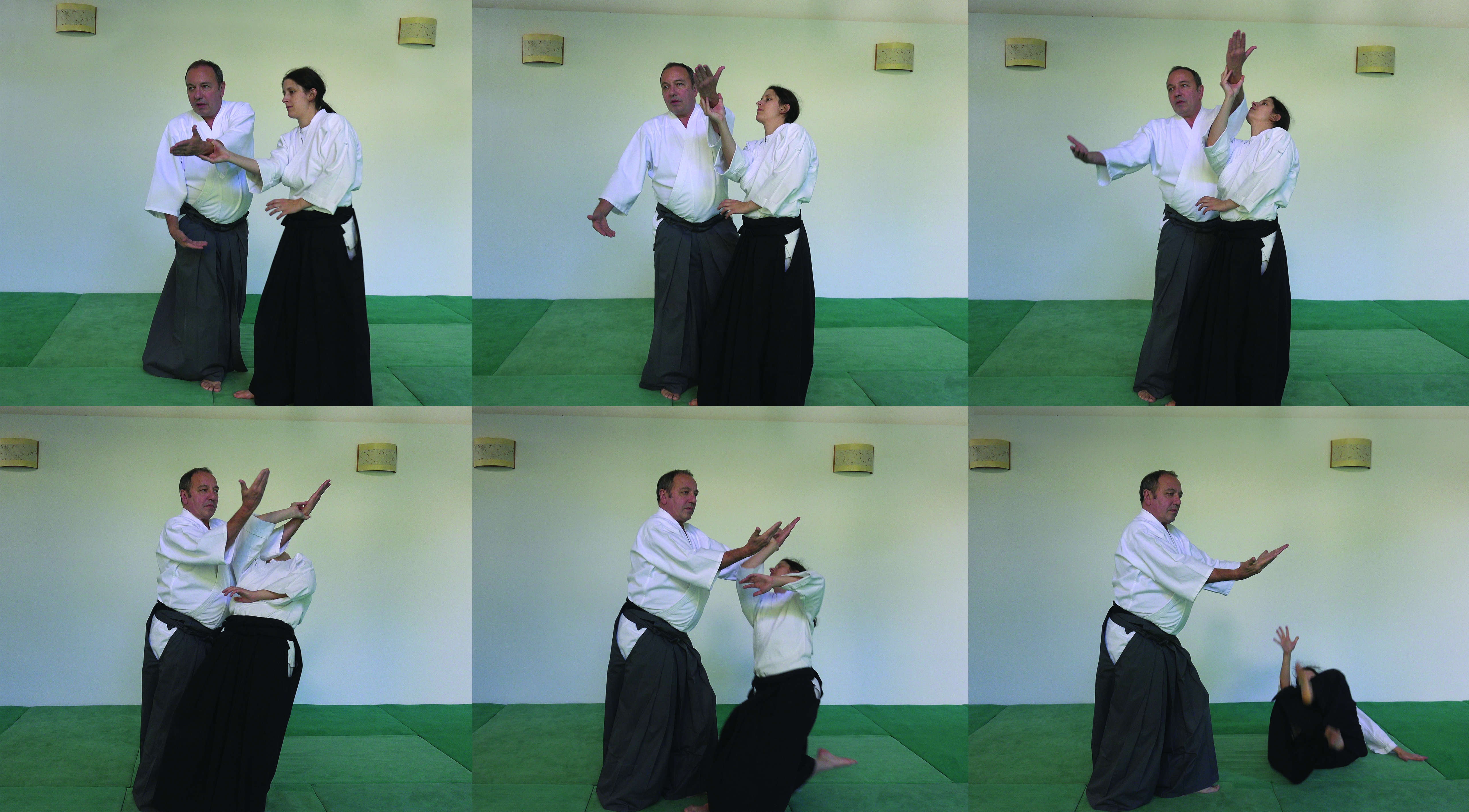


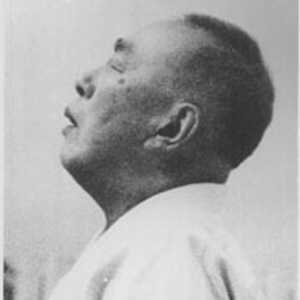


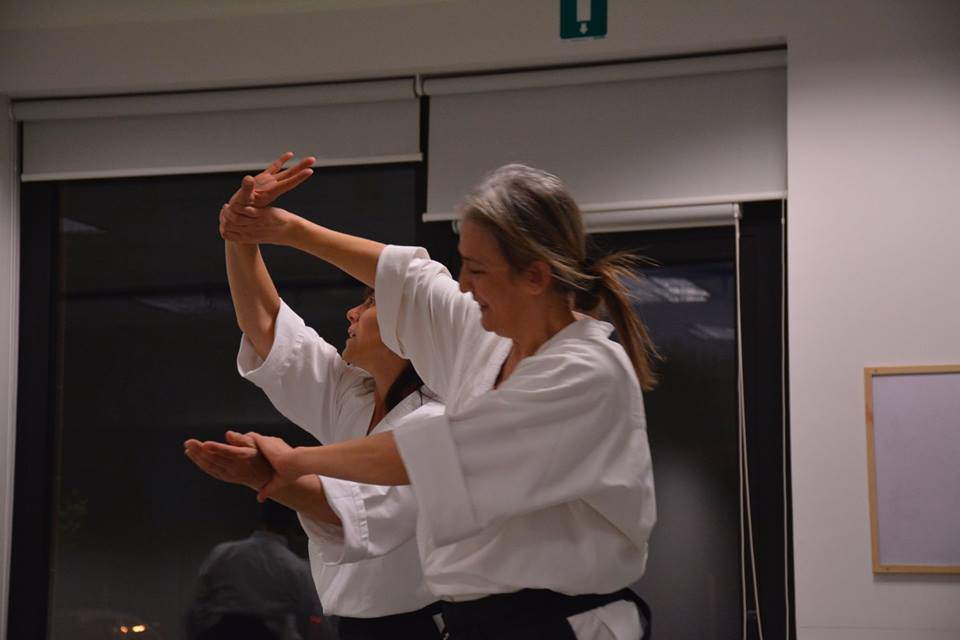 The teaching that we have received and continue to receive allows us to experience the accuracy of the above quotation. Whether we are quiet in our dōjō, where the atmosphere favours concentration and thus focusing on respiration – which makes our dōjō valuable –, or when we are away, since the dōjō is then within us.


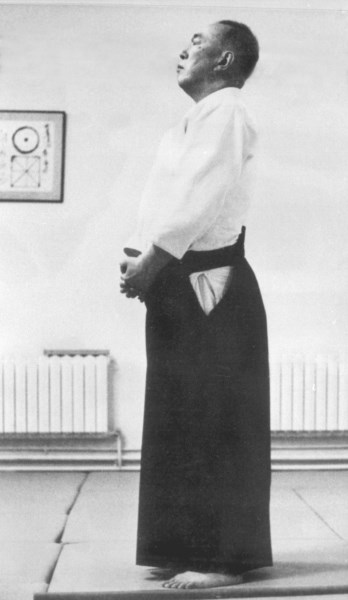


 live in a society where you go to bed very late and you get up very late too. In my case I really love the morning. One can be tired in the evening, people after working hours are stressed. Sessions of martial arts then very easily turned into a relief valve, and so on. Rather in the morning, competitiveness does not have too much importance … you get up, you are in the dojo, you can easily breathe, you start your day. Furthermore we are very lucky to be in a permanent dojo. One comes and it is like being at home, in an association but at home, the dojo are used only for this reason. There are gyms with more or less clean changing rooms where you can not even leave your watch otherwise they might stole it, and so on. So you come here in the morning, take a little coffee, tea, and then practise. And so the day begins and starts well, it is a real pleasure. Every morning I have a great pleasure to see people getting there and taking their time, we are in a world where we do not take our time anymore…

 received this Norito from the hands of